Navigating the Turkish Work Permit System
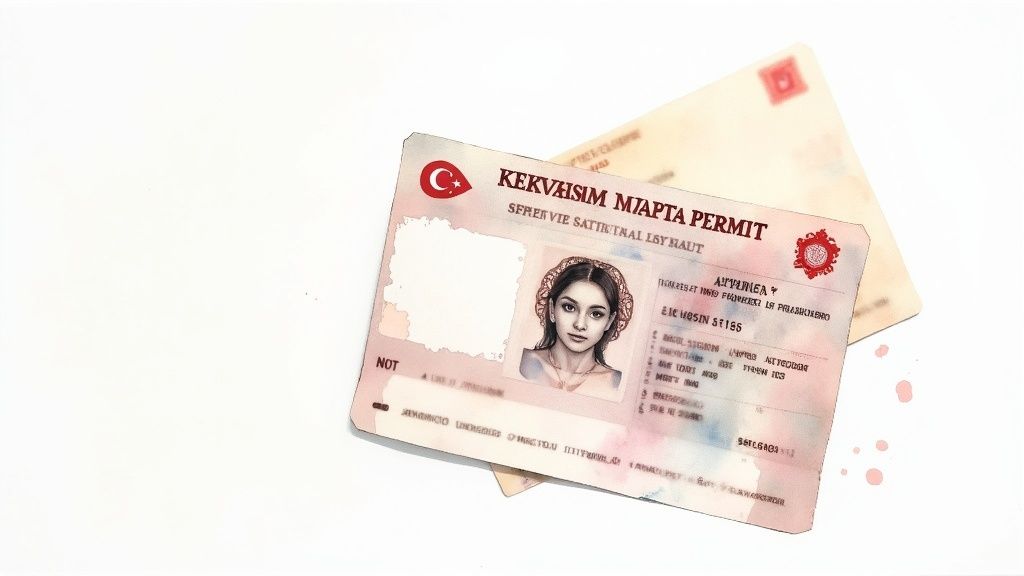
Securing a Turkish work permit provides access to Türkiye’s dynamic job market. The process, however, can appear complex. This section offers a guide to understanding the Turkish work permit system, helping you navigate it effectively.
Understanding the Legal Framework
The Turkish work permit system is built upon a legal structure designed to manage foreign employment while safeguarding the local workforce. This framework outlines the various work permit types, eligibility requirements, and application processes. Permits are classified into distinct categories, such as standard permits, independent work permits, and exceptional permits, each with specific stipulations. Understanding these categories is the first step toward a successful application.

Simplify your business setup with Workon’s all-in-one company registration service in Turkey.
Types of Turkish Work Permits
Each work permit type serves a distinct group of foreign workers. Standard work permits, the most common, are granted to individuals employed by a Turkish company. Independent work permits allow for self-employment or freelance work. Exceptional permits are issued under special conditions, often linked to specialized skill sets or significant investments. Selecting the right permit type is essential for your application.
Key Government Stakeholders
The Ministry of Labor and Social Security (MLSS) plays a vital role in processing and issuing work permits. Turkish embassies and consulates located abroad manage the preliminary visa applications, a necessary step before obtaining a work permit. This shows the interconnectedness of the government bodies involved in the process. Knowing their individual roles is crucial for effective navigation of the system. Foreign labor makes a substantial contribution to the Turkish economy. As of 2022, there were 2,126,825 foreign nationals holding work permits, a testament to their significant impact. More comprehensive statistics are available here: https://dtm.iom.int/sites/g/files/tmzbdl1461/files/reports/Turkiye_Sitrep_05_May_24.pdf
Work Permits and Residence Permits
Your Turkish work permit is directly linked to your residence permit. Successfully obtaining a work permit allows you to apply for a residence permit, a requirement for legally residing in Türkiye. This connection highlights the importance of the work permit application process for your long-term stay. This close relationship is a key element of understanding the wider immigration framework in Türkiye. Navigating these linked systems is crucial for a smooth transition to living and working in the country.
Meeting Turkish Work Permit Eligibility Requirements

Securing a Turkish work permit involves more than just meeting standard qualifications. A thorough understanding of the specific eligibility criteria is essential, as these vary considerably based on your profession and nationality. What might be sufficient for one applicant could be inadequate for another. This section explores these requirements, providing valuable insights to help you build a strong application.
Educational Credentials and Professional Categories
Turkish authorities prioritize certain educational credentials. Degrees in fields with skills shortages in Türkiye are highly regarded. Some professions also have specific restrictions. It’s crucial to research whether your field requires additional certifications or licenses, as this can impact your application’s competitiveness.
However, exceptions are made for highly skilled professionals and those making significant investments in Turkish businesses. Understanding the full range of regulations is therefore essential.
Employer Requirements: A Crucial Aspect
The role of employer requirements in the work permit process is often overlooked. Turkish authorities assess the sponsoring company’s financial stability and its capacity to meet specific criteria. A company’s capital adequacy and adherence to Turkish employee quotas are frequently key factors.
These stipulations aim to protect the local workforce while ensuring the financial viability of businesses. A clear understanding of these prerequisites can significantly improve your application’s prospects.
To understand the specific requirements for various permit types, please refer to the table below. It summarizes the key eligibility criteria for different applicant categories, making it easier to identify the relevant requirements for your situation.
To understand the specific requirements for various permit types, please refer to the table below:
Turkish Work Permit Eligibility Criteria by Category
| Permit Type |
Target Applicants |
Key Requirements |
Duration |
Renewal Options |
| Short-Term Work Permit |
Foreigners employed in specific projects or seasonal work |
Employer sponsorship, proof of required skills/experience, no criminal record |
Up to 1 year |
Possible, depending on the nature of the employment |
| Long-Term Work Permit |
Foreigners intending to work in Turkey indefinitely |
Continuous residence in Turkey for at least 8 years, no criminal record |
Indefinite |
N/A |
| Independent Work Permit |
Foreigners who want to start their own business or work as freelancers |
Business plan, proof of sufficient funds, relevant experience/qualifications |
Initially 1 year, renewable up to 3 years |
Yes, subject to meeting renewal requirements |
| Turquoise Card |
Highly skilled professionals, investors, scientists, artists, and athletes |
Points-based system assessing qualifications, experience, investment level, etc. |
Indefinite |
N/A |
| This table provides a simplified overview. Specific requirements may vary. Consult official sources for the latest information. |
|
|
|
|
This table summarizes key eligibility criteria across various permit types, highlighting the different requirements for short-term projects, long-term employment, independent work, and the specialized Turquoise Card program. Each permit category caters to specific applicant profiles and offers distinct duration and renewal options.
Navigating the Evolving Regulatory Landscape
Turkish work permit regulations are dynamic, adapting to the country’s economic priorities. Recent updates have implemented more stringent evaluation criteria. This includes requiring at least five Turkish citizens employed for every foreign worker in certain sectors, along with increased financial thresholds and sector-specific distinctions.
These changes, effective from October 1, 2024, aim to align employment standards with Türkiye’s economic goals and manage the labor market. Learn more about these updates: Updated Work Permit Evaluation Criteria in Türkiye
Strategic Positioning for Success
Strategically positioning your qualifications within Türkiye’s current labor priorities is essential. Researching in-demand sectors and tailoring your application materials to showcase how your skills contribute to these areas can significantly strengthen your application.
This proactive approach demonstrates your value to the Turkish economy and allows you to present a compelling and competitive application.
Mastering the Turkish Work Permit Application Journey
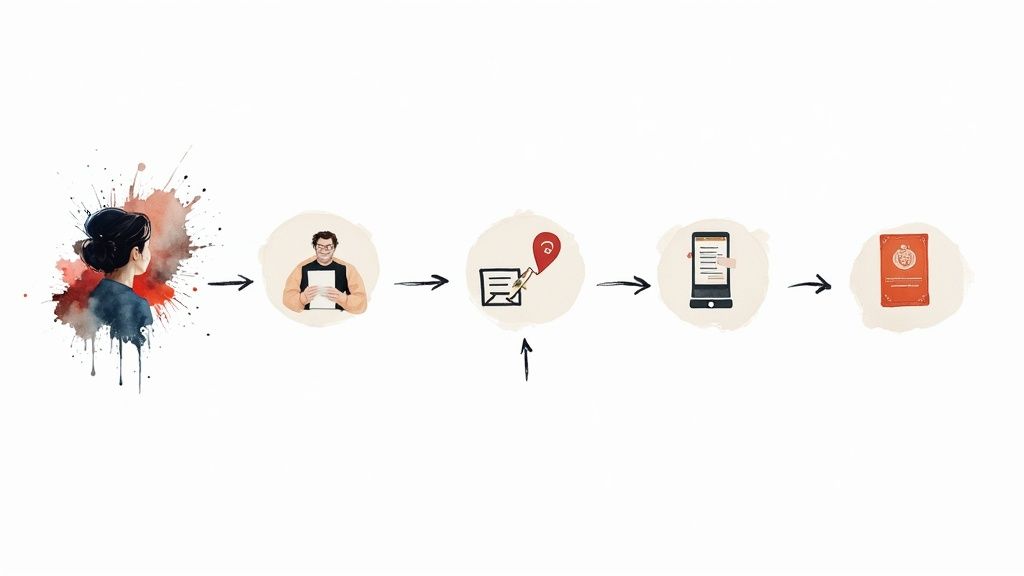
Securing a Turkish work permit can often feel overwhelming. This guide simplifies the process into a manageable journey, breaking down each step from navigating the online portal to final document submission. We’ll draw upon real experiences from recent applicants to provide practical advice.
Navigating the E-Government Portal
The e-Government portal serves as the primary interface for your work permit application. While this online platform can be intricate, understanding its functionalities is essential for a successful submission.
A stable internet connection and digitally scanned documents are key to avoiding technical issues. Familiarize yourself with the portal’s layout and save your progress frequently. This proactive approach can minimize frustration and streamline your application.
Understanding Application Status Updates
After submitting your application, you’ll receive status updates via the portal. These updates might appear unclear at first. Learning to interpret them, however, is vital for tracking your application’s progress.
For example, an “in review” status indicates that the Ministry of Labor and Social Security is actively processing your application. This signifies that your application has passed the initial screening and is under consideration.
Responding to Information Requests
The authorities may occasionally request additional information. Responding promptly and accurately is crucial to avoid delays. Provide all requested documentation clearly and concisely.
This responsiveness reinforces your commitment to the process and helps expedite your application review.
Application Pathways: Türkiye vs. Abroad
The application process varies depending on your location – whether you’re applying from within Türkiye or from abroad. Understanding these distinctions is essential for a smooth application experience.
Applicants in Türkiye typically submit documents through the e-Government portal and attend an appointment at a local immigration office. Applicants from abroad primarily interact with Turkish consulates in their respective countries. Therefore, familiarizing yourself with consulate-specific procedures is critical for those applying from outside Türkiye.
Application Timelines and Benchmarks
Managing expectations is key during the application process. Processing times can fluctuate. Understanding typical timelines, gleaned from recent applicants, can provide valuable insights.
While official processing times are available, real-world experiences offer a more accurate representation. Anticipate a processing time of several weeks and ensure your passport remains valid throughout. This foresight helps you plan effectively and avoid unexpected complications.
Documentation Mastery for Permit Success

A successful Turkish work permit application relies heavily on a well-prepared documentation package. This section goes beyond simple checklists and explores what truly makes an application shine in the eyes of Turkish authorities. We’ll delve into the key differences between merely acceptable documentation and truly compelling documentation, drawing on insights from successful applicants and immigration specialists.
Authentication: Translations, Notarizations, and Apostilles
Document authentication is a crucial, and often intricate, step in the Turkish work permit process. This involves ensuring your documents are legally valid in Türkiye. Documents issued outside Türkiye typically require translation into Turkish by a certified translator.
Notarization and apostille procedures might also be necessary depending on the document’s country of origin. An apostille is a specialized certificate that verifies the origin of a public document. These procedures validate your documents for official use within Türkiye. A solid understanding of these country-specific requirements is essential for a smooth and efficient application process. Workon can assist in navigating these complexities, ensuring your documents meet all Turkish regulations.
Presenting Your Professional Credentials
Presenting your professional credentials effectively is paramount. Your educational background, work history, and skills should be clearly documented and easily verifiable. This builds trust with Turkish authorities and strengthens the overall credibility of your application.
Demonstrating qualification equivalency is often a challenge for international applicants. Turkish authorities need to assess how your foreign qualifications compare to Turkish standards. Proactively addressing this, perhaps through supporting letters from past employers or relevant professional organizations, can significantly bolster your application.
Organizing Your Documentation Package
A well-organized documentation package streamlines the review process for Turkish officials. It also projects an image of professionalism and attention to detail, crucial elements in a successful application. A clear, logical structure is key to achieving this.
- Create a table of contents for easy navigation.
- Group similar documents together.
- Label every document clearly.
These simple steps significantly improve the readability and understanding of your application, increasing the likelihood of a positive outcome.
Troubleshooting Document-Related Roadblocks
Even with meticulous preparation, applications can encounter obstacles. Missing documents or inconsistencies can cause delays. Understanding how to address these challenges proactively saves valuable time and reduces stress.
For example, if a document is missing, promptly notify the authorities and provide a realistic timeline for its submission. This transparent communication demonstrates your commitment and helps prevent unnecessary hold-ups. Thorough and accurate documentation is the foundation of a successful Turkish work permit application. By mastering these elements, you greatly improve your prospects for a positive result.
Understanding Turkish Work Permit Demographics
Gaining insight into the demographics of Turkish work permit holders offers valuable context for your own application. Understanding who receives these permits, in what sectors, and the current trends can help you better position your application. This data-driven approach provides a benchmark for your individual journey.
Nationalities and Professional Sectors
Understanding how Turkish work permits are distributed across different nationalities provides valuable insights. It sheds light on regional migration patterns and how Turkish policies influence the accommodation of foreign workers. For example, some nationalities may be more prevalent in specific sectors because of existing bilateral agreements or specific labor demands. This information can be helpful when tailoring your application strategy.
Another key statistical aspect of Turkish work permits is the breakdown of permit holders by nationality. In 2020, Syrians received the most work permits, with 62,369 permits granted. This was followed by 9,721 permits for Turkmens, 4,873 for Georgians, 4,383 for Uzbeks, and 4,015 for Iranians. This distribution reflects regional migration patterns and the role of Turkish policy in accommodating refugees and migrant workers. The high number of Syrian permit recipients highlights the significant refugee population in Türkiye, largely due to geopolitical factors like the Syrian conflict. For more detailed statistics, you can visit the Prague Process website: https://www.pragueprocess.eu/en/countries/916-tuerkiye?tmpl=component&ml=1
Examining the sectors with the highest approval rates reveals areas where the Turkish economy actively seeks foreign expertise. This can inform your career choices and highlight potential job opportunities.
To further illustrate the distribution of work permits, let’s take a look at the following table:
Top Nationalities Receiving Turkish Work Permits Statistical breakdown of work permits issued by nationality with year-over-year trends
| Nationality |
Number of Permits |
Percentage of Total |
Year-over-Year Change |
Primary Employment Sectors |
| Syrian |
62,369 |
72.5% |
+5% |
Construction, Agriculture, Manufacturing |
| Turkmen |
9,721 |
11.3% |
-2% |
Textiles, Tourism, Transportation |
| Georgian |
4,873 |
5.7% |
+3% |
Tourism, Hospitality, Education |
| Uzbek |
4,383 |
5.1% |
+1% |
Manufacturing, Construction, Agriculture |
| Iranian |
4,015 |
4.7% |
-1% |
Trade, Information Technology, Engineering |
This table provides a snapshot of the top five nationalities receiving Turkish work permits in 2020, their respective share of the total permits issued, the year-over-year change, and the primary employment sectors they are engaged in. It is evident that Syrians constitute a substantial portion of work permit holders, followed by Turkmens, Georgians, Uzbeks, and Iranians.
Trends in Permit Distribution
Identifying patterns in work permit distribution across different demographics—gender, age, and qualification levels—provides further valuable context. This data can reveal important trends. For instance, a surge in applications from a specific demographic might indicate growing demand within a particular field.
Analyzing year-over-year trends in permit issuance reveals emerging opportunities and potential challenges. It also helps you understand how factors such as geopolitical events and economic shifts can influence approval patterns for various applicants. This information gives you valuable foresight for preparing your application. Workon can offer personalized guidance, helping you navigate these complexities and develop an effective application strategy.
The Importance of Demographic Analysis
Understanding these demographic trends lets you assess your own profile in relation to the broader landscape. This allows you to identify your strengths and weaknesses, which can help you refine your application strategy. This analytical approach can give you valuable insights into how to improve your chances of obtaining a Turkish work permit.
Leveraging Your Turkish Work Permit Rights
Obtaining your Turkish work permit is a significant step. But it’s more than just possessing the permit; it’s about understanding and exercising the rights it affords. This section explores how to maximize your professional and personal experience in Türkiye.
Workplace Protections and Entitlements
Your Turkish work permit grants you the same workplace protections as Turkish citizens. This includes fair wages, regulated working hours, and protection against unfair dismissal. You are also entitled to paid annual leave and sick leave in accordance with Turkish labor law. Knowing these rights empowers you and ensures fair treatment.
Social Security and Healthcare Access
Your work permit also provides access to social security benefits, including healthcare. Contributing to the Turkish social security system grants you access to public healthcare services. This coverage provides a safety net for medical care when needed, contributing to your overall well-being and integration into Turkish society.
Job Mobility and Changing Employers
Changing employers while on a work permit is a common question. While your initial permit is tied to a specific employer, changing jobs is permitted under certain conditions. You will need to apply for a new work permit with your new employer before your current one expires. This process allows you to explore new career opportunities while maintaining legal status in Türkiye.
Pathways to Permanent Residency and Citizenship
A Turkish work permit can be a pathway to permanent residency and eventually citizenship for those looking at a long-term future in Türkiye. Continuous legal residence and fulfilling certain requirements can open these pathways. Holding a valid work permit is a key starting point. Knowing these options allows for long-term planning.
Ongoing Obligations and Compliance
Maintaining your Turkish work permit requires ongoing compliance with Turkish regulations. This includes fulfilling tax obligations and adhering to registration requirements with local authorities. Staying informed about regulatory changes and ensuring timely compliance is crucial to avoid complications. Workon can assist with these requirements, helping you maintain your work permit status in Türkiye.
Overcoming Turkish Work Permit Roadblocks
The journey to obtaining a Turkish work permit can be complex, often presenting unforeseen challenges even for the most prepared applicants. This section outlines common obstacles and offers practical solutions based on the experiences of successful applicants and immigration experts.
Identifying Early Warning Signs
Early identification of potential issues is crucial for a smoother application process. A key warning sign is a perceived mismatch between your qualifications and the job requirements by Turkish authorities. Another potential issue is the employer’s inability to meet financial obligations or local hiring quotas. Recognizing these early allows for proactive measures.
Navigating Bureaucratic Complexities
Bureaucratic procedures can be time-consuming and challenging. While delays are sometimes inevitable, maintaining clear communication with the authorities and promptly responding to information requests can expedite the process. For instance, proactively explaining a missing document demonstrates your commitment and diligence.
Managing Communication Barriers
Effective communication is paramount, particularly when language barriers exist. Ensure all documents are accurately translated into Turkish by certified translators. This clarity minimizes potential misunderstandings and shows respect for the process.
Qualification Discrepancies
If your qualifications differ from Turkish standards, demonstrating equivalency is essential. Provide supporting documentation, such as detailed job descriptions from previous employers or certifications from recognized international bodies. This helps demonstrate the value of your foreign credentials to Turkish authorities.
Employer Eligibility Issues
Problems with employer eligibility, such as financial instability or failure to meet local hiring quotas, can significantly impact your application. Close collaboration with your employer to address these concerns is crucial. Open communication and a proactive approach are key to a successful resolution.
Documentation Challenges
Issues with documentation, including missing or incorrectly authenticated documents, are common. Maintain meticulously organized records of all submitted documents and keep copies readily available. This preparedness ensures you can quickly respond to any inquiries.
Developing Contingency Plans
Having a backup plan is vital. Explore alternative work permit categories or employment options in case your initial application encounters unexpected obstacles. This proactive approach provides alternative routes to achieving your professional goals in Türkiye. Consulting with immigration professionals is also advisable. Their expertise can offer invaluable guidance and help anticipate potential issues.
Cultural Nuances and Workplace Integration
Once your permit is secured, understanding cultural nuances plays a crucial role in successful workplace integration. Being mindful of Turkish customs and business etiquette fosters positive relationships with colleagues and clients, contributing to a more harmonious and productive work environment.
Ready to navigate the Turkish work permit process with confidence? Workon provides expert guidance and comprehensive support every step of the way, helping you overcome potential roadblocks and achieve your professional goals in Türkiye.
Foreigners who are not Turkish citizens must obtain a valid work permit to be legally employed in Turkey.
You can apply online through the Ministry of Labor system or via a Turkish consulate abroad, depending on your current residency status.
The processing time typically ranges from 2 to 6 weeks after the application is submitted.
No, a job offer or employment contract from a Turkish company is required before applying for a work permit.
Yes, work permits can be extended by submitting a renewal application 60 days before the current permit expires.
Yes, foreign entrepreneurs can apply for a work permit as the shareholder and director of their own Turkish company, provided the company meets certain criteria such as minimum capital requirements.