Quick answer: There is no single “Central Asia opportunity.” A Turkish exporter or foreign company using Turkey as a regional base should screen Kazakhstan, Uzbekistan, Kyrgyzstan, Turkmenistan and Tajikistan separately by product demand, tariff/technical regime, local partner model, payment risk and logistics route. The right market for machinery may be different from the right market for consumer goods, software or construction inputs.
This guide explains the country + sector + trade-regime + logistics-route decision intent. It does not rank “the most profitable” country or sector without product-level evidence.
1. Start With the Product, Not the Region
Before comparing countries, define exactly what you want to sell or source:
- HS/customs classification;
- B2B, distributor, project, marketplace or direct-sales model;
- technical/conformity requirements;
- cold-chain, dangerous-goods or special handling needs;
- target customer type;
- expected shipment size/frequency;
- Incoterms and payment method;
- after-sales/service requirements;
- whether local establishment is commercially or legally useful.
Only then compare country demand and route economics.
2. Treat the Five Central Asian Markets Differently
| Market |
What to verify first |
| Kazakhstan |
Large regional market, EAEU customs/technical framework, distributor geography, long-distance inland logistics and sector-specific import documentation. |
| Uzbekistan |
Product coverage under the Turkey–Uzbekistan Preferential Trade Agreement, local import requirements, distributor/agent model and payment/logistics route. |
| Kyrgyzstan |
EAEU rules, smaller market size, re-export/distribution logic, border documentation and actual end-customer demand. |
| Turkmenistan |
Project/tender and state-linked buying channels where relevant, payment/contract structure, import approvals and logistics feasibility. |
| Tajikistan |
Smaller-market economics, distributor/service capability, import documentation, payment risk and route cost. |
The Turkish Ministry of Trade publishes current country profiles, market information, reports, potential-product matrices and bilateral-agreement information for these markets. Use those country pages as the starting source, then validate the exact product with current tariff and regulatory data.
3. Do Not Assume “Free Trade” Across Central Asia
Turkey does not have one blanket free-trade regime covering all Central Asian states. Product-level tariff treatment must be checked country by country.
A concrete example: the Ministry of Trade’s current Preferential Trade Agreements page confirms that the Turkey–Uzbekistan Preferential Trade Agreement entered into force on 1 July 2023. That does not mean every Turkish product enters Uzbekistan duty-free. Preferential treatment applies according to the agreement’s covered product list and origin rules.
Kazakhstan and Kyrgyzstan participate in the Eurasian Economic Union (EAEU), so EAEU customs tariff and technical-regulation rules can affect imports from Turkey. Do not quote a Turkish domestic HS/tariff assumption as if it automatically applies at destination.
4. Build a Country-by-Country Landed-Cost Model
| Cost layer |
What to model |
| Ex-works / purchase price |
Factory or supplier cost. |
| Turkey-side logistics |
Pickup, export handling, terminal/rail/road charges. |
| International transport |
Road/rail/sea/multimodal rate and transshipment. |
| Destination customs |
Import duty, VAT/tax, customs-broker/terminal/inspection charges. |
| Product compliance |
Certificates, testing, labels, permits or registrations. |
| Local distribution |
Distributor margin, warehousing, inland transport, marketplace/retail cost. |
| Finance/payment |
Bank charges, FX exposure, financing period and collection risk. |
| After-sales |
Warranty stock, technician/service network, returns and spare parts. |
A product can have strong market demand and still be commercially weak after landed cost and service obligations are included.
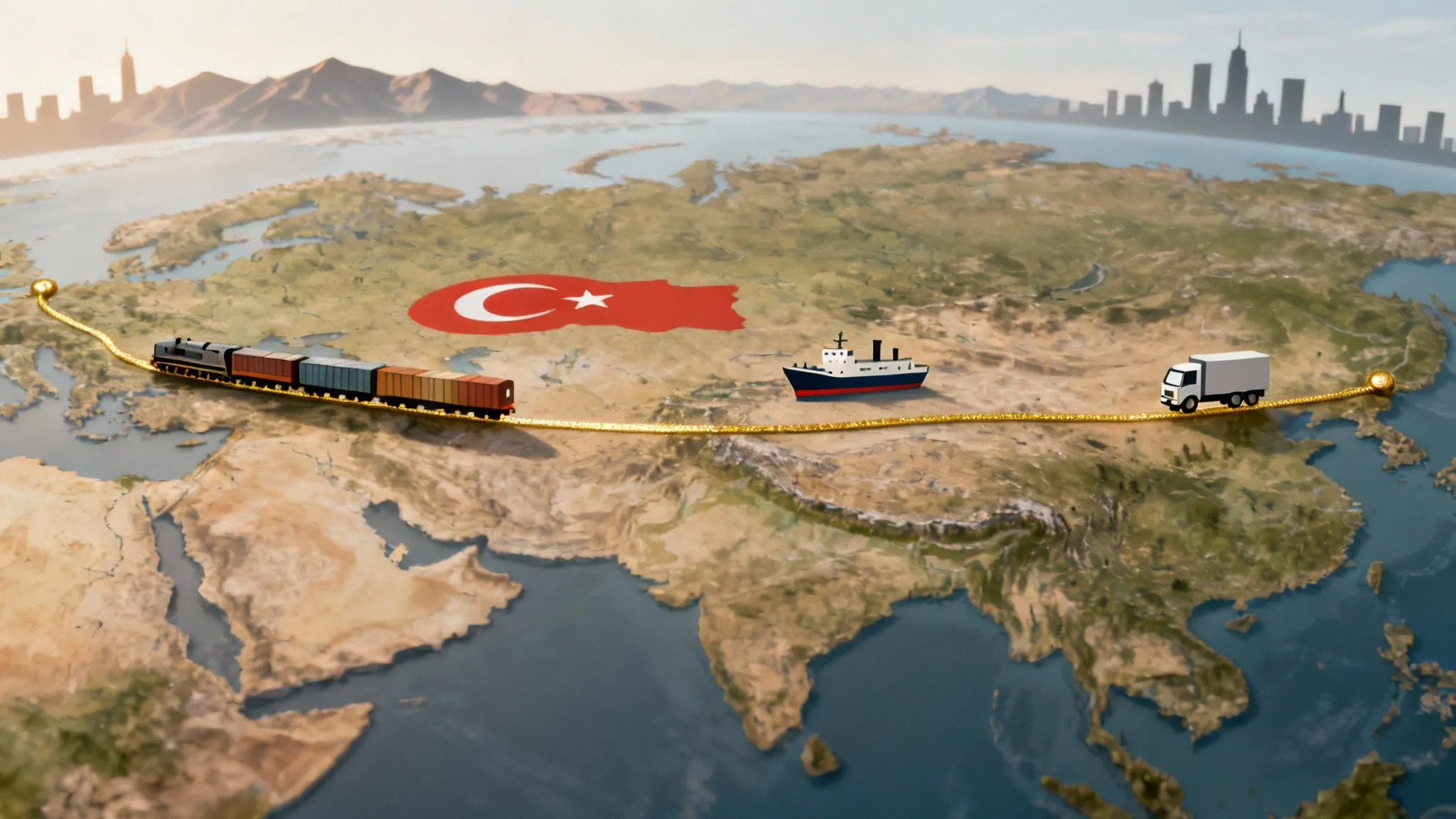
Market selection should combine demand, trade regime, payment risk and the real multimodal route.
5. Use Sector Signals as Hypotheses, Not Guarantees
Turkish companies often explore Central Asian demand in areas such as machinery, construction inputs, food-processing equipment, textiles/home products, automotive parts, chemicals, agricultural technologies, software/digital services and project contracting. But “popular sector” does not prove your SKU, price point or channel will work.
A proper sector screen asks:
- What did the country actually import in my HS code over the last 2–3 years?
- Who are the top supplier countries?
- What is Turkey’s current share?
- Is demand project-driven, retail-driven or replacement-driven?
- Are there local manufacturers?
- What certifications or technical regulations apply?
- Can my margin support the route and distributor structure?
The Turkish Ministry of Trade’s overseas representation pages include market reports and potential-product matrices that can help form this hypothesis before deeper validation.
6. Uzbekistan: Check Preferential Treatment Product by Product
Uzbekistan is one of the most commercially visible Turkey–Central Asia routes, but the decision should still start with product coverage and channel fit.
Before quoting a customer:
- Confirm the exact HS code.
- Check whether the item is covered by the Turkey–Uzbekistan preferential agreement.
- Check origin-document requirements.
- Confirm Uzbekistan import tax/technical requirements.
- Model road/rail/multimodal transport.
- Define distributor/importer responsibilities.
- Confirm payment and currency mechanics.
Do not describe the agreement as universal zero-duty trade.
7. Kazakhstan and Kyrgyzstan: Add the EAEU Layer
For Kazakhstan and Kyrgyzstan, the EAEU framework can affect customs tariffs, product classification, conformity and other import requirements. This makes destination-side regulatory verification especially important before pricing or printing labels.
Ask the importer/distributor to confirm:
- EAEU HS code/classification;
- import duty and tax treatment;
- EAC/conformity requirements where applicable;
- local-language label/manual needs;
- product-specific restrictions;
- who is importer of record;
- whether the goods are intended for local sale or onward distribution.
8. Middle Corridor: Useful Route, Not a Fixed Transit-Time Promise
The Middle Corridor / Trans-Caspian route connects Turkey through the Caucasus and Caspian region toward Central Asia and beyond. Türkiye’s Ministry of Transport and Infrastructure continues to invest in the corridor and the Baku–Tbilisi–Kars railway link; 2026 government communications highlight renewed BTK capacity and broader intermodal development.
But route performance depends on origin, destination, rail slots, Caspian crossing, border/customs processes, transshipment and season. Do not sell a fixed “15-day” or “18-day” transit time without a route-specific current quotation.
For each shipment, compare:
| Route factor |
Question |
| Mode |
Road, rail, sea/rail, multimodal? |
| Handoffs |
How many carrier/terminal changes? |
| Caspian crossing |
Schedule, weather/capacity and port handling? |
| Customs |
Which borders and declarations? |
| Tracking |
Who owns end-to-end visibility? |
| Liability |
Which contract/convention applies to each leg? |
| Contingency |
Alternative route if one leg is disrupted? |
The Middle Corridor is a multimodal system; current route design matters more than a generic headline transit time.
9. Payment Risk Can Matter More Than Tariff
A strong margin on paper can disappear if payment collection is slow or uncertain. Before first shipment, define the commercial risk model.
- advance payment, open account or documentary credit;
- bank acceptability and correspondent route;
- currency and FX exposure;
- credit limit;
- title/risk transfer under Incoterms;
- sanctions/AML screening where relevant;
- trade-credit insurance availability;
- dispute venue and governing law for material contracts.
Have material legal, banking and compliance questions reviewed by the appropriate professionals; do not rely only on distributor assurances.
10. Distributor vs Direct Sales vs Local Company
| Model |
Advantages |
Watch-outs |
| Distributor/importer |
Local channel and import handling |
Margin, control, exclusivity, inventory and customer visibility |
| Agent |
Lower fixed setup |
Authority, commission, customer ownership and legal classification |
| Direct cross-border sales |
More commercial control |
Importer-of-record, tax, logistics and service complexity |
| Local entity |
Local staff/contracts/operations |
Setup and ongoing compliance; country-specific rules |
| Turkey regional hub |
Consolidated sourcing/management from Turkey |
Does not eliminate destination-country import and regulatory requirements |
Do not create a local company merely because a market looks attractive. First confirm that local presence solves a real sales, service, regulatory or logistics problem.
11. Digital Trade: Track the Turkic-States Framework, but Do Not Assume It Is Fully Effective
In June 2026, Türkiye completed its domestic approval process for the Digital Economy Partnership Agreement among Organization of Turkic States members. The Ministry of Trade described the agreement as a framework intended to facilitate e-commerce, digital services and cross-border data-based economic activity.
However, businesses should verify the agreement’s actual entry-into-force status and country implementation before relying on it for a transaction. Domestic ratification by one state is not the same as operational effect everywhere.
12. Market-Entry Red Flags
- “Central Asia” treated as one market.
- Most-profitable-sector claims without HS/product evidence.
- Blanket “free trade” statements.
- Middle Corridor transit time guaranteed without a current route quotation.
- Distributor wants exclusivity before proving sales capability.
- No landed-cost model.
- No destination technical/compliance check.
- Payment terms agreed before bank/FX/collection risk is tested.
- Local-company formation proposed before channel economics are validated.
13. A 30-Day Turkey–Central Asia Validation Plan
- Lock HS codes for the top 5 products.
- Select 2–3 target countries, not all five.
- Pull current Ministry country/sector reports.
- Check tariffs, preferences and origin rules.
- Check technical/product requirements.
- Build landed-cost model for each country.
- Request two logistics-route quotations.
- Identify 5–10 distributors/importers per market.
- Run payment/compliance screening.
- Test one commercial offer before committing to local establishment.
How Workon Supports Turkey-Side Regional Expansion
Workon supports foreign and international companies using Türkiye as a market-entry or regional operating base with company formation, registered address/workspace, bank-account application coordination and connected operational-readiness workstreams. For customs, logistics, legal, tax and other regulated needs, Workon coordinates the relevant authorised professionals/providers according to scope.
Workon does not guarantee destination-market demand, tariff treatment, customs clearance or distributor performance. Those must be validated per country and transaction.
Review Workon’s company registration and market-entry support in Turkey.

Turkey can be a regional operating base, but each Central Asian destination still requires its own commercial and regulatory validation.
Official 2026 Reference Points
Last reviewed: 17 September 2026.
Do not treat Central Asia as one market. Define the product, HS code, customer type, compliance needs, shipment profile and payment model first, then compare Kazakhstan, Uzbekistan, Kyrgyzstan, Turkmenistan and Tajikistan separately on demand, tariff and technical rules, route cost, partner capability and collection risk.
No. Tariff treatment is country- and product-specific. For example, the Turkey-Uzbekistan Preferential Trade Agreement covers specified products and origin conditions rather than creating universal zero-duty trade, while Kazakhstan and Kyrgyzstan also require attention to the EAEU customs and technical framework.
No. Route performance depends on origin, destination, transport mode, rail slots, Caspian crossings, border procedures, transshipment, season and current capacity. Compare current road, rail and multimodal quotations for the actual shipment instead of relying on one headline transit time.
Machinery, construction inputs, food-processing equipment, textiles and home products, automotive parts, chemicals, agritech, software and project-related services can all be worth screening, but sector popularity does not prove product-level demand or profitability. Validate the specific HS code, buyer and landed cost.
Include ex-works cost, Turkey-side logistics, international transport, destination duties and taxes, product-compliance costs, local distribution margin, finance and FX exposure, payment terms, warehousing and after-sales or warranty costs. A strong sales price can still fail after these layers are included.
Not automatically. First determine whether a distributor, agent, direct cross-border sale or Turkey-based regional hub can validate the market. A local entity should solve a real sales, staffing, regulatory or service problem rather than being created simply because the market appears attractive.
Important: This article is general market-entry information, not customs, tax, sanctions, legal, investment or financial advice. Tariffs, preferences, technical rules, payment constraints and corridor performance depend on the product, country, origin, parties and transaction date. Verify the current official destination-country and Turkish sources before contracting or shipping.