Healthcare company registration Turkey is an activity-first process. Registering an LLC or JSC at the Trade Registry does not by itself authorise the company to diagnose, treat patients, operate a clinic or hospital, provide remote healthcare, act as an international health-tourism intermediary, or market regulated medical devices. The ownership, planning, premises, professional-personnel and Ministry of Health approval rules depend on the exact healthcare activity.
For a 2026 project, the safest sequence is: define the healthcare activity → identify the facility/business category → test ownership and planning eligibility → choose the company structure → secure any required planning/licence right → design the premises and personnel model → complete Ministry/Provincial Health Directorate approvals → start operations only within the approved scope.
Quick Answer: Does Every Healthcare Business Need the Same Licence?
No. Turkey regulates healthcare by facility and activity type. A private hospital, medical centre, polyclinic, physician office, dental facility, laboratory, dialysis centre, medical-device importer, telemedicine platform and international health-tourism intermediary do not follow one universal “healthcare company licence.”
| Business model |
Main regulatory question |
Typical authority layer |
| Private hospital |
Planning, preliminary permission, hospital licence and activity permit |
Ministry of Health / Provincial Health Directorate |
| Medical centre (tıp merkezi) |
Ownership, planning, preliminary permission, facility licence and activity permit |
Ministry of Health / Provincial Health Directorate |
| Polyclinic |
Physician ownership, planning/licence allocation and facility requirements |
Ministry of Health / Provincial Health Directorate |
| Physician office |
Professional authorisation and facility conformity |
Provincial Health Directorate under the outpatient regulation |
| Remote healthcare |
Can the authorised health facility obtain remote-health activity permission and use a registered system? |
Ministry of Health |
| International health tourism |
Is the applicant a health facility or intermediary, and does it meet the separate authorisation criteria? |
Ministry of Health / USHAŞ route |
| Medical-device import/distribution |
Product/operator/ÜTS/TAREKS/sales-centre compliance |
TİTCK + Ministry of Trade/customs layers |
| Health software / non-clinical consultancy |
Does the business merely develop software/consult, or actually provide regulated health services? |
Ordinary company law unless regulated health-service functionality is triggered |

Healthcare company formation should follow the regulated activity and facility type, not precede it blindly.
1. Company Registration and Healthcare Authorisation Are Separate
A Trade Registry registration creates the legal entity. It does not prove that the entity may open a specific healthcare facility or provide a regulated clinical service.
Before filing MERSIS articles, answer four questions:
- What exact service will be provided? Patient diagnosis/treatment, laboratory work, medical devices, software, health tourism, consultancy or another activity?
- Will patients receive healthcare from this entity? If yes, identify the regulated facility category.
- Who is legally allowed to own/open that facility type?
- Is the facility/capacity subject to Ministry planning or licence allocation?
For the ordinary corporate-registration process, use Company Formation in Turkey: 2026 Guide for Foreigners. This article focuses on the additional healthcare layer.
2. Tıp Merkezi Ownership: The 51% Physician/Dentist Rule Matters
The current Ayakta Teşhis ve Tedavi Yapılan Özel Sağlık Kuruluşları Hakkında Yönetmelik, published in April 2025 and applicable in 2026, materially changes how investors should structure outpatient projects.
Under Article 7:
- a tıp merkezi may be opened by a physician entitled to practise independently, by a partnership of physicians/dentists, or by a legal entity in which at least 51% of the shares are held by physician/dentist partners;
- a polyclinic is opened jointly by at least two physicians entitled to practise independently;
- a physical therapy and rehabilitation establishment is opened by qualifying physical medicine and rehabilitation specialists.
This means a non-physician foreign investor should not be told that a tıp merkezi can automatically be 100% foreign/non-physician owned simply because Turkey generally permits foreign investment.
See the current Ministry of Health outpatient healthcare regulation.
3. Private Hospital Ownership Follows a Different Rule
The January 2025 Özel Hastaneler Yönetmeliği provides that private hospitals may be opened and operated by natural persons or private-law legal entities, subject to the disqualification, planning, facility, personnel and licensing requirements in the Regulation.
Do not copy the tıp merkezi 51% physician-share rule into every hospital project. Equally, do not infer from the hospital rule that every other healthcare facility has the same ownership freedom.
The current official framework is available in the Private Hospitals Regulation.

The correct LLC/JSC and shareholder structure depends on the healthcare facility rules as well as company law.
4. 2026 Planning and Health-Service Licence Allocation
A critical 2026 issue is planning. The Ministry does not treat every proposed private healthcare facility as an unrestricted ordinary business opening.
The Health Services Licensing Regulation provides a framework for allocating planned healthcare-service licences, and the Ministry’s 2026 announcements show this framework in active use. In July 2026, for example, the Ministry opened applications for new polyclinic licences and physician-branch capacity across Istanbul, Ankara, İzmir and other provinces through its planning/allocation process.
Therefore, before signing a long lease or investing in fit-out, confirm whether the proposed facility needs:
- a planning licence/allocation;
- a planning conformity document;
- preliminary permission (ön izin);
- a facility licence (ruhsat);
- a separate activity permit (faaliyet izin belgesi);
- specific physician cadres, beds, units or technology-intensive device capacity.
A company can exist legally while still lacking the right to open the planned health facility.
5. Preliminary Permission and Premises Come Before Fit-Out
For planned outpatient facilities such as tıp merkezleri, poliklinikler and qualifying establishments, the current regulation requires preliminary permission before opening. Architectural projects, building use, access, fire/earthquake compliance, medical-service areas and other physical conditions must follow the applicable facility rules.
The current outpatient regulation provides a 30-day decision framework for a complete preliminary-permission file reaching the Ministry, but this is not a 30-day end-to-end launch guarantee. Planning rights, premises design, municipal approvals, missing documents, construction and final licensing can take materially longer.
Do not lease a generic office and assume it can later be converted into a clinic. Check the regulated facility standard before committing to the property.
6. Hospital Route: Planning → Preliminary Permission → Licence → Activity Permit
Under the current Private Hospitals Regulation, hospital projects are also subject to Ministry planning. The route separates:
- planning / capacity right;
- preliminary permission and Ministry-approved project;
- hospital licence;
- activity permit listing the authorised branches, units, beds and other capacity;
- personnel working documents and ongoing compliance.
The current regulation states that a private hospital must generally obtain its licence within the period tied to preliminary permission and, after licensing, obtain its activity permit and begin accepting/treating patients within the regulatory window. Treat these as statutory project milestones—not marketing promises for a new investor.
7. Professional Licensing Is Separate From Corporate Ownership
Even when a company can own a healthcare facility, the professionals who diagnose and treat patients must have the legal right to practise their profession in Turkey and the required working/registration documents.
For foreign doctors or other health professionals, diploma recognition, professional authorisation, language/citizenship/residence/work-permit or specialty-recognition issues can apply depending on the profession and route. Do not assume that owning or managing the company authorises a foreign shareholder to practise medicine.
8. Remote Healthcare: A Software Company Is Not Automatically a Telemedicine Provider
Turkey’s Remote Health Services Regulation separates the technology system from the health facility providing the healthcare service.
- A remote-health information system must meet Ministry standards and be registered.
- A health facility wishing to provide remote healthcare needs the relevant remote-health activity permission.
- The facility cannot provide remote care in an area in which it is not authorised to provide healthcare.
- Remote healthcare cannot be provided through a health professional who is not authorised to practise in Turkey.
A software developer can build technology, but it should not market itself as a licensed healthcare provider unless the actual service model satisfies the health-facility and professional rules.
See the current Remote Health Services Regulation.
9. International Health Tourism Is an Additional Authorisation Layer
If the project will market or provide health services to international patients, the 26 April 2025 International Health Tourism and Tourist Health Regulation creates a separate authorisation regime for both:
- health facilities treating international health tourists; and
- intermediary organisations providing authorised health-tourism intermediary services.
This authorisation is additional to the underlying health facility licence. A travel, marketing or consultancy company cannot simply act as a health-tourism intermediary without meeting the specific authorisation rules.
For 2026, the Ministry has also announced that international-health-tourism-authorised hospitals, laboratories, medical centres and dialysis centres must complete TÜSKA accreditation by 31 December 2026; other covered health facilities use the Ministry certification route.
See the current International Health Tourism Regulation.
10. Medical Devices Follow a Different Regulatory Owner
A company importing or distributing medical devices does not use the private-clinic licence merely because the products are used in healthcare. Device market access is centred on TİTCK, economic-operator roles, conformity/CE requirements, ÜTS and where applicable TAREKS/customs and sales-centre rules.
See Importing Medical Devices to Turkey: 2026 ÜTS & TAREKS Guide.
11. Health Software, Consultancy and Administrative Services
Not every company serving the healthcare industry is itself a healthcare facility. Examples can include software development, non-clinical management consultancy, recruitment, facility support or other B2B services.
The key boundary is what the company actually promises and performs. If it begins diagnosing, treating, monitoring patients clinically, facilitating regulated health-tourism services, processing health data in a regulated healthcare workflow or operating regulated medical technology, additional health-sector rules can be triggered.
Do not add a “health” word to the company purpose and assume that ordinary corporate registration either grants or prohibits all healthcare activity. Map the actual service.
12. LLC or JSC? Decide After the Healthcare Ownership Test
For ordinary Turkish company law, the current statutory minimum capital is TRY 50,000 for an LLC and TRY 250,000 for a standard JSC. But a healthcare investor should not choose the legal form only from these numbers.
First test:
- facility ownership restrictions;
- physician/dentist shareholder requirements;
- planning/licence holder requirements;
- investor/financing needs;
- future share-transfer restrictions;
- medical-professional governance and mesul müdür requirements.
Then compare general corporate structures in LLC vs Joint Stock Company in Turkey: 2026 Decision Guide.
13. Practical Pre-Incorporation Checklist
- Define the exact activity and patient journey.
- Identify the regulated facility/business category.
- Check who may legally own/open that category.
- Check Ministry planning/licence availability before committing capital.
- Map physician, dentist and other health-professional requirements.
- Select the company form and shareholder structure around the health regulation.
- Choose premises only after checking building/facility standards.
- Prepare preliminary-permission / licence / activity-permit files as applicable.
- Map remote-health, health-tourism, lab, radiology, device or other specialist licences separately.
- Set up tax, SGK, privacy/health-data, accounting and employment compliance before opening.

Healthcare company registration should be coordinated with the sector licence and ownership model before incorporation.
How Workon Can Support the Setup
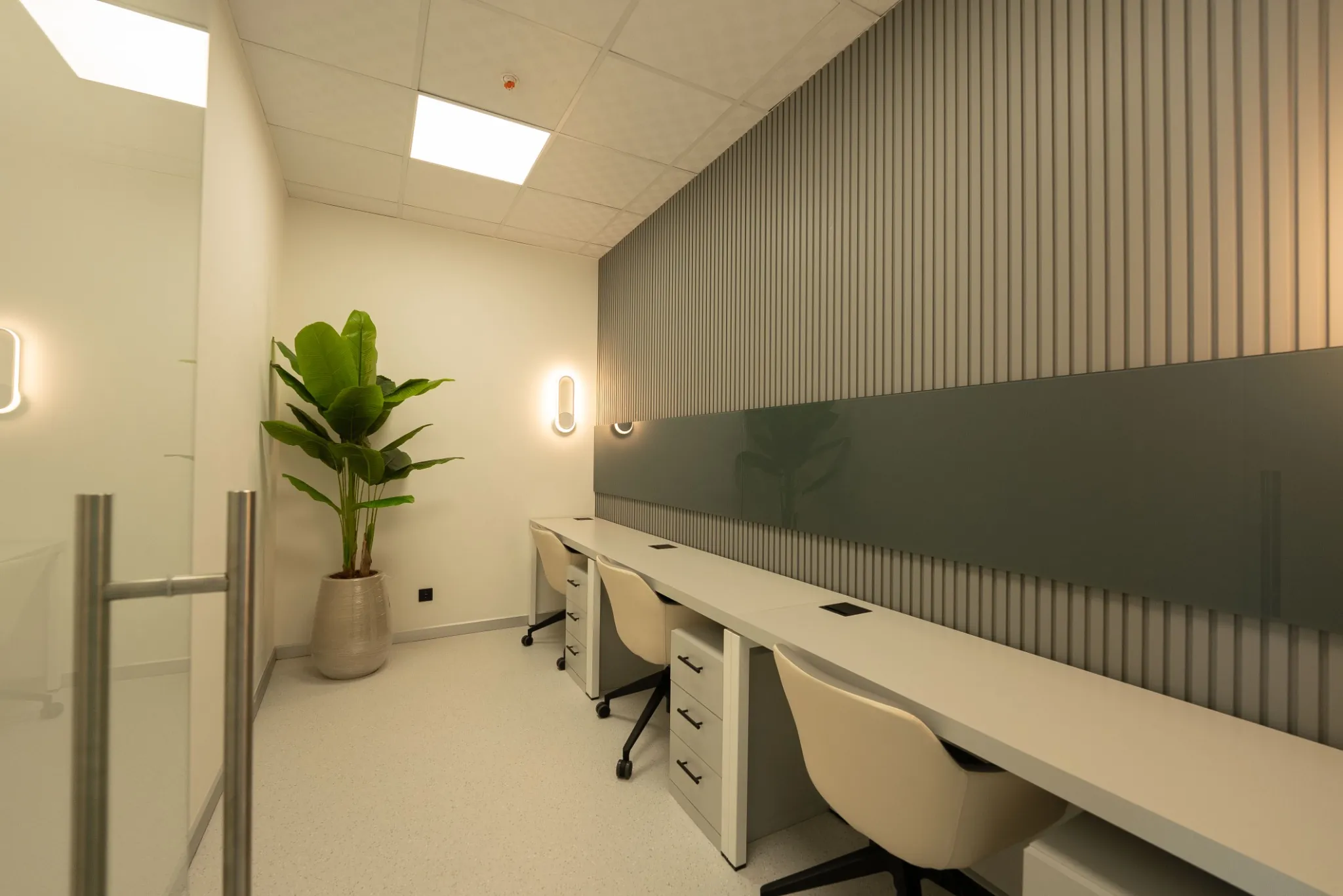
Workon can coordinate company-registration readiness, shareholder/corporate document preparation, registered-address/workspace planning, bank-account application support and the handoff between the investor and the appropriate healthcare/legal/licensed professionals. Ministry of Health planning, facility licensing, professional authorisation, medical decisions and regulated legal/clinical services remain with the competent authorities and appropriately licensed professionals.
Key Takeaways
- There is no universal “healthcare company licence” in Turkey.
- Company registration does not authorise patient diagnosis or treatment.
- For a tıp merkezi, a legal entity generally needs at least 51% physician/dentist shareholder ownership under the current outpatient regulation.
- A polyclinic is opened jointly by at least two qualifying physicians under the same regulation.
- Private hospitals have a different ownership rule and may be opened by natural persons or private-law legal entities, subject to planning and licensing.
- New private healthcare capacity can be subject to Ministry planning/licence allocation; the 2026 poliklinik licence process confirms this is an active requirement.
- Remote healthcare requires an authorised health facility, activity permission and compliant registered system.
- International health tourism has a separate authorisation layer, and 2026 accreditation/certification deadlines apply to authorised facilities.
- Medical-device import/distribution follows TİTCK/ÜTS/TAREKS rules rather than the private-clinic licence.
- Foreign ownership and foreign professional practice are separate questions; never assume one creates the other.
Potentially, but the answer depends on the exact healthcare activity. Company registration and healthcare authorisation are separate. Some facility types have specific ownership rules, such as the current tıp merkezi framework requiring at least 51% physician\/dentist ownership in the qualifying legal entity, while private hospitals follow a different ownership regime.
No. Trade Registry registration creates the legal entity but does not by itself authorise diagnosis, treatment, operation of a clinic or hospital, remote healthcare, health-tourism intermediation or medical-device activity. The relevant Ministry of Health, TİTCK, provincial or other sector approvals must be obtained where applicable.
The current general statutory minimum is TRY 50,000 for an LLC and TRY 250,000 for a standard JSC. Healthcare-specific ownership, planning, licence or investment requirements can require a different structure or substantially more capital in practice.
There is no safe universal one-to-two-week registration or two-to-twelve-month licensing promise. Company incorporation, Ministry planning or capacity allocation, preliminary permission, premises design, professional staffing, facility licensing and activity permits are separate stages with different dependencies.
No. Private hospitals, medical centres, polyclinics, physician offices, laboratories, dialysis centres, remote-health operations, health-tourism intermediaries, medical-device businesses and non-clinical software or consultancy models follow different regulatory routes. The exact activity must be classified first.
No. Corporate ownership and professional practice rights are separate. A foreign doctor or other health professional must satisfy the applicable recognition, professional-authorisation, registration and work-authorisation requirements before practising in Turkey.
Important: Last reviewed 17 September 2026. This guide provides general information on healthcare company setup in Turkey and is not medical, legal, licensing, investment, tax or professional-practice advice. Healthcare ownership, planning, facility licences, professional authorisations, remote-health permissions and health-tourism rules depend on the exact activity and can change. Confirm the project with the Ministry of Health/Provincial Health Directorate and appropriately licensed healthcare, legal and SMMM/CPA professionals before incorporating, signing a premises contract or accepting patients. Workon coordinates business setup and operational readiness but does not issue health licences or provide regulated medical services.