How to Register a Branch Office in Turkey: Complete 2025 Guide for Foreign Companies
07.10.2025
Thinking about expanding into Turkey? Setting up a branch office can be a brilliant strategic move. Unlike starting a whole new company, a branch acts as a direct extension of your parent company, which makes it a fantastic fit for businesses that want to get into the market quickly while keeping a firm hand on the tiller.
Why a Turkish Branch Office Might Be Your Best Move
Understanding the Legal Foundations of Turkish Branch Office Registration
Choosing to register a branch office in Turkey isn’t just about logistics; it’s a strategic choice built around control, simplicity, and direct market access. The main difference to grasp is this: a subsidiary is a separate legal person, but a branch is the parent company, just operating in a new location. This single distinction is where all the benefits really stem from.
This setup is perfect for companies looking to test the waters in the Turkish market, or for those whose local operations are deeply intertwined with the parent company’s core business. Think of a German engineering firm opening a branch to oversee a specific construction project, or a UK software company establishing one to manage local sales and support. In both cases, everything runs under the direct brand and operational command of the head office.
Keep Your Brand and Operations Seamless
One of the biggest pulls of a branch office is keeping total control over your operations and brand identity. Since the branch isn’t a separate legal entity, everything it does is under the parent company’s name. This guarantees a consistent brand presence—something that’s non-negotiable for businesses with strong international recognition.
This control goes right down to management and day-to-day decisions. The parent company sets the rules for operational procedures, financial management, and strategic direction. You get to skip the headaches of dealing with a separate board of directors or complex shareholder agreements that come with a subsidiary.
The real magic of a branch office is that it’s a direct extension of the parent. It keeps governance simple and ensures your Turkish operations are perfectly in sync with your global strategy from day one.
A More Straightforward Financial Setup
From a financial perspective, a branch can be much simpler to manage. All profits and losses are rolled directly into the parent company’s accounts, which can make global financial reporting a lot cleaner. You don’t have to worry about managing separate share capital like you would with a new company, though you will need to allocate enough capital to the branch to keep it running smoothly.
This integrated financial model is especially useful for companies that don’t need a separate Turkish balance sheet for things like local financing or attracting investors.
Tapping into a Thriving Economy
Turkey’s unique position as a bridge between Europe and Asia makes it an incredibly attractive economic hub. The decision to set up shop here is backed by some seriously strong economic signals. Recent stats from the Union of Chambers and Commodity Exchanges of Turkey (TOBB) show a huge jump in business registrations, which points to solid investor confidence.
In 2022 alone, the number of new companies established grew by an impressive 27.8% compared to the previous year, with a total of 140,229 new businesses registered. This kind of growth shows a vibrant, expanding market, making it an excellent time to get your foot in the door.
This dynamic environment is ripe for expansion. While a branch office is a great option, other models can also work wonders for international growth. For instance, companies looking to centralise certain business functions might explore setting up a Global Capability Center. At the end of the day, choosing a branch office in Turkey gives you a direct, controlled, and effective way to dive into this promising economic landscape.
Getting to Grips with Turkish Branch Legal Requirements
Understanding the Core Legal Documentation for Branch Registration in Turkey
Before you even think about the paperwork, it’s crucial to get your head around the legal landscape for a branch office in Turkey. This isn’t just a box-ticking exercise; it’s about building a solid, compliant foundation for your business. Nailing these fundamentals from day one will save you from some serious headaches down the line.
The first thing to understand is that a Turkish branch isn’t its own company. It’s a direct extension of your foreign parent company, meaning it operates under its name and legal authority.
This has some major implications, particularly when it comes to liability.
The Parent Company’s Unlimited Liability
Here’s the single most important legal detail: a branch office comes with unlimited liability. Because the branch and the parent company are legally the same entity, your parent company is on the hook for all debts, obligations, and legal actions of its Turkish operations.
Let that sink in. If your branch in Istanbul can’t pay a supplier, that supplier can legally go after your parent company’s assets back in its home country. This direct link is a massive strategic consideration and is the primary difference between a branch and a subsidiary, where liability is usually capped at the capital invested.
For many companies, the complete operational control a branch offers is worth this risk, but it demands some very tight internal risk management.
The Financial and Tax Picture
On the financial front, knowing your tax obligations is non-negotiable for any kind of accurate forecasting. Profits made by your Turkish branch will be subject to Turkish corporate income tax. Getting familiar with the current corporate tax rate is a must for your business plan.
All of your branch’s financial activities have to be recorded according to Turkish accounting standards. This means keeping proper books, issuing correct invoices, and handling payroll locally. You’ll almost certainly need to hire a local accountant or a financial advisor who knows the Turkish commercial code inside and out.
A mistake I see all the time is companies underestimating the local financial reporting requirements. Even though it’s legally part of the parent, your branch must be treated as a separate financial unit for tax purposes. Meticulous, independent bookkeeping isn’t optional.
Staying on top of these financial rules keeps you compliant and clear of any penalties from the Turkish tax authorities. It’s a cornerstone of running a successful branch.
Appointing a Fully Authorised Representative
A non-negotiable legal step to register a branch office in Turkey is appointing a local representative, often called the branch manager. This person must be given full power of attorney to act on behalf of the parent company for anything and everything related to the branch.
This representative doesn’t have to be a Turkish citizen, but if they are a foreign national, they will need a valid Turkish work permit. Their authority is broad and will cover:
Signing contracts and official documents for the branch.
Representing the company in front of government bodies, courts, and other third parties.
Managing the day-to-day operations, finances, and team.
Ensuring the branch stays compliant with all local laws and regulations.
The legal process for this appointment is quite formal. To register a branch, you’ll need to submit a power of attorney naming your Turkish representative, along with extensive details about both the parent company and what the branch will be doing.
Understanding these key pillars—unlimited liability, local tax rules, and the vital role of the authorised representative—is absolutely essential. For a wider view on setting up shop here, have a look at our guide on the legal requirements to start a business in Turkey. These elements are the bedrock of your Turkish operations, and getting them right from the start is what sets you up for a smooth entry into the market.
Your Essential Document Preparation Checklist
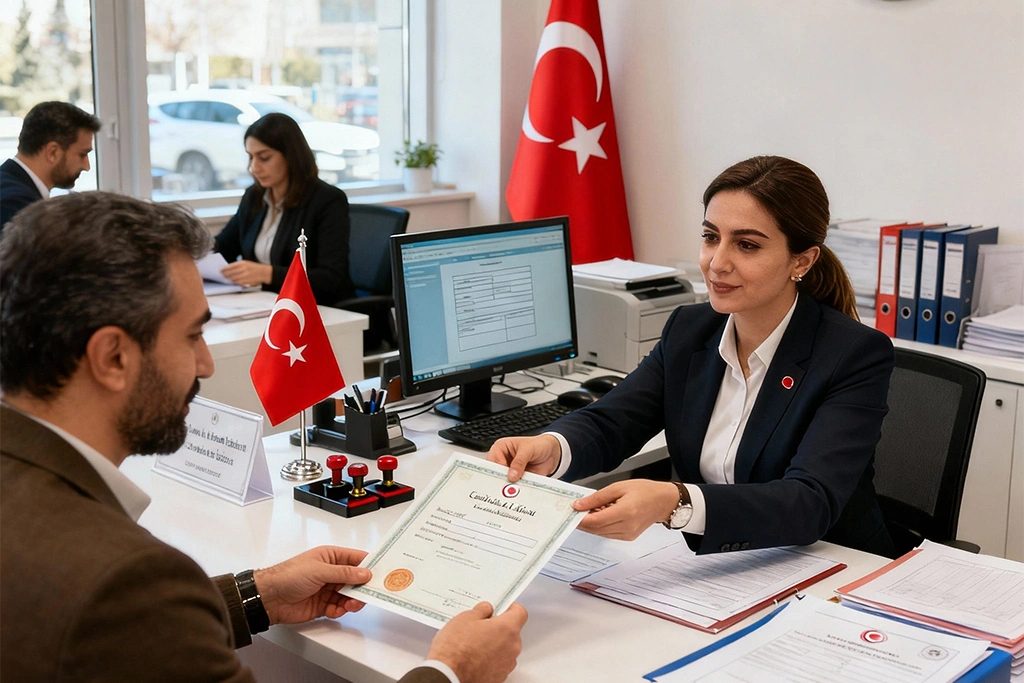
Visualizing the document and financial readiness for Turkish branch office setup
When it comes to registering a branch office in Turkey, getting your paperwork right from the very start is everything. I can’t stress this enough. One small mistake—a missing signature, an incorrect certification—can send your application right back to the beginning, costing you both time and money.
Think of it this way: the Turkish Trade Registry officials are meticulous. Their job is to scrutinise every detail to confirm your parent company is legitimate and has formally approved this expansion. Your mission is to hand them a perfect, complete file that leaves no room for doubt.
Core Parent Company Documents
First things first, you need to prove your parent company legally exists and is in good standing in its home country. These aren’t just internal documents; they need official certification to be recognised by the Turkish authorities.
You’ll need to get your hands on:
Articles of Association: This is your parent company’s charter. You’ll need a current, notarised copy.
Certificate of Activity or Good Standing: This document, usually from your local chamber of commerce or corporate registry, proves your company is active and compliant.
Here’s the critical part: these documents must be both notarised in their country of origin and then apostilled. An Apostille is an international certification that validates the document for use in Turkey. Without it, your paperwork is dead on arrival.
Simplify your business setup with Workon’s all-in-one company registration service in Turkey.
The All-Important Board Resolution
This is, without a doubt, the most important document in your application pack. The parent company’s board of directors has to pass a formal resolution to open a branch in Turkey, and it needs to be incredibly specific.
Your board resolution must clearly lay out:
The explicit decision to open a branch in the Republic of Turkey.
The official title of the branch. This usually includes the parent company name and a phrase like “Turkey Central Branch” (e.g., “ABC Corp Merkezi İstanbul Şubesi”).
The full, physical address of the new branch office in Turkey.
A detailed list of the business activities the branch will conduct, which should mirror the parent company’s objectives.
The amount of capital allocated to the branch. There isn’t a legal minimum, but it must be a realistic figure that can sustain the branch’s operations.
The appointment of a fully authorised representative (or branch manager). The resolution has to name this person and grant them full authority to act on behalf of the company in all matters related to the branch.
Getting the board resolution perfect is non-negotiable. I’ve seen applications delayed for weeks because the capital allocation was vaguely worded or the representative’s powers weren’t clearly defined. Be precise and cover every single point listed above.
Just like the other corporate documents, this resolution must be notarised and apostilled in the parent company’s home country. After that, it needs to be translated into Turkish by a sworn translator here in Turkey.
Local Paperwork for Turkey
Once your foreign documents are in order, you need to prepare a few more that are specific to the Turkish Trade Registry.
Petition to the Trade Registry: A formal letter, signed by your appointed representative, officially requesting the registration of the branch.
Declaration of Establishment: This is a standard registry form where you fill in the key details of the branch, parent company, and its representative.
Signature Declarations: The branch manager must go to a Turkish notary and provide a signature declaration. This official sample is kept on file to verify their signature on all future documents.
Navigating the required paperwork can feel overwhelming, so I’ve put together a table to summarise everything you’ll need.
Document Checklist for Branch Office Registration in Turkey
This checklist breaks down the essential documents, what they’re for, and what you need to pay attention to when preparing them.
Document
Purpose
Key Preparation Notes
Parent Company Articles of Association
Proves the legal structure and rules of the parent company.
Must be a recent copy, notarised and then apostilled in the home country.
Certificate of Activity/Good Standing
Confirms the parent company is active and legally compliant.
Issued by the home country’s Chamber of Commerce; also requires notarisation and an Apostille.
Board of Directors Resolution
Formally authorises the branch opening and appoints its manager.
Must contain all required details (title, address, capital, manager); needs to be notarised and apostilled.
Power of Attorney for Representative
Grants legal authority to the branch manager to act on behalf of the company.
Often part of the Board Resolution. Must be notarised, apostilled, and have a certified Turkish translation.
Petition & Declaration of Establishment
The formal application forms for the Turkish Trade Registry.
Must be completed in Turkish and signed by the authorised representative.
Manager’s Signature Declaration
Provides an official signature sample for the registry’s records.
Must be prepared and signed in front of a Turkish notary.
This is a very detail-oriented process. My advice? Work with a local legal advisor. They live and breathe these regulations and can review your entire file before you submit it, saving you from a world of potential headaches and delays.
Navigating the Official Registration Process
With your paperwork in order, you’re ready to dive into the official registration phase. This is the moment your plan to register a branch office in Turkey transforms from an idea into a legal entity. The journey runs through a few key Turkish institutions, largely managed via an online system called MERSIS, and every detail matters.
Think of it as a clear, sequential path. You’ll begin with a crucial application to the Ministry of Trade, then move on to the main event: registering with the local Trade Registry Office. It’s more than just submitting documents; you’ll be paying fees and, in some cases, depositing capital. Getting the order right is what makes the difference between a smooth process and one filled with frustrating delays.
Kickstarting the Process with the Ministry of Trade
The first official move you’ll make is submitting an application to the Ministry of Trade’s General Directorate of Domestic Trade. This is basically a preliminary checkpoint where the ministry examines your parent company’s board resolution and other foundational documents to make sure they align with Turkish law.
This step is a gatekeeper. You absolutely need the ministry’s approval letter to even approach the local Trade Registry. A common stumble here is submitting a board resolution that’s incomplete or has been poorly translated. Any bit of ambiguity can raise red flags and stall your application, which is why having a local legal expert give your file a final look-over is always a wise investment.
Assuming your documents are flawless, this initial review usually wraps up in a few business days. Once you get the green light—the official permission letter—it’s time to move on to the main registration system.
Mastering the MERSIS System
The engine room of the Turkish company registration process is the Central Registration System, better known as MERSIS (Merkezi Sicil Kayıt Sistemi). This online portal is where you’ll input all of your branch’s details and lodge the official application with the local Trade Registry Office.
Let’s be honest, MERSIS can be a bit of a maze for anyone unfamiliar with it. The entire system is in Turkish and demands a precise understanding of how to enter information according to local commercial norms. This is precisely where a local consultant or lawyer proves their worth. They can navigate the platform with ease, ensuring everything from the branch’s NACE code (the official classification for its business activity) to its address is entered perfectly.
Here’s what happens on MERSIS:
An online application for the new branch is created.
Digital copies of all your apostilled and translated documents are uploaded.
The system generates a unique tracking number for your application.
This MERSIS number becomes your reference point for everything that follows. You’ll use it to monitor your application’s progress, pay the necessary fees, and book your appointment at the Trade Registry Office for the final signatures.
Trying to navigate MERSIS without local expertise is one of the most common and expensive mistakes I see. The challenge isn’t just the language; it’s understanding the nuances of the Turkish commercial code. A single data entry error can get your application bounced right back, forcing you to start the whole process over.
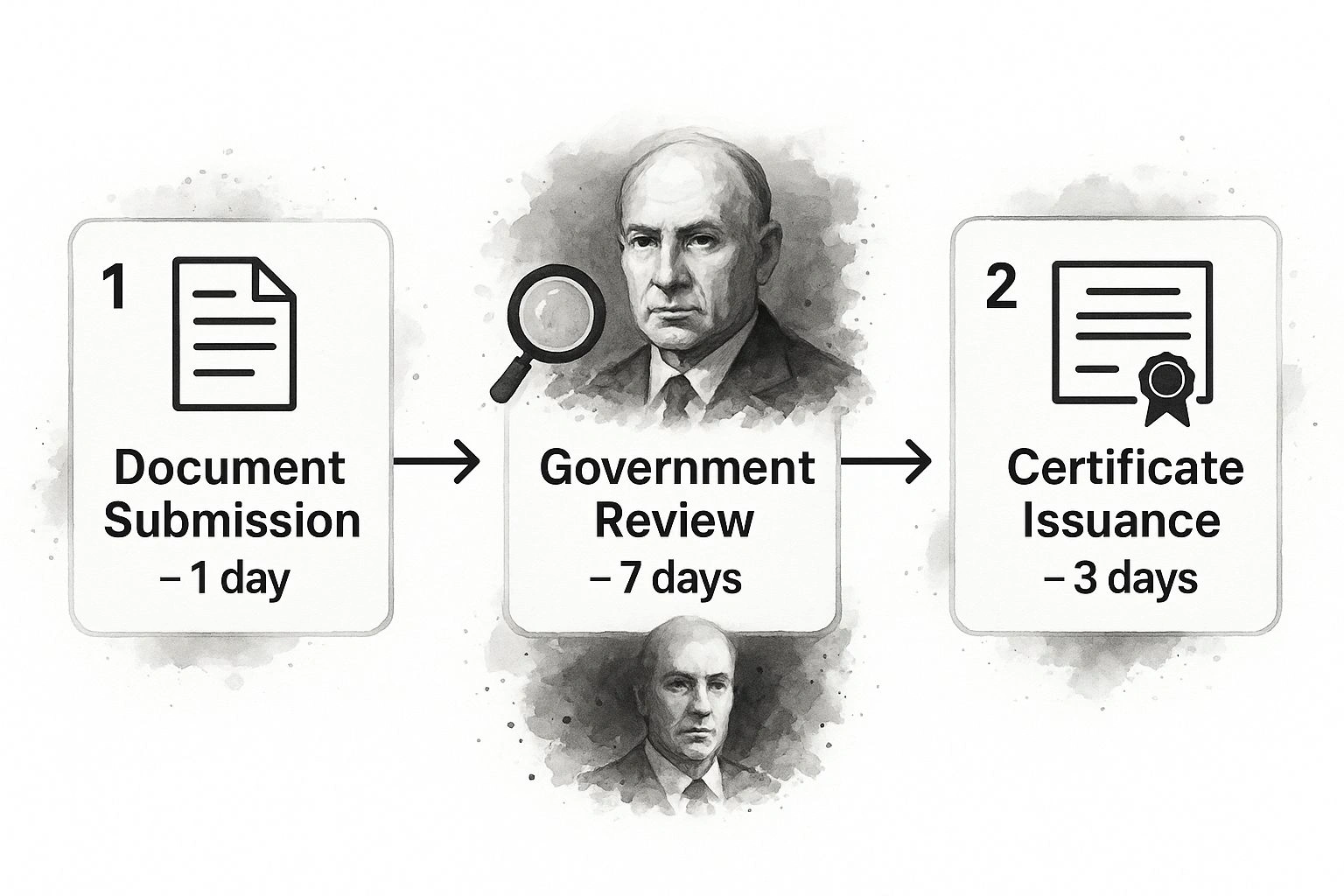
To give you a clearer picture of the typical flow and timeline after you’ve submitted everything, here’s a quick overview.
From Document Submission to Certificate Issuance Explained
As you can see, the government review and approval stage itself is quite efficient, often taking about two weeks once all the documents are filed correctly.
Finalising Registration and Financial Formalities
After your MERSIS application gets the preliminary nod, there are a couple of crucial financial tasks to complete before the registration is made official. These steps demonstrate your branch’s financial commitment and legitimacy.
First up is the payment to the Competition Authority. A small fee, currently 0.04% of the capital you’ve allocated to the branch, must be deposited into the Competition Authority’s bank account. This is a standard, non-negotiable requirement for all new company and branch setups in Turkey.
Next, you might need to deposit a portion of the branch’s allocated capital. While this isn’t as strict for branches as it is for corporations, some Trade Registry offices may ask for a percentage of the capital to be blocked in a bank account temporarily. Don’t worry, these funds are released right after the registration is complete. This is also when having a corporate bank account becomes a necessity. If you need help with that, our guide on how to open a business bank account in Turkey walks you through it.
With the payments sorted, your appointed representative will head to the Trade Registry Office for a scheduled appointment to sign the official documents in person. The registry official will then give everything a final review.
Once they’re satisfied, the Trade Registry Office will formally register the branch. The decision is then published in the Turkish Trade Registry Gazette, which serves as the official public announcement that your branch office is legally established and ready for business. You’ve officially crossed the finish line.
Post-Registration Compliance and Operations
Getting your branch office registered is a fantastic achievement, but it’s really just the starting line. Once that official announcement is published in the Trade Registry Gazette, a whole new set of responsibilities kicks in. The game changes from establishment to operation, and staying compliant is key.
This is where many businesses stumble. They treat the registration as the final step, but neglecting these next tasks can quickly lead to fines or serious operational headaches. Your focus must immediately pivot to meeting all local tax, social security, and bookkeeping rules from day one.
Immediate Administrative Actions
With your registration complete, you need to move fast. Your first stop should be the local tax office (Vergi Dairesi). Here, you’ll officially register the branch and secure its unique tax identification number. Don’t assume the potential number from the MERSIS system is final—this step is mandatory.
While you’re there, you will get your official tax plate, or Vergi Levhası. This isn’t just a piece of paper; it’s a legal requirement to have it displayed clearly at your branch’s address. It’s a visible signal to everyone that you’re a legitimate, compliant business.
At the same time, you need to sort out your social security obligations. Before you even think about hiring, your branch must be registered with the Social Security Institution (Sosyal Güvenlik Kurumu – SGK). This is absolutely non-negotiable. Every single employee, from the general manager to the office assistant, has to be registered with SGK from their very first day on the job.
One of the most critical post-registration steps is SGK registration. Failing to register an employee on time can result in significant penalties. Make this a top priority before anyone starts working.
Ongoing Financial and Tax Compliance
Running a branch in Turkey means you play by Turkish accounting rules. The branch’s finances must be managed completely separately from the parent company and follow the Turkish Uniform Chart of Accounts.
This breaks down into a few key duties:
Bookkeeping: You’ll need to maintain legally certified journals, ledgers, and inventory books. These typically need to be notarised at the beginning of each year.
Invoicing: Every invoice you issue must meet Turkish tax regulations.
VAT Declarations: Value Added Tax (KDV) is a big deal in Turkey. Expect to file monthly VAT declarations.
Corporate Tax Filings: Your branch’s profits are subject to Turkish corporate income tax. This involves filing quarterly advance tax returns and a final annual corporate tax declaration.
Honestly, this is why hiring a certified local accountant (Mali Müşavir) isn’t just a good idea—it’s practically a necessity. They’ll handle the books, manage tax filings, and make sure you’re keeping up with any changes in financial regulations.
Navigating Employment and Operational Duties
Bringing on a team introduces another layer of compliance. Turkish labour law is famously protective of employees, so you need to know your obligations inside and out. This covers everything from drafting proper employment contracts and managing working hours to handling terminations correctly. For a deeper dive, exploring the specifics of Turkish labour laws in our guide can save you a lot of trouble down the road.
Beyond payroll, think about the day-to-day realities of running an office. After successfully registering your branch, protecting your operations with essential business insurance is a key aspect of post-registration compliance. This could be liability insurance, coverage for your office space and equipment, or insurance for company vehicles.
Finally, never forget the power vested in your authorised representative. This person is legally empowered to sign contracts, act on behalf of the branch, and ensure all these ongoing compliance tasks are managed properly. Their performance is central to your branch’s long-term legal health and success after you register a branch office in Turkey.
Answering Your Key Questions About Turkish Branch Registration
When foreign companies start looking into setting up shop in Turkey, the same questions almost always pop up. Getting straight answers is vital before you dive in, so let’s clear up some of the most common points of confusion.
Thinking through these practicalities from the get-go will save you a lot of headaches down the line.
Is There a Minimum Capital Requirement?
This is usually the first question on everyone’s mind. The short answer? No, Turkey doesn’t impose a legal minimum share capital for a branch office.
That’s a big plus, but it doesn’t mean you can just assign a symbolic €1 to the branch. The capital you allocate must be realistic. Think about what you’ll actually need to cover setup costs, rent, initial salaries, and operational expenses until the branch starts generating its own revenue.
The parent company’s board has to formally approve a specific capital amount in a resolution. This figure gets put on the official record, so it needs to be a sensible, justifiable number that reflects your business plan.
Can We Appoint a Foreign National as the Branch Manager?
Absolutely. There’s no requirement for the branch manager to be a Turkish citizen. This gives you the flexibility to send one of your trusted senior executives to oversee the launch and run the operation.
The key thing to remember is that any non-Turkish manager will need a work permit. This is a separate, but essential, process that you should kick off as soon as the company registration begins. The manager must also be given full power of representation to legally act for the parent company in all matters concerning the branch.
The most critical distinction to grasp is liability. A branch connects directly to the parent company’s assets, whereas a subsidiary creates a protective legal barrier. This single factor often dictates the entire corporate structure decision.
What’s the Real Difference in Liability Between a Branch and a Subsidiary?
This is the big one, and it’s a strategic decision. A branch office isn’t a separate legal entity; it’s a direct extension of your parent company. This means the parent company has full and unlimited liability for all the debts and legal obligations incurred by its Turkish branch.
A subsidiary, on the other hand, is a completely separate Turkish company (like an LLC). Here, the parent’s liability is typically limited to the capital they’ve invested. This “corporate veil” is crucial because it shields the parent company’s global assets from any issues that might arise with the Turkish operation. A branch simply doesn’t offer that protection.
How Long Does the Registration Process Actually Take?
The timeline can vary. Once you have all your paperwork in perfect order—translated, notarised, and apostilled—the official registration with the Ministry of Trade and the local Trade Registry usually takes about two to four weeks.
But don’t be fooled by that number. The real time-consumer is the prep work. Gathering the necessary documents from your home country, getting them certified, and arranging for sworn translations can easily add several weeks to the clock. A realistic total timeframe, from the day you decide to start until you’re officially registered, is closer to two months.
Navigating the complexities of Turkish business registration requires expert local knowledge. At Workon, our team handles the entire process for you, from document preparation to final registration, ensuring a smooth and compliant market entry. Let us manage the details so you can focus on your growth. Find out how we can help at https://workon.com.tr/en.
A branch operates as an extension of the parent company with unlimited liability, while a subsidiary is a separate Turkish legal entity with limited liability.
If all documents are complete, official registration usually takes 2–4 weeks. Including document preparation, expect about two months in total.
No legal minimum exists, but you must allocate a realistic operating capital approved by your parent company’s board.
Yes. A foreign national can manage the branch, but they must hold a valid Turkish work permit and full power of attorney.
You’ll need apostilled and translated parent company documents, a board resolution, power of attorney, establishment forms, and a manager’s signature declaration.
Subscribe to Newsletter
Be notified of the latest news in the business world quickly