Do you need an import licence for cosmetics in Turkey? Turkey does not use one blanket licence that, by itself, authorises every cosmetic product to be imported and sold. Market access is layered: confirm that the product is legally a cosmetic, appoint the required Turkey-established responsible person, complete the cosmetic safety assessment and Product Information File (PIF), ensure manufacturing/GMP compliance, make the required pre-market notification, check label and claims compliance, and then confirm the transaction-specific customs/product-safety route for the actual GTİP.
The practical sequence is therefore product scope → responsible person → safety assessment → PIF → GMP → notification → label/claims → import/customs controls → post-market compliance. Notification is not the same thing as regulatory pre-approval, and it does not guarantee customs release.
Quick Answer: Is There One Cosmetics Import Licence?
No. The 2023 Cosmetic Products Regulation establishes a market-placement framework based on a responsible person, product safety, information-file readiness, good manufacturing practice, electronic notification and ongoing market-surveillance obligations. Import/customs treatment is a separate transaction layer.
| Compliance layer |
Main question |
What it does not replace |
| Product scope |
Is this legally a cosmetic product? |
Safety assessment, notification or customs review. |
| Responsible person |
Who is the Turkey-established person legally responsible for the product? |
Importer/distributor or customs-broker roles. |
| Safety + PIF |
Is the product safety assessment complete and the PIF accessible? |
Notification or import controls. |
| GMP/manufacturing |
Is manufacturing compliant with good manufacturing practice? |
A standalone import permit. |
| Pre-market notification |
Has the required national electronic notification been completed before market placement? |
Substantive approval or guaranteed customs release. |
| Label / claims |
Are mandatory particulars, Turkish-language fields and claims compliant? |
Safety/PIF or import classification. |
| Customs/product safety |
What GTİP and 2026 import-control route applies to this shipment? |
TİTCK market-placement obligations. |
1. Confirm the Product Is a Cosmetic
The first gate is legal product classification. The Cosmetic Products Regulation covers substances or mixtures intended to be applied to external parts of the human body, teeth or oral mucosa mainly to clean, perfume, change appearance, protect, keep in good condition or correct body odours.
Products intended to be swallowed, inhaled, injected or implanted are outside that definition. Borderline products can instead fall under medicinal-product, medical-device, biocidal-product or another regulated regime. Do not begin the cosmetics notification path until the intended purpose, presentation and claims support cosmetic classification.
2. A Responsible Person Established in Turkey Is Required
Under Article 6, a cosmetic product can be placed on the Turkish market only when a natural or legal person established in Turkey is designated as the responsible person. This is the central legal accountability role for the product.
Do not confuse the responsible person with a generic “responsible technical person,” importer or customs broker. The roles can interact, but their legal functions are different. Avoid blanket claims that the responsible person must always be a Turkish citizen or must always hold one particular profession unless the exact current rule for the specific role/activity says so.
| Role |
Practical function |
Key distinction |
| Manufacturer |
Manufactures or has the cosmetic manufactured and markets it under its name/trademark. |
May or may not be established in Turkey. |
| Responsible person |
Ensures the product meets the Regulation’s relevant obligations. |
Must be established in Turkey. |
| Importer |
Imports the cosmetic and places it on the Turkish market. |
Import role does not replace the responsible-person framework. |
| Distributor |
Makes the product available further in the supply chain. |
Has separate verification/traceability duties. |
3. Safety Assessment Comes Before Market Placement
Article 13 requires the responsible person to ensure that the cosmetic product has undergone a safety assessment and that a cosmetic-product safety report is prepared before the product is placed on the market. The assessor must meet the qualification requirements in the Regulation.
This is not a formality that can be replaced by a Certificate of Free Sale, an SDS or a general GMP certificate. The safety assessment must address the actual cosmetic formulation, intended use and available safety information.
4. Product Information File (PIF): What It Must Contain
Article 14 requires a Product Information File for each cosmetic product. The PIF is kept readily accessible at the address stated on the label and is retained for ten years after the date on which the last batch or series of the cosmetic product was placed on the market.
The PIF includes, among other items:
- a description that clearly links the file to the cosmetic product;
- the cosmetic-product safety report;
- the manufacturing method and a statement of compliance with good manufacturing practice;
- proof of the effect claimed for the product where justified by the nature/effect of the cosmetic;
- data on animal testing performed by the manufacturer, agents or suppliers where relevant under the Regulation.
The Regulation allows the PIF to be maintained in Turkish or English. That does not mean every consumer-facing label field can be English; PIF language and labelling language are separate questions.
5. GMP Is a Manufacturing Requirement, Not a Generic Import Permit
Article 11 requires cosmetic manufacturing to comply with good manufacturing practice. Compliance with the relevant harmonised standards can support the presumption of GMP compliance where the legal conditions are met.
Do not present “GMP certificate + CFS + SDS” as a universal three-document import-licence file. A CFS, SDS, GMP certificate or other supporting document may be relevant in a particular regulatory/customs context, but each should be called mandatory only when a current legal or transaction-specific basis supports it.
6. Pre-Market Electronic Notification
Article 16 requires the responsible person to submit specified information through the national electronic database before the cosmetic product is placed on the market. For imported products, the country of origin is among the information notified.
The notification framework includes information such as product/category/barcode data, responsible-person information and PIF address, relevant nanomaterial/CMR/formulation information, and label/packaging data required by the Regulation.
Notification is not a product approval certificate. It does not mean TİTCK has substantively pre-approved every claim or guaranteed that the product will clear customs. The responsible person remains accountable for compliance and the authority retains market-surveillance and corrective-action powers.
7. Label Requirements: Do Not Say “Everything Must Be Turkish Only”
Article 22 sets the mandatory particulars that must appear on the inner and outer packaging, subject to the Regulation’s exceptions and presentation rules. Imported cosmetics must also state the country of origin.
Mandatory particulars can include, as applicable:
- the responsible person’s name/registered name and address;
- country of origin for imported cosmetic products;
- nominal content;
- minimum durability or period-after-opening information where applicable;
- special precautions and warnings;
- batch/reference identification;
- function of the cosmetic product if not clear from presentation;
- ingredient list.
The Regulation specifies Turkish-language requirements for particular mandatory information. The accurate rule is therefore field-specific Turkish compliance, not “every element of the packaging must be only in Turkish.”
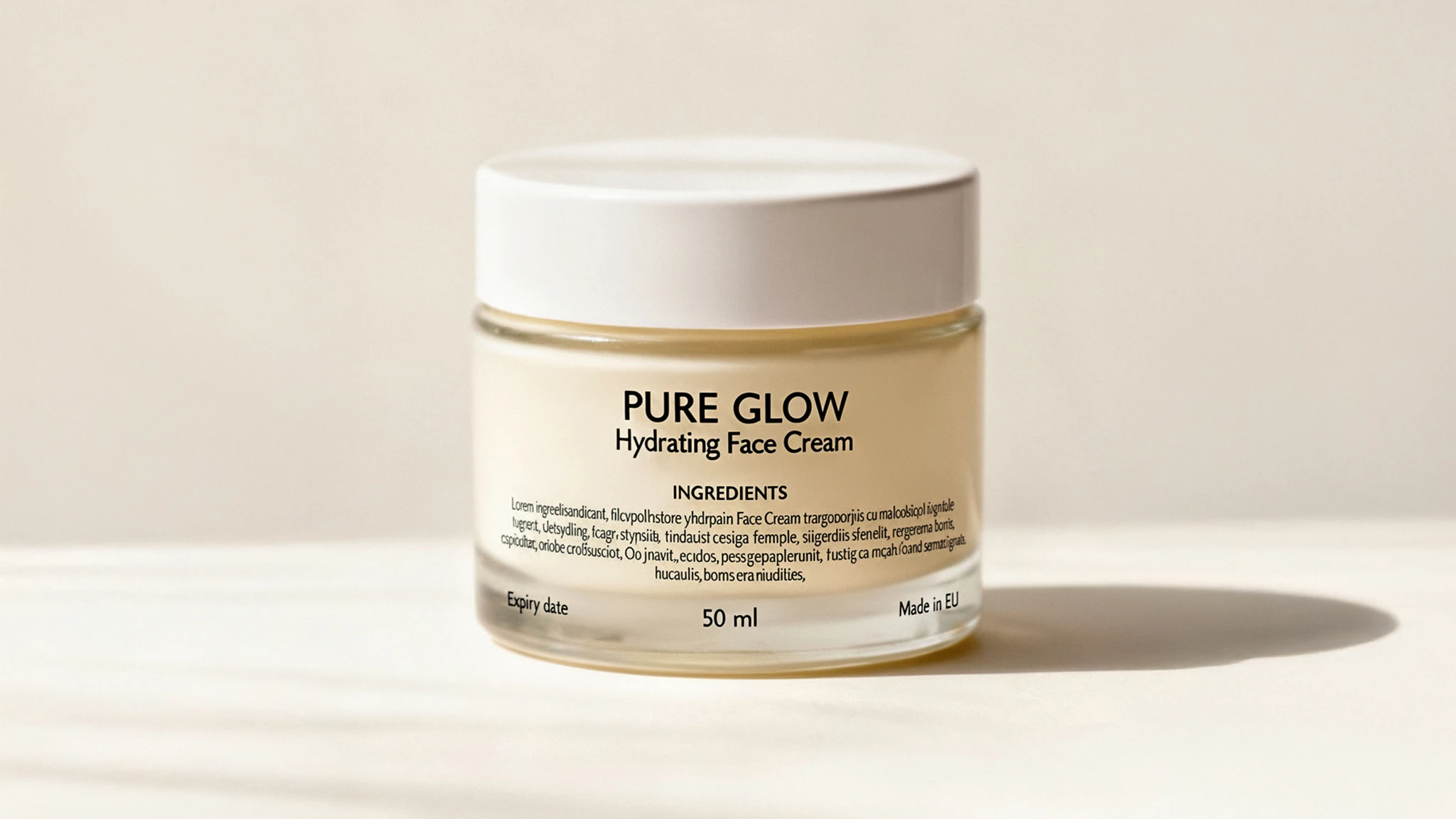
Label compliance should be checked field by field against the current Cosmetic Products Regulation.
8. Cosmetic Claims Must Be Supportable
Marketing claims should match the cosmetic nature of the product and be supported by appropriate evidence. A claim that changes the product’s apparent intended purpose can also create classification risk—for example, language suggesting treatment or prevention of disease may move the analysis beyond ordinary cosmetic claims.
Keep the import/market-access file aligned with the wording used on packaging, websites, distributor materials and advertising.
9. Customs and 2026 Product-Safety Controls Are Transaction-Specific
After the TİTCK market-placement file is ready, the shipment still needs the correct customs classification and any applicable import product-safety controls. Start with the exact GTİP, product composition and presentation.
Do not automatically add TAREKS as a universal step for every cosmetic shipment. TAREKS is the Ministry of Trade’s risk-based electronic inspection system, but the actual transaction must first be checked against the current 2026 product/GTİP inspection communiqué and scope.
For the general customs workflow, see Customs Clearance Steps in Turkey: 2026 Importer Guide.
Pre-Shipment Customs Questions
- What is the exact GTİP?
- Does the current 2026 import-product-safety framework cover this product/GTİP?
- Are product names, responsible-person details, country of origin and labels consistent across regulatory and shipping documents?
- Are any product-specific restrictions or ingredient controls relevant?
- Has a licensed customs professional reviewed the declaration and product-safety route?
10. Go / Fix / Stop Checklist Before Shipment
| Status |
Condition |
Action |
| GO |
Cosmetic classification confirmed; responsible person appointed; safety report and PIF complete; GMP/manufacturing evidence aligned; notification complete; label/claims checked; GTİP/import controls reviewed. |
Proceed to transaction-specific customs execution. |
| FIX |
Core file exists but label, formula, responsible-person, country-of-origin, barcode or notification data do not match. |
Correct the inconsistencies before shipment/market placement. |
| STOP |
Product classification is unclear, safety assessment/PIF is incomplete, responsible person is missing, or the current import-control route has not been checked. |
Resolve the regulatory gap before shipping. |
11. Common Failure Points
- Treating notification as an approval or import licence.
- Importing before the responsible-person, safety and PIF layers are ready.
- Using “Turkish citizen responsible technical person” as a universal legal shortcut.
- Calling CFS, GMP certificate and SDS the mandatory “big three” for every cosmetic import.
- Assuming GMP alone proves product safety.
- Using a blanket “all packaging must be Turkish only” statement instead of checking field-specific language rules.
- Making unsupported therapeutic or performance claims.
- Assuming a notification/barcode guarantees customs clearance.
- Using fixed few-week or 2-month approval timelines without a current primary source for the exact step.
- Applying TAREKS mechanically without checking the actual GTİP/current 2026 inspection scope.
12. Post-Market Obligations Continue
The responsible person and other economic operators must remain ready for authority surveillance and corrective action after market placement. The Regulation provides mechanisms for non-compliant or unsafe cosmetics, including corrective measures, withdrawal and recall.
Operationally, maintain:
- current PIF and safety information;
- complaint and undesirable-effect monitoring processes where applicable;
- traceability and supply-chain records;
- change control for formula, label, claims, manufacturer or responsible-person data;
- procedures for authority requests, corrective action, withdrawal or recall.
13. Setting Up the Turkish Business Structure

Company formation can support the importer/distributor structure, but it does not replace cosmetic-product compliance.
If the foreign brand needs a Turkish importer/distributor entity, align company formation with the responsible-person and supply-chain model from the start. The company’s legal purpose, address, bank/accounting setup, importer/distributor role and regulated-product workflow should not contradict one another.
For the operating-company route, see Import-Export Company Setup in Turkey: 2026 Guide.
14. How Workon Can Support Cosmetics Market Entry
Workon can coordinate the business-setup and market-entry readiness side: Turkish company formation where needed, registered-address/workspace planning, document coordination and project management between the investor and the appropriate cosmetics-regulatory, safety and customs specialists.
Workon can coordinate the company, responsible-person, cosmetics-regulatory/safety and customs workstreams with appropriately qualified or authorised professionals. Product-safety assessment, responsible-person duties, regulatory determinations and customs declarations remain with the competent authority and the responsible qualified or licensed professionals for those scopes.
For shipment-level customs-readiness coordination, see Workon’s Customs Process Coordination in Turkey.
Last reviewed: 17 September 2026.
Key Takeaways
- Turkey does not use one blanket cosmetics import licence for every product.
- A responsible person established in Turkey is required before market placement.
- The safety assessment/report and Product Information File are separate mandatory compliance layers.
- The PIF is retained for ten years after the last batch/series is placed on the market and may be kept in Turkish or English under the Regulation.
- GMP is a manufacturing-compliance requirement, not a universal customs permit.
- Pre-market notification is required, but notification is not substantive product approval.
- Label-language requirements are field-specific; do not assume the entire package must be Turkish-only.
- Customs and any TAREKS/product-safety handling must be checked against the actual product, GTİP and current 2026 rules.
Frequently Asked Questions
No. Cosmetic market access is layered rather than based on one blanket import licence. The product must first be correctly classified, a Turkey-established responsible person must be in place, the safety assessment and Product Information File must be ready, manufacturing and GMP obligations must be addressed, the required pre-market notification completed and the actual customs or product-safety route checked for the shipment.
There is no safe universal 'big three' or fixed import document list for every product. The core regulatory file includes the product safety assessment and report, Product Information File, manufacturing or GMP evidence, responsible-person data, notification information and compliant label or claim evidence. Customs and transaction-specific documents depend on the product and GTIP.
The current framework requires a natural or legal person established in Turkey to be designated as the responsible person. Do not assume this role universally requires Turkish citizenship or one specific profession unless the exact current rule for the relevant role says so.
No. The required national electronic notification is a pre-market obligation, not a substantive product-approval certificate. The responsible person remains accountable for compliance and TİTCK retains market-surveillance and corrective-action powers.
No. The Regulation imposes Turkish-language requirements on specified mandatory particulars, while other elements follow their own rules. Label compliance should be checked field by field, including responsible-person details, origin for imported products, warnings, function, durability information and ingredients where applicable.
No. TAREKS is a risk-based import inspection system whose applicability depends on the exact product, 12-digit GTIP and current product-safety communiqué. The shipment should be checked against the live 2026 scope rather than treating TAREKS as a universal cosmetic-import step.
Important: This guide provides general cosmetics regulatory and market-entry information and is not product-safety, legal or customs advice. Product classification, responsible-person duties, safety assessment/PIF, notification, labeling, ingredient/claims controls and import treatment are product- and transaction-specific and can change. Before shipment or market placement, verify the current TİTCK and Ministry of Trade requirements with qualified cosmetics-regulatory/safety professionals and, for customs declarations, an appropriately licensed customs professional. Workon coordinates business setup and operational readiness but does not grant or guarantee regulatory or customs approval.