A company bank account in Turkey can become restricted for very different reasons, and the correct response depends on which type of restriction you are dealing with. A bank may limit transactions while reviewing KYC or transaction activity; a specific transaction may be temporarily suspended under anti-money-laundering rules; or funds may be subject to a court, enforcement or tax measure. Merchant-acquiring reserves and chargeback controls are another separate category.
The first objective is therefore not to “unfreeze the account” in the abstract. It is to identify who imposed the restriction, what exactly is restricted, and which documents or legal process control the next step. A KYC document request is handled very differently from a court attachment or tax e-haciz.
Reviewed: 17 September 2026. This guide is general information, not legal advice. Court, enforcement and tax measures may require a licensed lawyer or other authorised professional.

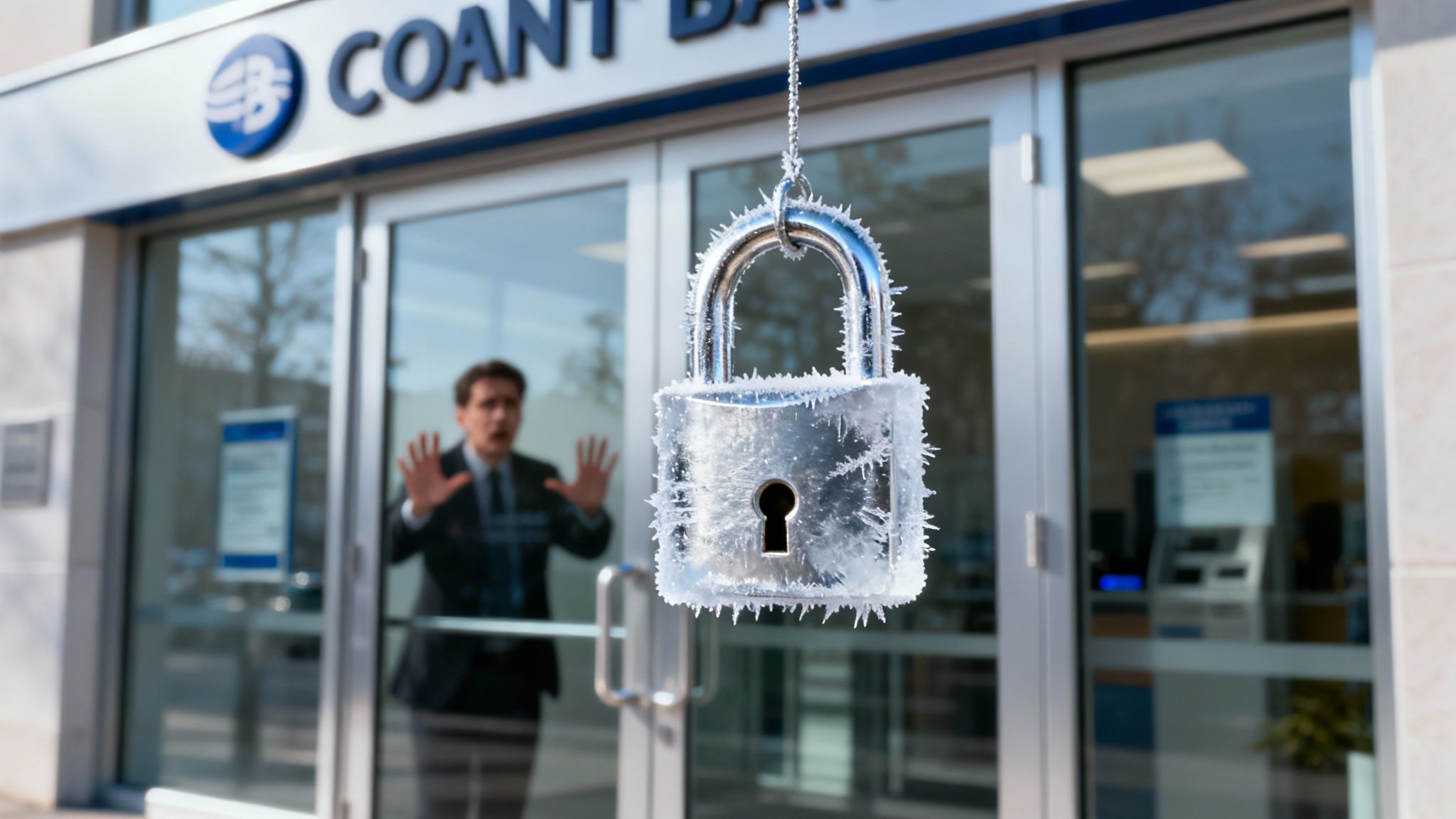
A denied bank transaction can signal a frozen company account caused by compliance or legal issues
First Identify What Has Actually Been Restricted
The phrase “frozen bank account” is often used for several different situations. They do not have the same legal basis or the same remedy.
| Restriction type |
What it may look like |
Best first step |
| Bank compliance / KYC restriction |
Some or all transactions are limited while the bank reviews customer information, ownership, source of funds or transaction activity. |
Ask what information the bank is permitted to disclose and submit the requested corporate/KYC evidence. |
| Specific AML transaction hold |
A particular attempted or ongoing transaction is not completed while an AML/CFT review follows the applicable legal process. |
Do not assume the whole account is legally frozen; identify the affected transaction and provide supporting commercial evidence if requested. |
| Court / prosecutor / enforcement measure |
Funds are blocked or attached under an external legal order. |
Identify the authority, case/reference number and scope of the order; legal counsel may be required. |
| Tax e-haciz |
A bank receives an electronic attachment notice for unpaid public receivables under the tax-collection framework. |
Confirm the relevant tax-office debt and attachment record; this is not solved by sending ordinary KYC documents to the bank. |
| Merchant-acquiring reserve / chargeback control |
Card-settlement funds may be reserved, delayed or limited because of merchant risk or disputes. |
Work with the acquiring bank or payment provider on the specific merchant-risk issue. |
This distinction matters because a company can waste valuable time if it treats every restriction as the same problem. A bank compliance review, a tax attachment and a court order require different evidence and different decision-makers.
Common reasons company bank accounts are frozen and the steps businesses can take to restore banking operations.
Compliance Reviews and MASAK: What Is Actually Different?
Banks are obliged entities under Turkey’s AML/CFT framework, but they are not law-enforcement agencies. They perform customer due diligence, monitor transactions and submit suspicious transaction reports when the legal threshold is met. A suspicious transaction report does not by itself mean that an entire company account is automatically frozen.
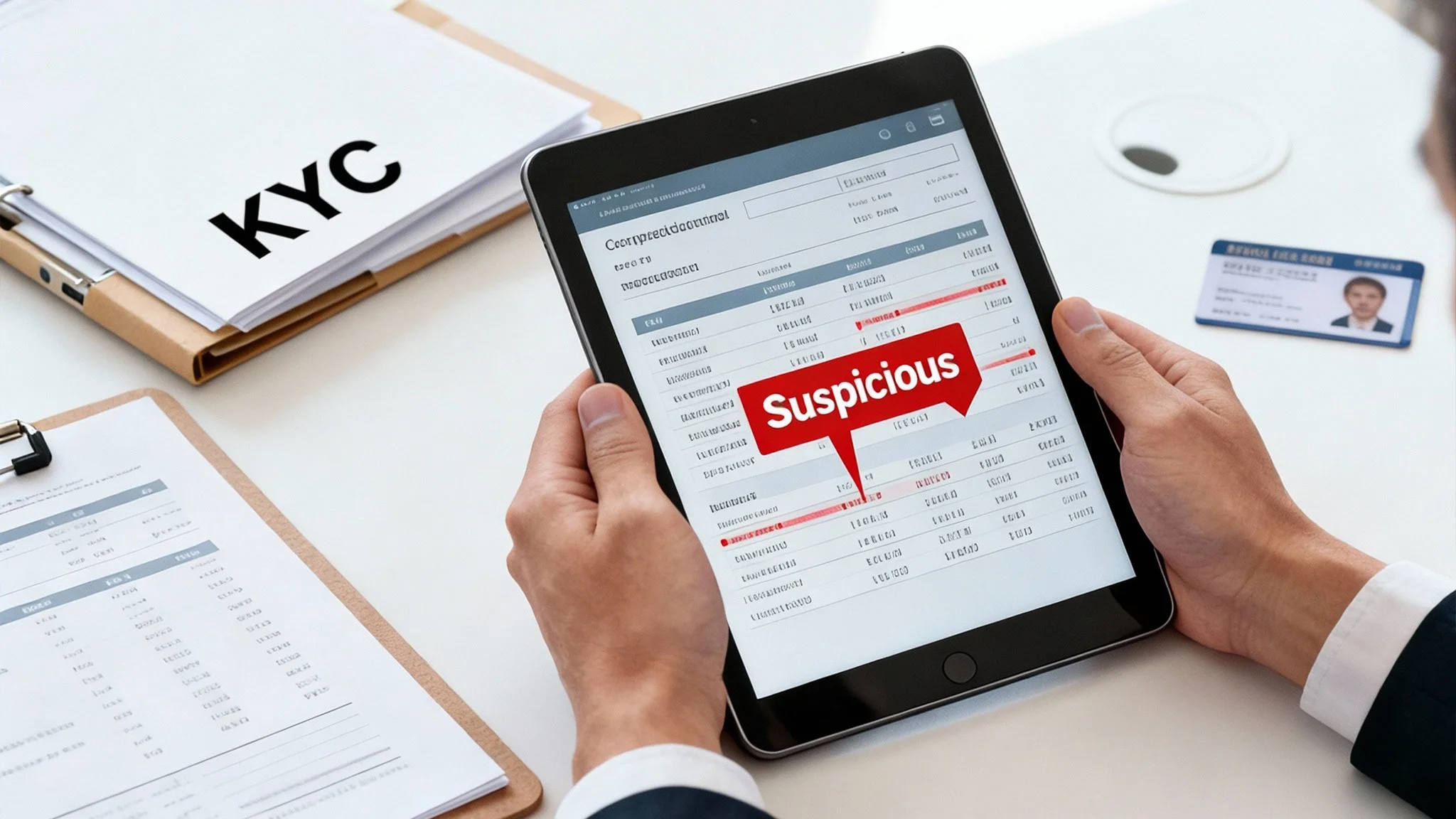
AML and KYC reviews can lead to requests for information or transaction restrictions, depending on the specific facts and legal process.
Suspicious Activity Is a Risk Signal, Not an Automatic Freeze
Factors that can lead to additional review include transaction activity that does not fit the company’s stated business profile, unexplained source-of-funds changes, inconsistent ownership or customer information, sanctions exposure, or transactions involving higher-risk countries or counterparties. None of these should be described as a universal automatic-freeze rule; banks apply a risk-based assessment and may request additional information.
MASAK Transaction Suspension Under Article 19/A
Turkey’s Law No. 5549, Article 19/A creates a separate mechanism for specific attempted or ongoing transactions where the assets are suspected to be connected with money laundering or terrorist financing. Under this mechanism, the relevant transaction may be suspended or prevented from being completed for up to seven business days so the suspicion can be verified and analysed. This is different from saying that every suspicious transaction report creates an indefinite freeze over the whole bank account.
See the official MASAK text of Law No. 5549 and the Regulation on Delaying Transactions.
KYC Updates Can Restrict Access, but the Outcome Is Bank-Specific
Banks must keep customer-identification and ownership information current and, under the ongoing-monitoring framework, assess whether transactions remain consistent with the customer’s business, financial position, risk profile and known source of funds. A change in registered address, managers, authorised signatories, beneficial owners or identity documents can therefore trigger a request for updated evidence.
Do not describe every missing document as an automatic whole-account freeze. However, current MASAK guidance is also clear that where required customer-identification information cannot be brought into compliance, the obliged institution cannot carry out requested transactions, including non-face-to-face requests, until the identification deficiency is resolved. The exact operational restriction still depends on what information is missing and the legal/compliance basis.
For the account-opening side of the process, see our business bank account guide for foreign-owned Turkish companies. For application-stage rejection and escalation factors, see why Turkish banks reject or escalate foreign account applications.
External Legal Measures Are Not the Same as Bank Compliance Restrictions
A bank may also restrict access to funds because it has received an enforceable order or attachment from an external authority. In that situation, the bank is implementing the relevant legal measure; it is not making an ordinary AML risk decision about the customer.
Court, Prosecutor and Enforcement Measures
The exact legal route depends on the underlying proceeding. A court, prosecutor or enforcement office may impose or communicate a measure affecting funds, and the bank must act within the scope of the order it receives. The company should identify the issuing authority, case or enforcement-file reference, amount and scope before deciding what to do next.
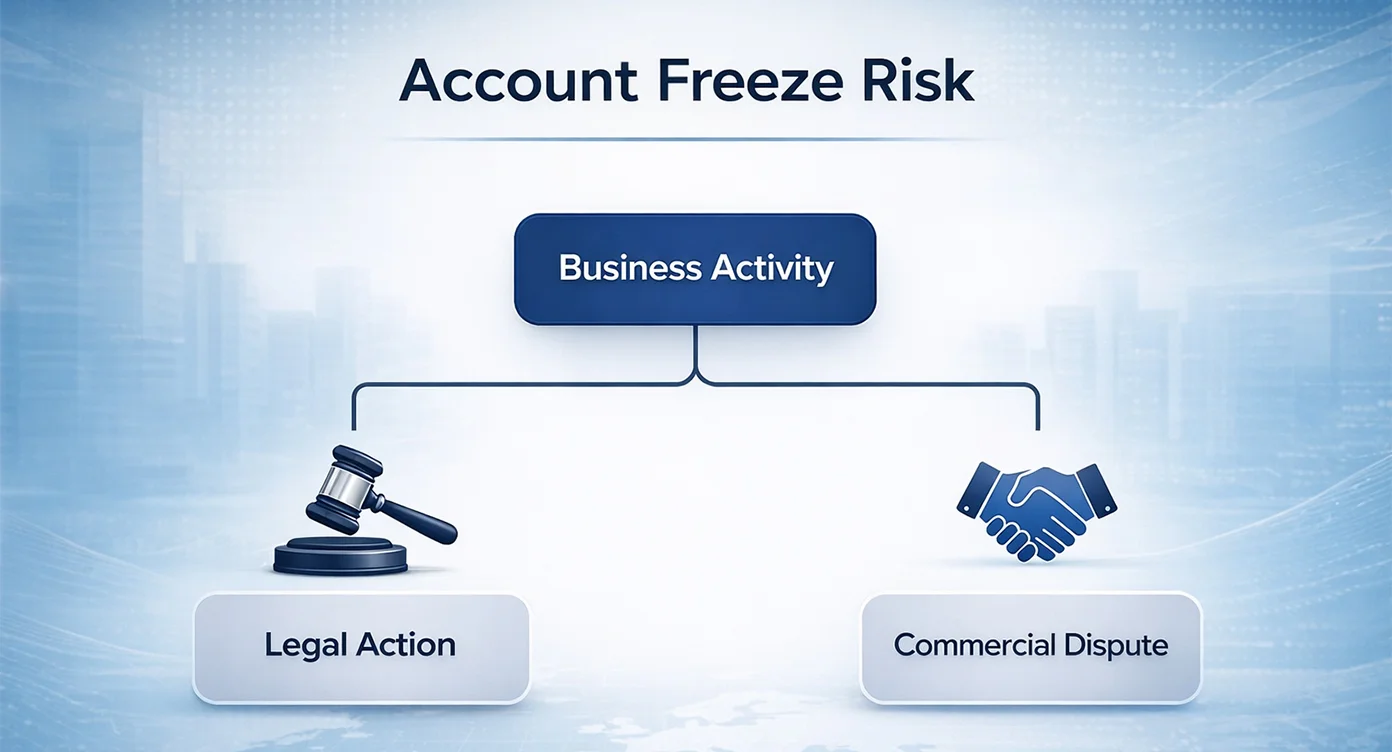
External legal measures affecting a bank account require a different response from ordinary bank KYC reviews.
Tax e-Haciz for Unpaid Public Receivables
Turkey’s Revenue Administration uses the e-Haciz infrastructure for certain collection measures under Law No. 6183 on the Collection Procedure of Public Receivables. For bank accounts, the system allows attachment notices that would otherwise be served on paper to be communicated electronically to participating institutions. This is a tax-collection mechanism, not a bank’s own AML freeze.
See the official GİB description of e-Haciz applications.
Dishonoured Cheques and Other Debts
A dishonoured cheque or unpaid commercial debt can create serious legal and enforcement consequences, but it should not be described as a rule that automatically freezes every company bank account. The actual consequence depends on the legal and enforcement steps taken in the specific case.
Chargebacks Usually Belong to the Merchant-Acquiring Relationship
High chargebacks can cause an acquiring bank or payment provider to apply reserves, delay settlements, request evidence, limit card acceptance or terminate the merchant relationship under its risk rules. That is different from saying that the company’s ordinary corporate bank account will automatically be frozen. Keep the merchant-acquiring issue separate from the company-account restriction unless the bank has expressly connected them.
What to Do When a Company Account Is Restricted
The fastest useful response is diagnosis, not a generic “unfreeze request.” Determine whether the restriction is bank-led, transaction-specific, tax-related or based on an external legal order before choosing the next step.
Step 1: Ask What the Bank Can Lawfully Disclose
Contact the bank through the appropriate business-banking channel and confirm which functions or transactions are restricted. Ask whether there is an external authority, file/reference number or document request that the bank is permitted to disclose. Be prepared to verify that you are an authorised representative.
In an AML review, the bank may be legally unable to disclose every detail. The practical objective is to obtain the information it can provide and respond accurately, not to force disclosure of protected information.
Step 2: Build the Evidence File for the Actual Restriction
- Bank KYC / compliance request: current company records, authorised-signatory and UBO information, identity documents, contracts, invoices, source-of-funds evidence and documents explaining the commercial purpose of the relevant transactions, as requested.
- Tax e-haciz: verify the underlying public receivable, the competent tax office and the scope of the attachment. Ordinary KYC documents do not resolve a tax attachment.
- Court / prosecutor / enforcement measure: identify the authority, case or enforcement-file reference and the scope of the measure. A licensed lawyer may need to review the legal route.
- Merchant reserve / chargeback issue: prepare fulfilment, refund, fraud-control and dispute evidence for the acquiring bank or payment provider.
Submit only relevant, consistent evidence. A large file of unrelated documents can make the review harder rather than easier.
Step 3: Use the Correct Resolution Channel
- Bank-led restriction: respond through the bank’s requested channel and keep the explanation consistent with the company’s actual business activity and transaction evidence.
- External legal measure: do not treat it as a bank-service complaint. Identify the issuing authority and obtain qualified legal support where required.
- Tax attachment: verify and address the public-receivable issue with the competent authority or authorised adviser.
- Merchant-acquiring restriction: resolve the acquiring/provider risk issue rather than assuming the ordinary company account itself is frozen.
Opening another bank account is not a substitute for resolving the underlying issue. A new bank will perform its own KYC and risk assessment, and an external legal or tax measure may follow the applicable legal process independently of the original bank.
How to Reduce Avoidable Account-Restriction Risk
No company can guarantee that an account will never be reviewed or restricted. The useful objective is to reduce avoidable friction by keeping corporate/KYC information current, maintaining transaction evidence and responding promptly to legitimate bank requests.
Keep Corporate and KYC Information Current
Material changes in the company’s legal address, managers, authorised signatories, shareholders or ultimate beneficial owners can require the bank’s records to be updated. Identity documents and other evidence requested by the bank should also remain current.
Do not assume every change produces an automatic freeze. Stale or inconsistent information can instead trigger additional review or prevent the bank from completing required customer-due-diligence checks.
- Corporate records: keep material manager, signatory, shareholder, UBO and registered-address changes aligned with the bank’s requested records.
- Identity evidence: replace expired or superseded identification documents when required.
- Commercial evidence: retain contracts, invoices and other records that explain material payments and counterparties.

Simplify your business setup with Workon’s all-in-one company registration service in Turkey.
Keep the Bank’s View of Your Business Accurate
If the bank asks about a material change in transaction profile, new counterparties, funding sources or business activity, provide clear commercial context and supporting documents. Do not assume that advance notice of a large transaction guarantees that no review will occur.
For foreign-owned Turkish companies, practical friction often arises when a transaction is commercially legitimate but the bank lacks enough context about ownership, counterparties, invoices, contracts or the purpose of funds. Keeping those records organised can make a later review more efficient, although it does not guarantee approval or uninterrupted account access.
Practical Account-Readiness Checklist
- Keep company, signatory and UBO information consistent with the bank’s records.
- Maintain valid identity documents and the corporate records the bank has requested.
- Retain contracts, invoices and transaction evidence for material incoming and outgoing payments.
- Reconcile bank activity with company records and investigate unexplained entries promptly.
- Monitor chargebacks and merchant disputes separately from ordinary corporate-account activity.
- When the company’s business model, ownership or transaction profile changes materially, be ready to explain the change with supporting evidence if the bank asks.
These steps reduce avoidable documentation and consistency problems; they cannot guarantee that a bank, authority or payment provider will never review or restrict an account.
Where Workon Fits in the Process
For foreign founders and international companies operating in Turkey, Workon can help coordinate the operational side of a banking file: company and KYC-document preparation, transaction-support documents and the wider business setup context around the account. Once an account has been opened, account-specific bank communication, instructions and access normally must be handled directly by the company’s authorised account holder or signatory; Workon cannot access private bank information on the client’s behalf. Workon does not control a bank’s compliance decision or guarantee that a restriction will be lifted.
If the issue comes from a court, enforcement, prosecutor or tax measure, the relevant legal or regulated professional should handle that part of the process. Workon’s role is operational coordination rather than replacing legal advice or an authority’s decision.
If your company is still at the account-opening stage rather than dealing with an active restriction, see Workon’s business bank account application support.
Official Reference Points
Frequently Asked Questions
Different mechanisms can cause restrictions: a bank-led KYC or transaction review, a specific AML transaction hold, a court or enforcement order, a tax e-haciz, or a separate merchant-acquiring reserve or chargeback control. The correct response depends on who imposed the restriction and what exactly is affected.
There is no reliable universal duration. A bank compliance review, a specific AML transaction suspension, a court or enforcement measure and a tax attachment each follow different rules and decision-makers. For the Article 19\/A AML mechanism described in this guide, the specific transaction can be delayed for up to seven business days; that should not be confused with every kind of account restriction.
Yes, depending on the missing information and legal basis. MASAK requires obliged institutions to keep customer information current, and where required identification information cannot be brought into compliance the institution cannot carry out requested transactions until the deficiency is resolved. That is different from saying every stale document automatically freezes the entire account.
Potentially yes. Banks can be limited in what they may disclose during AML or other protected compliance processes, and external legal orders can require action within their scope. The company should ask what the bank is lawfully able to disclose and identify whether the issue is bank-led or imposed by an external authority.
No. A new bank will perform its own KYC and risk review, and an external court, enforcement or tax measure can continue under its legal process. The underlying cause should be diagnosed rather than treating a new account as a workaround.
Identify the affected functions or transaction, ask whether the bank can provide a reference or document request, and determine whether the restriction is KYC-related, transaction-specific, tax-related, court or enforcement based, or a merchant-acquiring issue. Then build the evidence or legal response for that specific category.
No. Workon can coordinate company, KYC and transaction-support documentation and bank communication within the agreed scope, but the bank, court, enforcement office, tax authority or other competent actor controls the underlying decision. Legal or tax measures should be handled with the appropriate licensed professional.
Disclaimer: This article provides general information about company bank-account restrictions, AML/KYC reviews, transaction holds and legal or tax attachments in Turkey as of September 2026 and is not legal, banking, compliance, tax or financial advice. The correct response depends on who imposed the restriction, the legal basis, the affected transaction or amount, and the company’s specific facts. Confirm material steps with the bank and, where relevant, a qualified Turkish lawyer, tax professional or other authorised adviser.