Starting a logistics company in Istanbul begins with the operating model, not with one generic transport licence. Turkey’s road-transport framework uses different Ministry of Transport and Infrastructure (UAB) authorisation certificates for different activities. A company that carries goods with its own/commercial fleet, runs a logistics operation, organises transport for customers, operates cargo/distribution services or only warehouses goods can fall under different rules.
The practical 2026 sequence is: define the logistics activity → map the correct UAB authorisation → choose company form/activity scope → test capital/fleet/premises/professional-competence conditions for that certificate → register the company → complete the UAB application → set up U-ETDS and operational systems where applicable → coordinate customs/warehouse/special-cargo permissions separately → launch only within the authorised scope.
Last reviewed: 17 September 2026. The certificate-family and U-ETDS references below were rechecked against current Ministry of Transport and Infrastructure (UAB) sources.
This guide is for the operator establishing a logistics business. If you need to buy freight, warehousing or fulfilment services instead, use the Istanbul logistics-partner selection guide. If the company will buy and sell goods while outsourcing their transport, use the import-export company setup guide for the trading operation.
Quick Answer: Which Logistics Authorisation Fits the Business?
| Operating model |
Main UAB route to investigate |
Key distinction |
| Domestic logistics operator |
L1 |
UAB defines L1 for domestic logistics operations. |
| International + domestic logistics operator |
L2 |
UAB defines L2 for international and domestic logistics operations. |
| Transport organiser / freight-forwarding type activity |
TİO |
Organises carriage commercially under the TİO framework; it is not the same certificate as L1/L2. |
| Commercial road freight carrier |
K/C-type route depending activity/geography |
Carrier authorisation depends on whether the company physically carries goods, route and vehicle model. |
| Cargo operator |
M-type |
Scheduled commercial cargo activity. |
| Freight warehouse / depot operator |
N-type |
Commercial freight-depot activity. |
| Distribution operator |
P-type |
Commercial distribution activity. |
| Goods terminal operator |
T3 |
Terminal operation rather than ordinary logistics/carriage. |
UAB’s current Istanbul Regional Directorate page confirms the certificate families and defines L1 as domestic logistics and L2 as international and domestic logistics. The Ministry also maintains a separate live TİO authorisation and e-Government verification route.
Official starting points: UAB Istanbul — Goods Transport Authorisation Types and UAB — TİO.
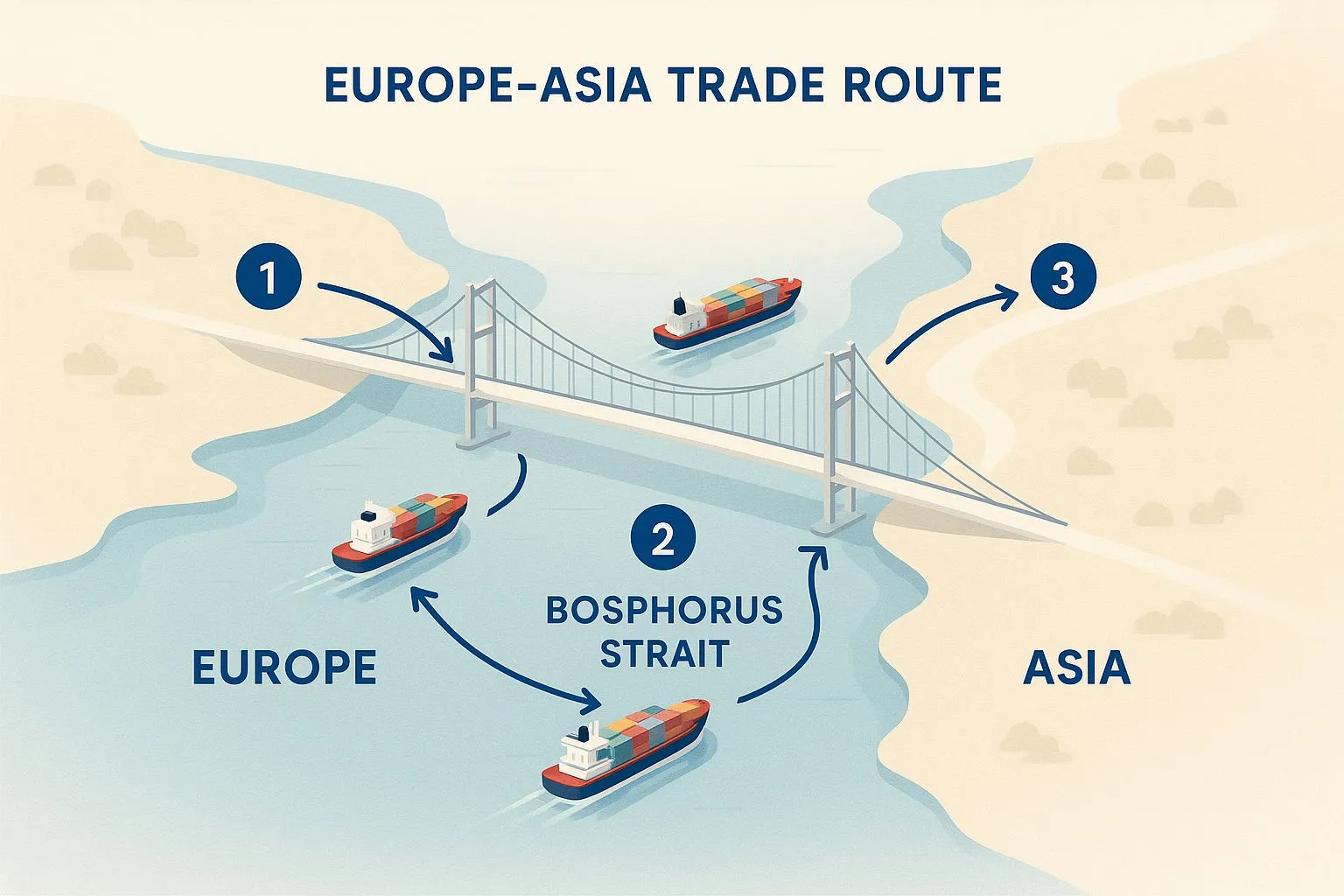
Istanbul can be an operational hub, but the transport authorisation itself is determined by the activity under Turkey-wide UAB rules.
1. Company Registration Is Not a Transport Authorisation
A Turkish Ltd. Şti. or A.Ş. can be established with logistics/transport-related activities in its articles, but Trade Registry registration does not by itself authorise the company to perform regulated road-transport, logistics, cargo, distribution or transport-organiser activity.
Keep two workstreams separate:
- Corporate setup: shareholders, legal form, articles/NACE, registered address, Trade Registry, tax and banking.
- Operational authorisation: exact UAB certificate, fleet/premises/capital/professional-competence conditions, application and ongoing reporting.
Use Company Formation in Turkey: 2026 Guide for the corporate layer.
2. L1 vs L2: Domestic or International Logistics?
UAB currently defines:
- L1: for those carrying out domestic logistics operations;
- L2: for those carrying out international and domestic logistics operations.
Do not choose L1/L2 merely because the brand calls itself a “3PL.” Review what the company actually undertakes for the customer, whether it operates transport vehicles, geography of carriage, warehousing/handling model and whether another certificate family is a better legal fit.
Certificate-specific fleet, capacity, premises, capital and professional-competence requirements can be amended. Verify the current regulation and UAB application requirements immediately before committing to vehicles, warehouse space or paid-in capital instead of copying old numeric tables from third-party guides.
3. TİO: Transport Organisation Is a Separate Activity
A Taşıma İşleri Organizatörü (TİO) commercially organises the carriage of goods under the TİO Regulation. UAB states that persons within this activity must obtain the Ministry’s TİO authorisation.
This route is relevant when the business model centres on organising carriage and coordinating carriers/modes rather than simply operating its own logistics fleet. TİO has its own application documents, professional-competence framework, registered centre/branch obligations and Ministry verification list.
Before choosing TİO, map:
- who contracts with the shipper;
- who assumes responsibility for organising the carriage;
- which carrier actually transports the goods;
- whether multiple transport modes are coordinated;
- how freight charges and subcontractors are invoiced;
- which professional-competence roles are required;
- whether the company also carries goods under a separate authorisation.
4. K, M, N and P Certificates Cover Different Operations
A startup should not be told that “K1 is the logistics licence.” UAB’s framework distinguishes several operating models.
| Certificate family |
Core activity |
| K |
Specified commercial/private road-goods carriage activities; K1/K2/K3 have different purposes. |
| M |
Scheduled commercial cargo operations. |
| N |
Commercial freight-depot / nakliyat ambarı operations. |
| P |
Commercial distribution operations. |
| L |
Logistics operations. |
| TİO |
Transport organisation. |
The correct certificate depends on substance. A company can also have multiple operational layers, but each should be tested against the current regulation rather than assumed from a marketing description.
5. U-ETDS Can Be an Ongoing Compliance Requirement
The Ministry’s U-ETDS system imposes electronic reporting obligations on specified transport/logistics operators. UAB’s current U-ETDS guidance separately identifies carriers and L1/L2 logistics operators and specifies the information to be transmitted for covered activities.
For an authorised operator, operational readiness should therefore include:
- customer/sender/recipient data capture;
- vehicle/driver records where applicable;
- loading/unloading and shipment data;
- integration or portal workflow;
- data-quality controls;
- staff responsibility for timely reporting;
- privacy/KVKK handling of personal data.
Official source: UAB U-ETDS — Goods Transport.
6. Customs Brokerage Is Not Automatically Included
A logistics company can coordinate shipments, documents, warehouses and licensed service providers, but it should not present itself as automatically authorised to perform regulated customs-broker / customs consultancy functions merely because it operates in logistics.
For imports/exports, map the roles clearly:
- importer/exporter of record;
- carrier;
- TİO / transport organiser;
- warehouse operator;
- licensed customs broker;
- product-conformity / inspection representative;
- port/terminal operator.
Use appropriately licensed customs professionals for the regulated customs-clearance role. For a high-level trade workflow, see Customs Clearance in Turkey.
7. Istanbul Location Strategy: Choose the Node From the Freight Flow
Istanbul’s value is operational, not a separate licence regime. Choose premises from the actual freight flow.
| Operational need |
Location question |
| Sea freight |
Which port/terminal and customs/warehouse corridor handles the target cargo? |
| Air cargo |
Does proximity to Istanbul Airport or Sabiha Gökçen materially reduce transit/handling time? |
| European road freight |
How quickly can vehicles access TEM/O-3/O-7 and border-bound corridors? |
| Anatolian distribution |
Which bridge/motorway and Asian-side hub minimises cross-city congestion? |
| Warehousing |
Is the property zoned/suitable for storage, vehicle access, loading, fire and activity-specific requirements? |
| Last-mile |
Where are the customer-density zones and can micro-hubs reduce urban delivery time? |
A prestigious office address is secondary to vehicle access, warehouse suitability, customer geography, labour and licence/premises compliance when the business physically handles freight.

For a physical logistics operation, warehouse and network location should follow the freight flow and premises requirements.
8. Fleet Strategy Follows the Authorisation and Contract Model
Do not decide “buy vs lease” before understanding the licence conditions and service contract. Depending on the activity, fleet ownership/usage, vehicle registration, capacity and age/class requirements can affect eligibility and operations.
Model:
- owned vs leased/contracted vehicles;
- domestic vs international routes;
- vehicle class and cargo type;
- insurance;
- driver qualifications;
- maintenance/downtime;
- fuel/tolls;
- seasonality;
- subcontractor controls;
- licence/fleet registration requirements.
An asset-light TİO/organiser model and an L1/L2 fleet-heavy logistics model can have very different capital and risk profiles.
9. Special Cargo Can Trigger Additional Rules
The base transport certificate may not be the end of the compliance analysis. Additional rules can apply to:
- dangerous goods;
- food/cold chain;
- pharmaceuticals/medical products;
- waste;
- live animals;
- oversized/heavy cargo;
- postal/courier-type activity;
- airport/port restricted zones;
- bonded/customs warehouses.
Classify the cargo before buying specialised vehicles or warehouse equipment.
10. Technology: Build Around Compliance and Customer Visibility
TMS/WMS/GPS tools can improve efficiency, but the minimum useful stack depends on the operating model. Prioritise systems that support:
- order/booking management;
- route and capacity planning;
- carrier/subcontractor records;
- shipment status and proof of delivery;
- U-ETDS data where applicable;
- warehouse inventory if storage is provided;
- customer portals/APIs;
- costing and invoicing;
- driver/vehicle compliance records;
- incident/claims management.
A technology claim such as “20% more deliveries per shift” should not be published without data from the company’s own measured operations.
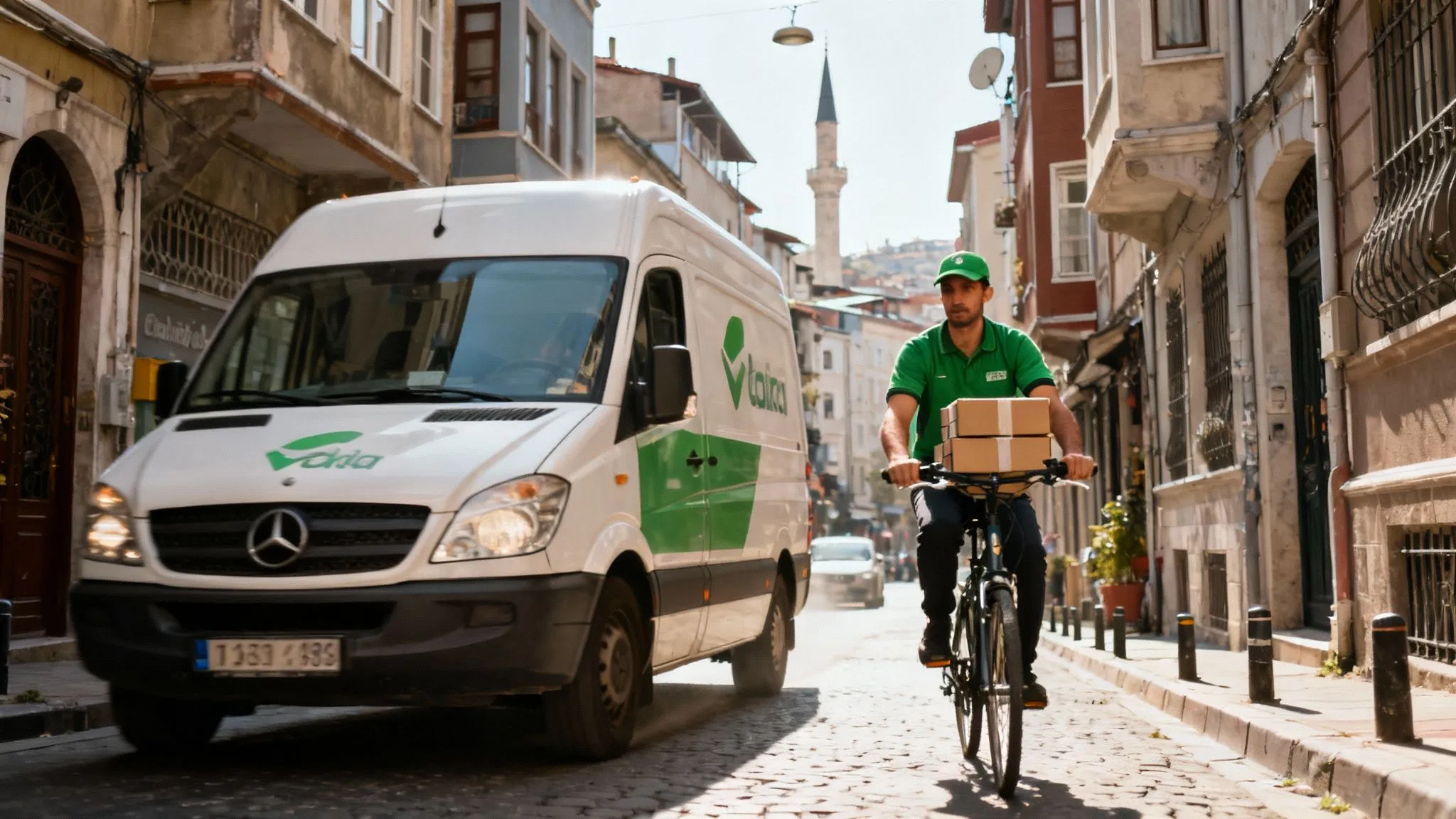
Last-mile performance depends on network design, compliance and data—not only on adding more vehicles.
11. Bank, Insurance and Working Capital
Company registration does not guarantee a bank account, credit line, vehicle finance or insurance approval. Logistics businesses often have meaningful working-capital exposure because fuel, payroll, tolls, carriers and customs/terminal-related costs can fall due before customers pay.
Build a cash-flow model for:
- customer payment terms;
- carrier/subcontractor payment timing;
- fuel/toll/driver payroll;
- warehouse rent and deposits;
- vehicle lease/finance;
- insurance;
- licence and compliance costs;
- FX exposure on international freight;
- claims/damage reserves.
For banking, see Business Bank Account in Turkey.
12. Pre-Launch GO / FIX / STOP Test
| Status |
Meaning |
| GO |
Activity is classified; the correct UAB certificate is identified; company, fleet/premises, professional-competence, U-ETDS, banking and cargo-specific requirements are mapped. |
| FIX |
The commercial model works but licence category, warehouse suitability, fleet, professional competence, customs role or data integration needs resolution. |
| STOP / RECLASSIFY |
The planned company is relying on the wrong certificate—for example using K1 as a substitute for an L/TİO activity—or intends to perform regulated customs/other services without the required professional authority. |

Workon can coordinate the Turkish company and business-readiness layer; UAB and other competent authorities control the sector authorisations.
How Workon Can Support the Setup
Workon can coordinate Turkish company formation, foreign shareholder documents, registered-address/workspace planning, bank-account application support and the operational workstreams with appropriately licensed transport, customs, legal, tax and technical professionals where required. UAB and other competent authorities retain the final decision on sector authorisations, while bank approval remains subject to the selected bank’s KYC and risk procedures.
Key Takeaways
- There is no single “logistics licence” for every Istanbul logistics business.
- L1 = domestic logistics; L2 = international and domestic logistics under the current UAB framework.
- TİO is a separate transport-organisation authorisation, not another name for L1/L2.
- K, M, N and P certificates cover different carriage/cargo/depot/distribution activities.
- Company registration does not itself authorise regulated transport operations.
- U-ETDS can create ongoing electronic reporting duties for covered operators including L1/L2.
- Customs brokerage is a separate regulated professional function.
- Istanbul-specific strategy should focus on ports, airports, warehouses, roads, customers and delivery density; licensing is Turkey-wide.
- Verify current certificate-specific fleet, capital, premises and professional-competence thresholds immediately before filing.
No. Turkey’s road-transport framework uses different UAB authorisations for different activities, including L1\/L2 logistics, TİO transport organisation and separate carrier, cargo, depot, distribution or terminal categories. The correct route depends on what the company actually undertakes for customers.
UAB defines L1 for domestic logistics operations and L2 for international plus domestic logistics operations. TİO is a separate authorisation for commercially organising carriage and should not be treated as another name for L1 or L2.
No. Trade Registry registration creates the company, but the relevant UAB authorisation, fleet or premises conditions, professional competence and other operating requirements must be completed separately before regulated activity begins.
No. Customs representation is a separate regulated professional function. A carrier, forwarder, warehouse or logistics provider can coordinate customs work, but the licensed customs-broker role must be identified and performed within the applicable professional framework.
The UAB authorisation framework is national. Istanbul-specific planning mainly concerns the operating network—ports, airports, roads, customers, warehousing, vehicle access and premises suitability—not a separate city licensing regime.
First classify the activity and required authorisation, then verify current fleet, capital, premises and professional-competence conditions, U-ETDS reporting, cargo-specific rules, warehouse suitability, insurance, working capital and the customs or subcontractor roles. Numeric thresholds should be checked against the live UAB rules before committing.
Current-rule note — 17 September 2026: UAB certificate categories, fleet/capacity, capital, premises, professional-competence, U-ETDS and cargo-specific requirements can change and depend on the exact activity. Confirm the current route with UAB before acquiring vehicles or premises, signing customer contracts or starting operations. Workon can coordinate the company-setup and operational-readiness workstreams and, where regulated transport, customs, legal, tax or technical work is required, coordinate with the appropriately licensed professionals; final authorisations remain with the competent authorities.