Virtual Office Tax Office Verification in Turkey: Yoklama Guide 2026
14.07.2026
A virtual office address in Turkey can support company registration, but the important compliance question comes after the address is entered into the company file: can the address be verified consistently across MERSİS, the tax record and the provider’s supporting documents?
For foreign founders, this guide focuses specifically on that verification stage. MERSİS uses address data integrated with the National Address Database (UAVT), while the tax administration may carry out an electronic yoklama at the taxpayer’s premises after the tax liability is established. These are related parts of the setup, but they are not the same procedure.
The practical objective is not simply to find the cheapest address. It is to use a registered address that is correctly recorded, supported by a clear right-to-use arrangement, capable of receiving official correspondence, and operationally ready if the tax office needs to verify the business at that location.
Why Activity Fit Matters During Virtual-Office Address Verification
A registered business address is part of the company and tax record, so the practical issue is whether the exact address and right-to-use arrangement can be documented consistently and used for official correspondence and any verification that applies.
At the verification stage, the useful question is no longer whether a virtual office is commercially attractive. The question is whether the chosen arrangement creates a coherent evidence trail: the exact official address, the company’s right to use it, the provider’s authority where relevant, the declared business activity and a reliable premises-side process for official contact.
For this verification stage, the key controls are the underlying premises documentation, official-mail process, activity fit and tax-office readiness. If you are still choosing between physical, shared, home and virtual address models, use the registered business address options guide; the comparison below is limited to how each premises model changes the verification file.
How the Premises Model Changes the Verification File
Premises model
Evidence to keep consistent
Main verification risk
Virtual / serviced office
Exact official address, company right-to-use agreement, provider authority where relevant, declared activity and premises-side contact process
The package exists, but the company cannot clearly substantiate use of the exact premises or the activity does not fit the model
Dedicated leased office
Exact address, lease/right of use, company records, declared activity and any premises-specific licences
The lease or operating site does not match the address/activity represented in the company and tax records
Home / owned premises
Ownership or right-of-use evidence, exact official address, activity compatibility and any building/residential restrictions that matter
The property can be identified but the actual business use is incompatible with the premises or supporting rights
The purpose of this comparison is evidentiary, not commercial. Whichever premises model is used, the company should be able to explain the exact address, its right to use it, the real activity carried out there and the records that support those facts.
Verification Should Follow the Real Operating Model
A desk-based business with no stock, production, regular walk-in customers or premises-specific licence can have a different verification file from a company that operates staff, equipment, storage or regulated activity on site. The point is not to rank office types; it is to make sure the declared headquarters and the real activity tell the same story.
If the company’s activity later creates a need for dedicated or additional operating premises, resolve that premises requirement directly and complete any necessary address/workplace registrations. Do not use the registered headquarters as a substitute for an operating site that must separately satisfy municipal or sector rules.
Verification rule: the address, right of use, declared activity and premises-side evidence should remain mutually consistent from registration through tax-office follow-up.
What Turkish Rules Actually Require From a Registered Address
Turkish legislation does not create a blanket statutory category that makes every product marketed as a “virtual office” automatically acceptable for every business. The company instead needs a registered headquarters address that can be entered correctly in the relevant registry and tax records, supported by a genuine right to use the premises, and compatible with the company’s actual activity.
For companies using MERSİS, the Ministry of Trade states that address fields used for incorporation and address changes are retrieved from the National Address Database (UAVT), and free-form address entry is not permitted. This is intended to keep the registered address identifiable, real and correctly recorded.
Virtual office addresses in Turkey must be supported by valid agreements and documentation suitable for company registration.
What makes the address verifiable
There is no single provider-issued document that should be described as universally decisive for every entity, activity and tax office. What matters is whether the company can substantiate its right to use the exact address and whether the supporting file is consistent with the company’s legal form and actual activity.
Depending on the arrangement, the file may include a lease, serviced-office or address-use agreement together with provider-side evidence showing control of the premises and authority to permit the company’s use of it. The exact documents should be confirmed for the specific registration and tax process before filing.
A mailing address is not automatically the same thing as a registered business address. The registered address must be the exact address used in the company’s official records and must be capable of supporting official correspondence and any verification that applies to the taxpayer.
Why the label “virtual office” is not the legal test
The legal and tax question is not whether the provider calls the product a virtual office. The relevant questions are whether the premises are real and identifiable, whether the company has a valid right to use the address, whether the arrangement is compatible with the declared activity and any premises-specific rules, and whether the company can be reached or verified through the address when required.
This is especially important for activities that need customer access, employees, storage, equipment, municipal licensing or another regulated operating site. A virtual or serviced address can be practical for many remote service businesses, but it should not be used to disguise an operational location that must be separately licensed or registered.
Before signing, ask whether the exact address, contract, provider authority, mail process and your real business activity will still make sense when the company file is reviewed after registration.
Resolve Conflicting Address Evidence Before the Review
If the agreement, company records and description of the activity refer to different premises, identify the source of the mismatch before providing further documents. Keep the original request, the corrected evidence and the person responsible for responding together. Choosing a different office model is a separate decision covered by the registered-address comparison; the task here is to substantiate the premises actually declared.
Prepare the Address Evidence Before Tax-Office Verification
Address-file consistency matters when the contract, premises evidence, declared activity and official records are used together. The best approach is to validate the address file before incorporation or tax registration so the selected virtual-office arrangement is aligned with the later verification steps from the beginning.
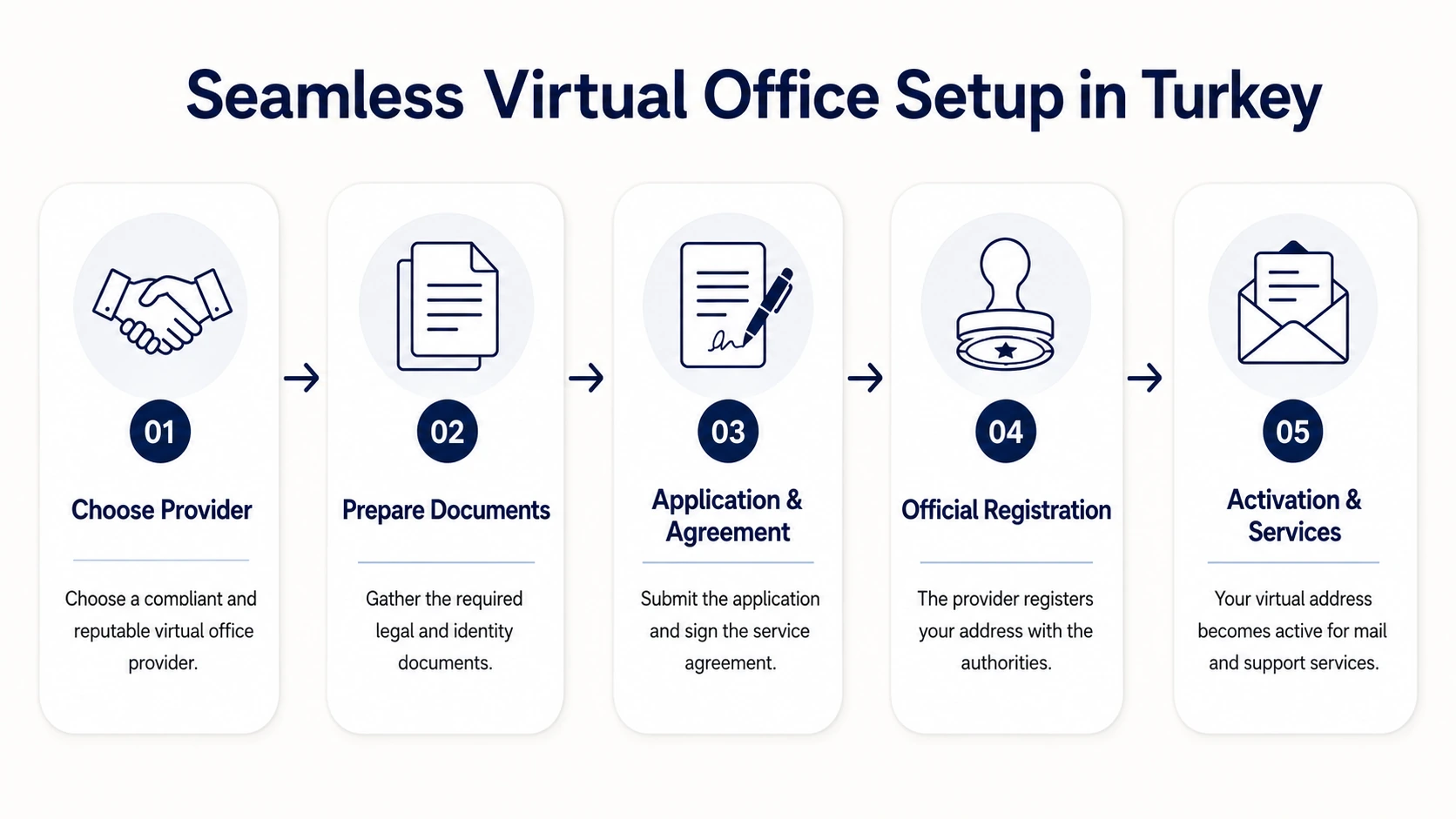
A straightforward visual summary helps before you start:
The virtual office setup process includes provider selection, document preparation, agreement signing, official registration and service activation.
Step 1 Choose the provider based on the address file, not the district
The first decision is whether the provider can substantiate its authority over the premises and give your business a clear contractual right to use the exact registered address.
For a sole proprietor or company, ask to see the proposed agreement and the supporting premises documents relevant to the actual setup. There is no single provider-issued “workplace usage certificate” that should be treated as universally decisive. Before discussing price, confirm the exact address, provider authority, right-to-use wording and official-mail procedure.
If you are already operating and plan to move your registered office later, the process changes. Review the rules for changing a company address in Turkey before signing a new agreement, because an address change triggers separate filings and notifications.
Step 2 Build the file that will be checked, not just the file that will be sold
The required evidence depends on the legal form, activity, provider arrangement and receiving authority. Do not copy a universal checklist from a provider brochure.
For a sole proprietorship or company using a virtual or serviced address, the file commonly needs to establish:
Identity and taxpayer/company information: the documents required for the relevant registration path;
Exact registered address: consistent address data in the official records;
Right to use the premises: the signed lease, serviced-office or address-use agreement applicable to the arrangement;
Provider-side premises evidence: documents showing the provider’s control of the premises and authority to grant the relevant use, where required for the specific filing or verification.
Ask which documents will be available for your exact legal form and activity before filing.
That one step makes provider comparison much clearer. Prefer a provider that can show the relevant sample paperwork, explain the verification workflow clearly and coordinate the address file with the company’s accountant where needed.
Simplify your business setup with Workon’s all-in-one company registration service in Turkey.
Keep company formation and tax-office verification in the correct order
For a company, the registered headquarters is first used in the applicable MERSİS/Trade Registry formation process. After taxpayer status is established, GİB may then carry out commencement-of-business yoklama. A sole proprietorship follows a different registration path, so the same sequence should not be copied mechanically across business forms.
The address data and supporting premises file should remain consistent between these stages.
Keep the address file aligned after registration
Treat the registered headquarters as an ongoing company record rather than a one-time formation field. Keep the exact premises, right-to-use documents, declared activity and official-mail process aligned after registration. Yoklama is a factual verification process focused on the taxpayer and declared business facts, so the provider’s role is to support a consistent and well-prepared address file.
Confirm the Provider’s Readiness for Authority Contact
Provider quality should be tested before the address is used in official records. The practical risk is not simply price or district prestige; it is whether the provider can document the company’s right to use the exact premises, manage official correspondence reliably and respond appropriately if the tax administration requests information or attends the address.
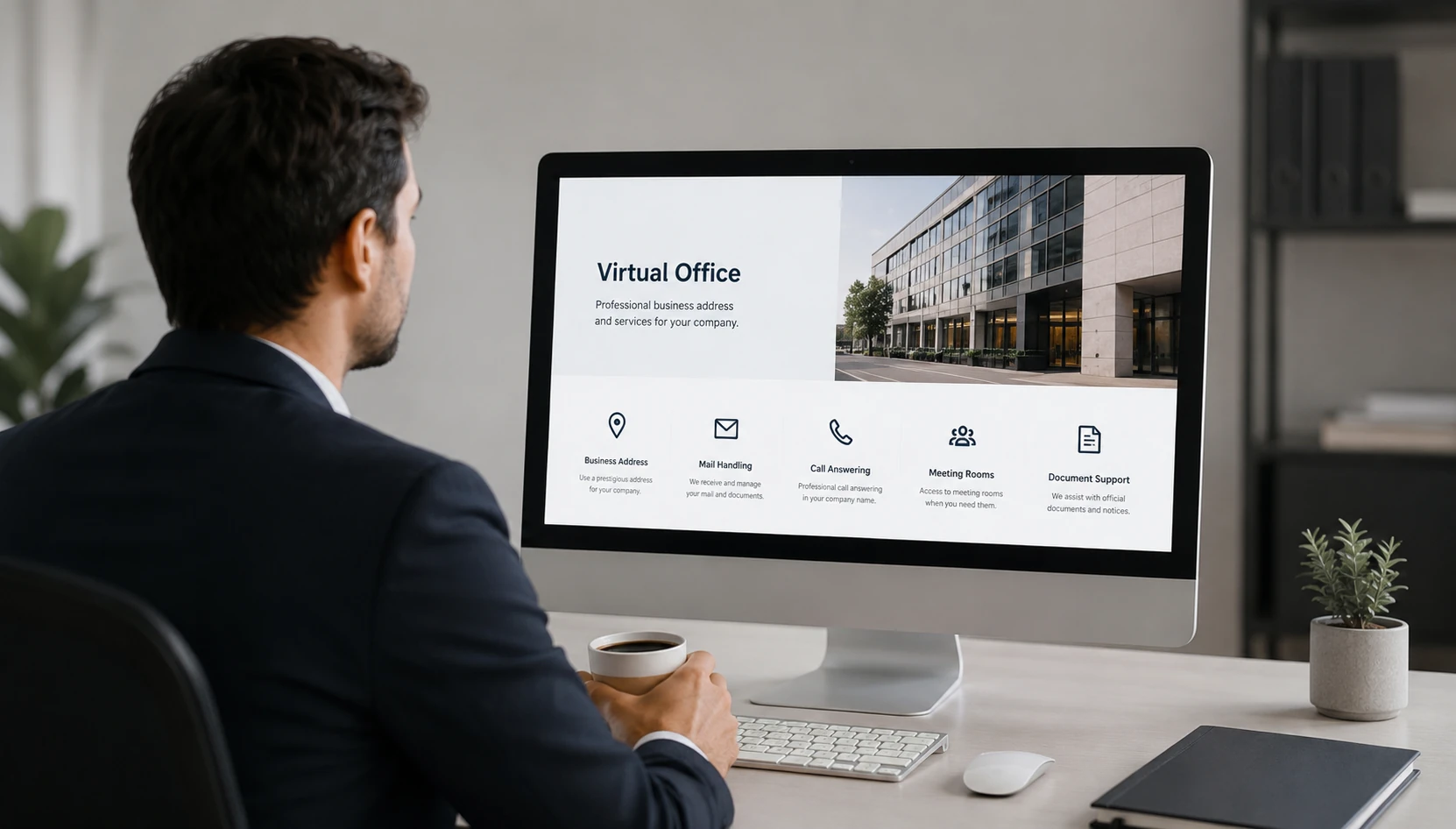
The right virtual office provider should offer a compliant business address, reliable mail handling and practical support for official processes.
For yoklama readiness, the provider-selection question is narrower than prestige, meeting-room design or city-district branding. Confirm that the company has a genuine right to use the exact premises and that the operational process can support official correspondence and authority requests.
What to verify before filing
Right to use the address: the agreement should identify the parties and exact premises and support the intended registered-headquarters use.
Supporting premises documents: confirm which documents are available for this specific arrangement rather than assuming one universal certificate.
Mail control: ask how official correspondence is logged, how the company is notified and which forwarding/scanning services are included.
Authority contact: know who the premises-side contact is if the tax administration requests information or attends the address.
Record consistency: keep the same headquarters information across MERSİS/registry records, tax records and the address-use file.
Provider location and workspace amenities may matter operationally, but they are not substitutes for yoklama readiness and are covered by the separate address-model and Istanbul provider guides.
How to prepare smoothly for yoklama
Company registration and tax-office verification are separate stages. After taxpayer registration, GİB may use yoklama to establish relevant taxpayer facts, including facts connected with the registered address and business activity.
Accurate documents, consistent company records and reliable address management help reduce avoidable virtual-office verification problems in Turkey.
What the official timeline means
GİB’s commencement-of-business guidance uses Electronic Yoklama and states a standard administrative completion period of up to 15 days after taxpayer status is established. For planning purposes, this is best treated as the official administrative framework while the exact visit and verification sequence follows the taxpayer’s file.
Keep four elements consistent
Right to use the address: retain the agreement and supporting premises documents applicable to the actual arrangement.
Business activity: the premises model should make sense for the activity; a virtual office cannot replace dedicated operational premises where sector or licence requirements call for them.
Official correspondence: know who receives documents, how arrivals are logged, and how the company is notified.
Company records: registered-address information should remain consistent across MERSİS/registry records, tax records and other company documents that use the headquarters address.
Questions to ask the provider before filing
Which agreement and supporting premises documents will be available for this specific address arrangement?
What happens if the tax office requests information or attends the address?
How is official mail logged, scanned or forwarded under the service contract?
Who is the named operational contact for an authority request?
Does the address model fit the company’s actual activity and any premises-specific requirements?
The useful question is not “Is every virtual office automatically accepted?” There is no blanket approval rule. The better question is whether the selected premises, right-to-use documentation, activity and operational process form a coherent company file.
If a virtual or serviced address fits your company’s activity, review Workon’s virtual office service in Turkey. Workon can coordinate the address service, company-setup process and the required legal, tax and other professional handoffs through appropriately licensed professionals according to the agreed scope.
Frequently Asked Questions
A virtual-office address can support the company file when the exact premises are identifiable, the company has a genuine right to use them, the activity fits the premises model and the records are consistent. The provider can support the premises-side process, but it cannot guarantee the tax administration’s findings or the exact verification sequence.
No. For a company, the headquarters address is used in the MERSIS and Trade Registry formation process. After taxpayer status is established, GIB may carry out yoklama to establish relevant facts about the taxpayer and declared business. The address and supporting evidence should remain consistent between these stages.
Prepare the documents that support the exact registered address and the company’s right to use the premises, together with provider-side premises authority evidence where relevant and any activity-specific records needed for the case. The exact file depends on the company and arrangement; this verification page does not replace the broader registered-address document checklist.
Yoklama is a factual verification process. The tax administration may check relevant taxpayer and declared-business facts, including address or premises information and supporting records where applicable. A virtual-office provider can support premises-side contact and document handling within its scope, but it does not determine or guarantee the tax administration’s findings.
No. GIB states that commencement-of-business yoklama is to be concluded within a maximum 15-day administrative period after taxpayer status is established. That rule should not be presented as a guaranteed appointment date or an identical visit sequence for every taxpayer.
Keep the exact registered address, right-to-use agreement, relevant premises evidence and declared activity consistent. Agree who handles an authority request and how official mail is logged and escalated. The provider supports the premises-side process; the company remains responsible for accurate company and business information.
Note: Last reviewed 13 September 2026. This guide explains the registered-address and tax-office verification workflow at an operational level. Workon coordinates the address and setup process with the relevant authority and appropriately licensed professionals according to the company’s activity and file.
Subscribe to Newsletter
Be notified of the latest news in the business world quickly