










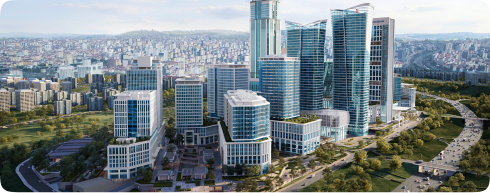


The best city in Turkey to start a business depends on what the business must physically do. Istanbul is usually the strongest choice for access to corporate customers, finance, international connections and a broad talent pool. Ankara fits government-facing, defence, health, education and regulated-technology work. Izmir suits Aegean trade, manufacturing, agrifood and coastal services. Bursa and Kocaeli are stronger for industrial supply chains; Antalya for tourism and visitor-led services; Mersin for port-linked trade and agrifood logistics; and Eskişehir for engineering, aviation, rail and university-linked talent.
Once you have shortlisted a city, use the business location validation checklist to assess the exact site, access, premises and activity requirements.
No city is “best” on every factor. A lower rent can be a false saving if customers, suppliers, licensed premises or specialist employees are elsewhere. Choose the operating model first with our best businesses to start in Turkey comparison, then select a city using real customer, talent, logistics, premises and permit evidence.
Last reviewed: 17 September 2026. City recommendations remain operating-model screens rather than rankings; current premises, labour, logistics, zoning and permit evidence should control the final choice.

Your registered address, operating premises and market location should follow the business model.
Quick answer: best Turkish city by business need
| City | Best fit | Primary advantage to test | Main trade-off |
|---|---|---|---|
| Istanbul | Corporate sales, technology, finance, creative and international services | Customer and partner density | Higher premises, hiring and travel friction |
| Ankara | Government-facing work, defence, health, education and regulated technology | Institutional and research access | Long procurement cycles and narrower consumer reach |
| Izmir | Export manufacturing, agrifood, software, tourism and Aegean trade | Port-region supply chains and talent retention | Smaller headquarters market than Istanbul |
| Bursa | Automotive, machinery, textiles and industrial services | Manufacturing supplier ecosystem | Less suitable for a general national sales headquarters |
| Kocaeli | Industrial production, chemicals, automotive and logistics | Factory and corridor proximity | Site, environmental and heavy-industry compliance |
| Antalya | Tourism, hospitality, food, agriculture and international consumer services | Visitor economy and destination demand | Seasonality and site-specific economics |
| Mersin | Port logistics, cross-border trade, warehousing and agrifood | Freight and export-route relevance | Opportunity depends on the exact corridor and commodity |
| Eskişehir | Engineering, aviation, rail, industrial technology and talent-led operations | University and specialist-industry links | Smaller local customer market |
How to Compare Cities on the Same Basis
Use the city profiles below to build a shortlist, then compare each candidate against the same operating brief: the same customer segment, headcount, required skills, shipment or travel pattern and planning period. A small shared office in one city is not a fair cost comparison with a fitted private office for a larger team in another.
For each shortlisted city, record the customer or supplier relationships it would improve, the roles you could realistically recruit, the districts or industrial zones worth examining and a comparable operating-cost estimate. Mark assumptions that still need evidence. A city can remain on the shortlist even when one property fails, and a suitable property does not by itself make the city commercially suitable.
Keep city selection and property approval separate. Once the regional shortlist is clear, use the business location validation checklist for the exact building, access, premises requirements and site-level scorecard before committing to a lease or fit-out.
Published provincial GDP and population figures are useful context but do not answer these questions. The latest full official data may also lag the current market. Use TÜİK’s provincial GDP release for macro context, then obtain current commercial evidence for the shortlist.
1. Istanbul: strongest for customer and partner density

Best for: companies that need frequent access to corporate headquarters, investors, professional advisers, international flights, specialized talent or a broad supplier and partner network.
Istanbul often wins when commercial density matters more than the lowest operating cost. B2B software, finance-related technology, international trade, creative services, consulting and regional management teams may benefit from proximity to buyers and partners. Manufacturing businesses may still keep commercial leadership in Istanbul while locating production elsewhere.
Verify before choosing: customer meeting frequency, employee commute catchment, airport access, district-level rent and building suitability. “Istanbul” is not one market: an address on the wrong side of a customer or workforce corridor can create recurring time and hiring costs.
Watch: do not pay for a central office before knowing which interactions truly require it. A compliant registered address can serve a different function from a licensed operating site; our registered business address guide explains that boundary.
2. Ankara: best for institutional and research proximity
Best for: defence and aerospace suppliers, health and education technology, research-led ventures, government-facing services and teams that regularly work with national institutions.
Ankara can outperform Istanbul when procurement, regulation, universities or technical institutions are central to the business. It also offers an established technology and research environment. The commercial case should still be based on named customers and realistic procurement timelines, not the assumption that proximity guarantees public contracts.
Verify before choosing: whether the relevant customer unit and decision-maker are actually in Ankara, security or supplier qualifications, tender requirements, technopark eligibility and the availability of specialized staff.
Watch: public and regulated-sector sales cycles can be long. Technology-zone benefits attach to eligible activity and conditions, not automatically to every company in a city. Review the current official investment-zone rules and our software and IT incentives guide before putting an incentive into the forecast.
3. Izmir: balanced option for Aegean trade and talent

Best for: export-oriented manufacturing, agrifood, maritime or blue-economy services, software teams, tourism-related operations and businesses using Aegean supply chains.
Izmir can offer a useful balance of port-region logistics, industrial areas, universities and a location that some founders and employees prefer for long-term retention. It is not a universal low-cost substitute for Istanbul. The relevant question is whether the company’s customers, suppliers, freight routes and talent are in the Izmir region.
Verify before choosing: exact port or airport route, supplier and warehouse distance, industrial-zone or free-zone fit, seasonal demand and role-specific hiring. The Izmir Development Agency publishes regional research and current announcements that can support—though not replace—site diligence.
Watch: free-zone or zone-related advantages are conditional. A company located in Izmir does not automatically receive them.
4. Bursa: best for manufacturing supplier integration
Best for: automotive and mobility suppliers, machinery, textiles, industrial software, maintenance, quality and production services.
Bursa makes sense when the business needs daily contact with factories, production engineers and established supplier chains. A foreign company can begin with a service, sourcing or contract-manufacturing relationship before committing to its own facility.
Verify before choosing: the target industrial zone, supplier qualification, freight route, energy and utility needs, technical labour, shift transport and customer-approved quality system. Model travel to Istanbul customers separately rather than assuming proximity eliminates it.
Watch: an industrial ecosystem does not guarantee orders. Secure a buyer specification, sample approval or service contract first. The official Bursa Eskişehir Bilecik Development Agency links regional plans and investment-support resources.
5. Kocaeli: best for heavy-industry and logistics proximity
Best for: chemicals, automotive, industrial components, warehousing, logistics technology, maintenance and services for large manufacturing sites.
Kocaeli’s value is operational proximity to industrial customers and major transport corridors. It may be a better production or technical-service base than a brand or general-services headquarters. The business case should identify the exact industrial cluster, customer gate and freight movement.
Verify before choosing: zoning, environmental permissions, hazardous-material or safety requirements, port and terminal access, workforce transport, utility capacity and the site’s distance from named customers.
Watch: industrial land and “near Istanbul” are not enough. Site-level environmental, safety, title and infrastructure diligence can determine whether the operation is feasible.
6. Antalya: best for visitor-led and hospitality operations

Best for: accommodation and restaurant concepts, destination services, hospitality technology, multilingual customer support, food and greenhouse-linked businesses.
Antalya can provide direct access to tourism operators and international visitors, but annual visitor headlines do not prove that a specific concept, district or price point works. Business demand may change sharply by season, customer nationality and location.
Verify before choosing: monthly demand, lease conditions, staff housing and transport, airport seasonality, supplier continuity, municipal and tourism permissions, and the economics of the exact site. Restaurant founders should use the opening a restaurant in Turkey guide before signing a lease.
Watch: lifestyle appeal is not business feasibility. Build a twelve-month cash model and a low-season staffing plan.
7. Mersin: best for port-linked trade and agrifood logistics
Best for: import-export operations, freight and warehouse services, cold-chain support, agrifood trading and businesses serving Eastern Mediterranean routes.
Mersin can be compelling when cargo, storage or agricultural supply chains—not headquarters prestige—drive the location decision. The model should identify a commodity, corridor, customer and legally defined role in the transaction.
Verify before choosing: terminal and carrier options, customs procedure, warehouse status, cold-chain need, inland connections, seasonality, product controls and customer concentration. A logistics address is not permission to act as a carrier, customs representative or bonded operator.
Watch: port proximity does not automatically reduce total landed cost. Include terminal, waiting, inspection, inland freight and inventory-delay costs.
8. Eskişehir: best for focused engineering and talent
Best for: aviation and rail supply, machinery, engineering services, industrial technology, research collaboration and talent-led back-office operations.
Eskişehir may suit companies that need a focused technical workforce and relevant industrial or university relationships without requiring a large local consumer market. It works best when the customer base is national or export-oriented and travel requirements are planned.
Verify before choosing: the exact engineering skills available, graduate retention, supplier qualification, customer travel time, freight needs and the capacity to recruit experienced managers as the business scales.
Watch: a university presence does not guarantee job-ready specialists or retention. Test recruiting with real job descriptions and compensation ranges before committing.
City choice by operating model
| Operating model | Shortlist first | Decision that should control |
|---|---|---|
| Exportable digital service | Istanbul, Ankara, Izmir, Eskişehir | Customer access versus specialist-talent retention |
| Industrial supplier | Bursa, Kocaeli, Izmir, Eskişehir | Named customer and qualified supplier distance |
| Port-linked trade | Mersin, Izmir, Kocaeli/Istanbul region | Actual commodity route and customs/logistics cost |
| Tourism or restaurant | Antalya, Istanbul, Izmir | District-level demand, seasonality and premises approval |
| Government or regulated-sector supplier | Ankara, Istanbul | Where procurement and technical decision-makers sit |
| Renewable-energy project or service | Project-specific | Resource, grid, site, customer and licence evidence—not headquarters city |
Energy is a good example of why a national city ranking can mislead. The project site follows resource, grid, land, environmental and customer conditions. The headquarters may be elsewhere. See our renewable-energy investment guide for the project-level decision.
Registered address, office and operating site are different decisions
A Turkish company needs a registered address, but that address is not automatically suitable for every activity. A virtual or shared-office arrangement may support eligible desk-based operations; a restaurant, warehouse, clinic, workshop, factory or regulated facility normally requires premises that meet the relevant operational rules. Confirm the activity and local requirements before signing a lease or choosing an address.
Special investment zones are also location- and eligibility-specific. The Investment Office’s current investment-zones guide distinguishes technology development zones, organized industrial zones, free zones and industrial zones. If export-focused zone operations are relevant, review our Turkey free-zone company setup guide. Do not put an exemption into the forecast until the activity, company and site are confirmed eligible.
A 14-day city validation plan
- Days 1–2: define the customer, required staff, suppliers, permits and physical workflow.
- Days 3–4: shortlist three cities and two districts or zones in each.
- Days 5–7: collect comparable premises, payroll, freight, utility, insurance and travel quotations.
- Days 8–9: interview customers, suppliers, recruiters and a sector-qualified compliance adviser in each candidate region.
- Days 10–11: inspect candidate premises and verify zoning, occupancy and activity-specific requirements.
- Day 12: check official local research through the Development Agencies portal and current support information through the Ministry’s Investment Support portal.
- Days 13–14: score evidence, run a downside case and record the reasons for the final city and site decision.
Next step: match the company setup to the chosen location
Once the business model and city have passed validation, align the company type, registered address, operating premises, tax and reporting, banking, staffing and permit sequence. Workon can coordinate the practical incorporation steps through its company formation in Turkey guide and support.
Disclaimer: This article provides general market-entry and location-screening information, not investment, legal, tax, real-estate or financial advice. City conditions, rents, incentives, licences, zoning and activity requirements vary by project and can change. Verify the exact site and current rules with the relevant authorities and qualified advisers before investing, leasing premises or starting operations.