Renewable energy investment in Turkey can be attractive, but a national target is not a project right and an incentive is not a guaranteed return. A defensible investment decision starts by proving the project route, grid access, land rights, environmental status, revenue mechanics, permits, construction assumptions and financing in that order. Foreign investors should also distinguish a new development from an operating-asset acquisition: the risks, approvals, data and timetable are different.
This 2026 guide is a decision framework for investors evaluating solar, wind, storage and other renewable-energy opportunities in Türkiye. It compares new development with acquiring an existing project, using regulator and market-operator sources to identify the evidence needed before committing capital.
Fast answer
Do not commit capital until independent advisers have confirmed: (1) the licensed, unlicensed, tender or acquisition route; (2) site-specific connection capacity; (3) land, zoning and environmental viability; (4) the exact revenue regime; and (5) downside economics after curtailment, imbalance, exchange-rate, tax and financing assumptions.
Renewable Energy Investment Routes in Turkey
The first investment decision is not “solar or wind?” It is which legal and commercial route creates the asset and its revenue. Treat these routes as separate opportunities:
| Route |
Typical investor objective |
First evidence to verify |
| Licensed generation |
Develop or operate a utility-scale generating asset |
Current EPDK licence route, application status, connection rights and project-specific conditions |
| Unlicensed generation |
Usually link generation to eligible consumption and offset or settle electricity under the applicable rules |
Consumption relationship, capacity allocation, connection opinion and the rules in force on the application date |
| YEKA tender |
Bid for a defined Renewable Energy Resource Area opportunity |
The individual tender specification, bid obligations, deadlines, local-content or other conditions and security package |
| Storage-linked project |
Combine generation and storage or evaluate a standalone storage business |
Licence/pre-licence position, connection allocation, permitted operating model and market-settlement assumptions |
| Operating asset or SPV acquisition |
Buy an existing project company, pre-licence, licence or commissioned plant |
Change-of-control rules, title to project rights, compliance history, operating data and encumbrances |
| Equipment or energy services |
Enter through EPC, O&M, components, software, efficiency or advisory services |
Customer demand, certification, procurement qualification, warranty exposure and import/localisation economics |
“Unlicensed” does not mean unregulated, and a storage application is not proof that a financeable project exists. Confirm the live rule set through the Energy Market Regulatory Authority (EPDK), including electricity legislation, licensing, unlicensed generation, YEKDEM and current sector reports. Rules and application windows can change, so date every regulatory memo used by the investment committee.
Why National Targets Are Context, Not an Investment Thesis

Screen the project route and evidence before treating solar potential as an investable opportunity.
Türkiye’s National Energy Plan signals a long-term policy direction. The plan projected 2035 installed capacity of 52.9 GW solar, 29.6 GW wind and 7.5 GW battery storage on a two-hour basis. More recent 2026 Ministry policy messaging sets a higher combined solar-and-wind ambition: the Ministry reported 40 GW of combined solar and wind capacity at the end of 2025 and a target of 120 GW by 2035, alongside planned transmission investment. Treat the older technology-specific plan figures as dated plan projections and the newer 120 GW figure as current policy context—not as a project right or return promise. Neither proves that a particular site will obtain grid capacity, a licence, a tariff or an acceptable return. Read the National Energy Plan announcement together with the Ministry’s current electricity/policy updates, then underwrite the individual asset.
For investors still comparing the sector with other entry options, start with business opportunities in Turkey for foreign investors. If the decision is between operating models rather than sectors, use the separate business-model comparison guide. This guide explains the narrower decision: whether a renewable-energy project or acquisition can survive technical, regulatory and financial diligence.
Solar, Wind and Storage: What to Test
Solar
Solar screening begins with bankable irradiation and production studies, but it must not stop there. Test module and inverter specifications, degradation, temperature effects, soiling, clipping, availability, replacement reserves, warranties and supply-chain exposure. A high-yield site may still fail if land use, grid export, environmental constraints or the revenue route is weak. For a rooftop or consumption-linked proposal, match the legal consumer, consumption profile, connection point and generation design before modelling savings.
Wind

Wind investment requires site-specific resource, grid, land and permitting evidence.
Wind projects need an auditable measurement campaign and an independent energy-yield assessment. Review wake losses, turbine suitability, extreme-weather assumptions, access roads, crane areas, aviation or radar constraints, land parcels, forestry or protected-area exposure, noise and community impact. Do not substitute regional wind potential for a bankable project study. Offshore and onshore projects also have materially different development, infrastructure and contracting risks.
Storage
Storage can change the dispatch profile and may support system flexibility, but it does not automatically make a solar or wind project more profitable. Underwrite usable capacity, degradation, augmentation, round-trip efficiency, cycle limits, fire and safety design, warranty exclusions, auxiliary load, market access and the permitted charging/discharging model. Revenue stacking must be legally available and operationally achievable—not merely present in a vendor presentation.
Hydro, geothermal, biomass and waste-derived projects require their own resource, feedstock, water, environmental and operating analyses. There is no universal “best” renewable technology. The best fit is the one whose rights, inputs, connection and cash flows can be independently verified.
The Ten Investment Gates Before Capital Commitment
- Sponsor and structure. Identify the investor, project company, ultimate beneficial owners, funding path and governance. Decide whether the transaction is an asset purchase, share purchase, development partnership or service business.
- Regulatory route. Obtain a written, dated analysis of the applicable EPDK route and every project-specific approval. Do not assume that the process used by another project applies unchanged.
- Resource and yield. Require independent data, methodology, loss assumptions and probability cases such as P50 and P90 where appropriate.
- Grid. Verify the connection point, allocated capacity, connection/system-use documents, reinforcement responsibility, curtailment exposure and schedule. TEİAŞ regional capacity material is a screening input, not a substitute for project rights.
- Land and planning. Map title, leases, easements, access, zoning, agricultural or forest status, public-land conditions and the full project footprint—not only the generating equipment.
- Environment and social impact. Confirm the applicable environmental-impact assessment route, decisions, permit conditions, protected areas, water or biodiversity issues, stakeholder commitments and monitoring duties with the competent authorities.
- Licences and permits. Build a responsibility matrix showing authority, document, dependency, owner, submission date, expiry and condition precedent.
- Delivery contracts. Stress-test EPC scope, delay and performance damages, interface risk, currency, import exposure, warranties, spare parts, O&M and insurance.
- Revenue and settlement. Identify who pays, under which instrument, in which currency or index, for how long, with what credit support and settlement deductions.
- Finance and exit. Model debt covenants, refinancing, taxes, distributions, security, change of control, decommissioning and exit scenarios.
The sequence is iterative: a grid or land finding can change the design, cost and revenue case. Use an evidence register and stop/go gates so that early professional fees do not turn into an excuse to continue a weak project.
YEKDEM, YEKA and Market Revenue Are Different
Eligibility must be demonstrated for the specific facility, commissioning cohort and application period.
YEKDEM is a regulated support mechanism with legislation, eligibility criteria and time-bound procedures. It is not a blanket feed-in tariff for every renewable project. For example, EPDK’s published procedure for 2026 participation required eligible generation-licence holders to apply by 1 December 2025 and imposed facility-status and documentation conditions. That closed deadline should not be treated as an invitation to apply now; it illustrates why investors must verify the relevant year, commissioning cohort, certificate, application window and final list. Check the official 2026 YEKDEM procedure.
YEKA opportunities are tender-specific. The controlling tender documents may set capacity, bidding, security, construction, equipment, localisation, timetable and electricity-sale obligations. A YEKA label does not make licensing “smooth,” remove development risk or guarantee a winning bidder’s economics.
For facilities in an applicable renewable-support cohort, EPİAŞ publishes current settlement prices and categories. The EPİAŞ renewable-support price page is an input to diligence, not proof that a target asset qualifies. Market sale, bilateral power-purchase agreements, consumption-linked economics and tender arrangements require different models and counterparty tests.
Are Tax and Investment Incentives Automatic?
No. Never model VAT exemption, customs-duty exemption, reduced corporate tax, social-security support, public land or local-content support solely because a project uses renewable energy. Availability can depend on an investment incentive certificate, activity, location, equipment, origin, minimum investment, commissioning date and compliance with current rules. Imported equipment may also face technical, customs and origin requirements.
Build a base case that works without discretionary or unconfirmed support. Add an incentive only after a qualified adviser has produced an eligibility memo, application plan and documentary audit trail. The same discipline applies to free-zone or organised-industrial-zone assumptions; a zone can change the operating context but does not erase energy regulation. Investors considering an equipment or export platform can compare the separate Turkey free-trade-zone company setup guide.
Buying a Renewable-Energy Asset or Project Company
An acquisition can shorten development time, but only if the buyer receives enforceable rights and understands inherited liabilities. A data-room label such as “ready to build” is not a legal conclusion. Use technical, legal, tax, financial, environmental and insurance workstreams with one reconciled issues list.
| Acquisition workstream |
Evidence to request |
Typical red flag |
| Corporate and ownership |
Trade-registry file, articles, share ledger, UBO records, resolutions and shareholder agreements |
Seller does not control all shares or key approvals are missing |
| Licence and project rights |
Pre-licence/licence, amendments, correspondence, security and milestone compliance |
Capacity, site or technology differs across documents |
| Grid |
Connection opinion/agreement, system-use position, studies, payments and works |
Connection is conditional, delayed or dependent on unbudgeted reinforcement |
| Land and environment |
Title, leases, easements, access, zoning, EIA decision, permits and undertakings |
Project footprint extends beyond secured or approved land |
| Operations |
Metered generation, availability, curtailment, losses, outages and maintenance records |
Seller model cannot reconcile to settlement and meter data |
| Revenue |
YEKDEM/YEKA status, PPA, market registration, settlement statements and counterparty support |
Forecast assumes a tariff or indexation the asset cannot document |
| Contracts |
EPC, O&M, warranties, land, insurance, financing and related-party agreements |
Change of control triggers termination, consent or price reset |
| Liabilities |
Debt, security, tax, litigation, fines, claims and decommissioning obligations |
Off-balance-sheet guarantees or unresolved regulatory breach |
Before signing, classify every issue as a condition precedent, price adjustment, escrow/holdback, warranty, indemnity, covenant or walk-away item. Confirm whether the transaction itself needs regulatory, competition, financing or contractual consent. Do not close first and hope an approval can be repaired later.
Foreign Investor and Turkish Company Setup

Company formation is one workstream; it does not replace energy-project approvals.
A Turkish company may be appropriate for a generation licence, asset ownership, local contracting, finance or staffing, but incorporation is not automatically the first irreversible step. Define the transaction, licensing route, shareholders, governance, funding and tax structure before choosing a limited liability company or joint-stock company. For the corporate sequence, see company formation in Turkey for foreigners and the separate MERSIS and company-registration guide.
Foreign ownership of shares does not by itself give an individual the right to work in Türkiye. If an owner or manager will perform work locally, assess immigration and employment requirements separately through the company-owner work-permit guide. After incorporation, maintain tax, UBO, corporate-record and regulatory obligations; the project SPV is not a passive shell.
Build a Finance Model That Can Fail Safely
There is no credible universal six-, eight- or ten-year renewable-energy payback period. Model project-specific cash flows and show the assumptions that control the result:
- P50, P75 and P90 production where appropriate, including degradation and availability;
- curtailment, grid outages, electrical losses, imbalance and capture-price effects;
- merchant, PPA, YEKDEM or tender revenue under the actual eligible period and settlement rules;
- EPC price, contingency, delay, import, customs, currency and interest during construction;
- O&M, land, insurance, security, market fees, tax, reserve accounts and decommissioning;
- debt tenor, covenants, refinancing, interest-rate and foreign-exchange exposure;
- equipment degradation, augmentation or replacement and residual value; and
- downside cases for lower generation, delayed commissioning, higher capex and weaker prices.
Require the financial model, technical yield report, contracts and regulatory memo to use the same capacity, timetable, currency and revenue assumptions. A model that cannot reconcile those documents is not investment-ready.
A 60-Day Renewable Investment Validation Plan
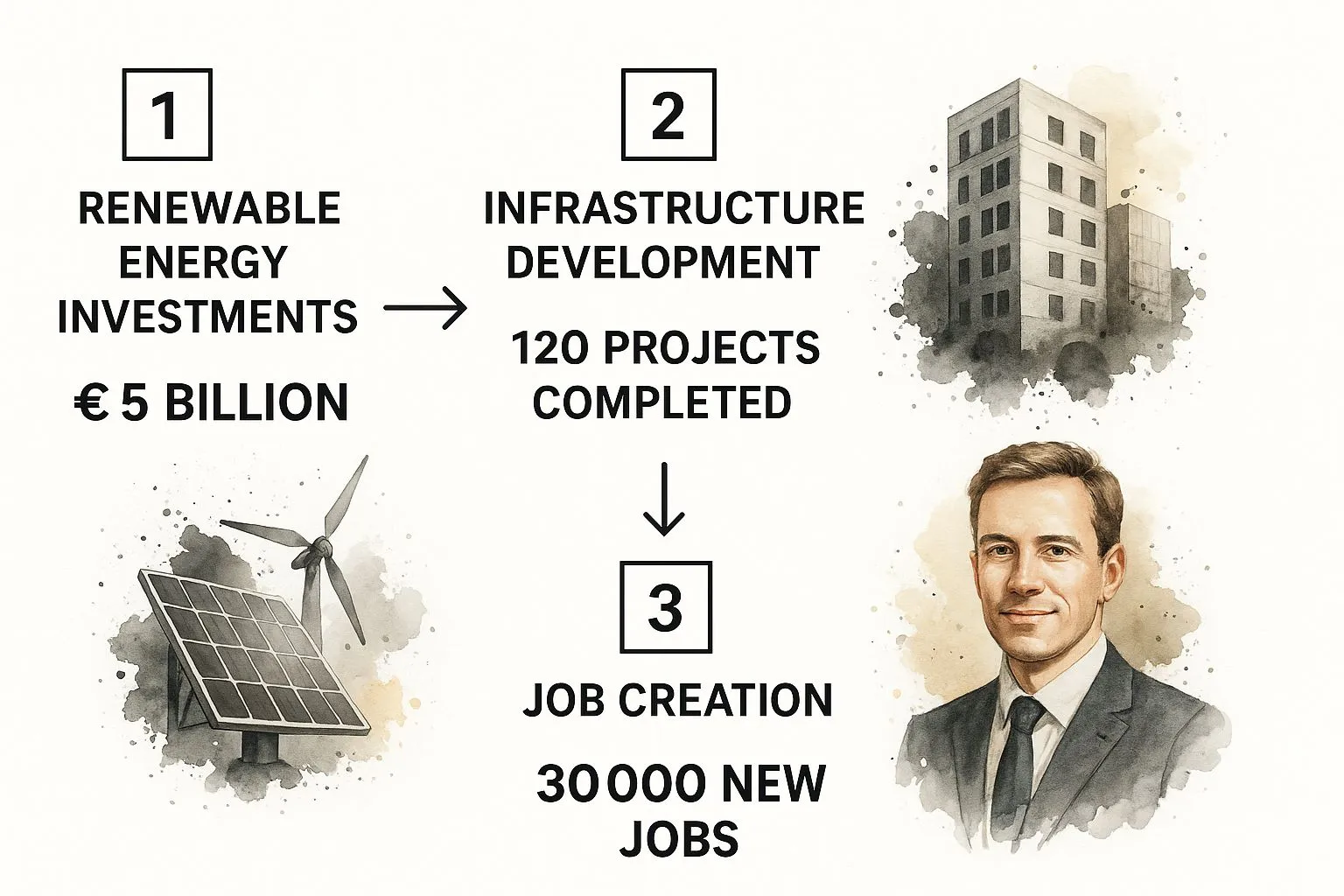
Use evidence gates rather than unsupported investment and job-creation promises.
Days 1–15: Define the investable proposition
Choose development, acquisition or service entry. Create a one-page investment hypothesis, source-and-use table, regulatory route memo and initial red-flag list. For a multi-location business, compare talent, logistics and operating access through the best cities in Turkey for business guide, but make the energy site decision from resource, grid, land and permit evidence.
Days 16–30: Test rights and constraints
Open the data room; verify corporate ownership, licence position, grid evidence, land and environmental status. Commission an independent desktop resource/yield review and map every permit dependency. Reject any claim that cannot be tied to a dated official document, executed contract or auditable operating record.
Days 31–45: Rebuild the economics
Replace seller or developer assumptions with independent cases. Reconcile production to revenue, capex to contracts, and debt to cash flow. Price unresolved risks and identify required consents, securities and transaction protections.
Days 46–60: Make a conditional decision
Issue a go, conditional-go or no-go memorandum. A conditional go should name each owner, deadline, evidence item and consequence if the condition is not met. Set the Turkish entity and compliance calendar only after the transaction structure is stable; use the Turkey company compliance checklist to organise recurring corporate obligations.
How Workon Can Support the Market-Entry Workstream
Workon can coordinate the corporate and operational-entry layer for foreign investors: company formation, registered-address planning, accountant and legal-professional coordination, document sequencing and ongoing company compliance. Energy licensing, engineering, environmental, valuation, finance and transaction opinions should be delivered by appropriately qualified specialists. Keeping those workstreams separate—and reconciling their assumptions—gives the investor a clearer decision trail.
Next step: prepare a project brief stating the route, technology, capacity, location, development stage, seller or counterparty, grid evidence, land status, expected revenue model and target investment date. That brief allows the adviser team to scope evidence and identify fatal issues before expensive execution begins.
Routes can include licensed generation, eligible unlicensed generation, YEKA tenders, storage-linked projects, acquisition of an operating asset or project company, and equipment or energy-service businesses. Each route has different regulatory, grid, land, revenue and financing requirements.
No. National solar, wind and storage projections are policy context, not a project right. A specific investment still needs site-level grid access, land and environmental viability, the applicable regulatory route, a supportable revenue model and financeable downside economics.
No. YEKDEM is a regulated support mechanism with eligibility criteria, commissioning and facility conditions and time-bound application procedures. The relevant year, project cohort, certificate, application window and final eligibility must be verified for the specific facility.
No. VAT, customs-duty, reduced-tax, social-security, land or other support can depend on an investment incentive certificate, activity, location, equipment, origin, investment size, commissioning date and other current conditions. Unconfirmed incentives should not be built into the base case.
Verify corporate ownership, licence or pre-licence rights, grid position, land and environmental rights, operating or yield data, revenue arrangements, contracts, financing, security, tax, disputes and change-of-control requirements. A 'ready to build' label is not a substitute for diligence.
A Turkish company can support asset ownership, licensing, contracting, financing or staffing, but incorporation does not replace EPDK, grid, land, environmental, construction or other project approvals. Foreign share ownership also does not itself give an individual the right to work in Turkey.
Disclaimer: This article was last reviewed on 17 September 2026 and provides general information and is not legal, regulatory, tax, environmental, engineering, financial or investment advice. Renewable-energy rules, application windows, tariffs, permits and incentives are project- and date-specific and may change. Obtain written advice from authorised Turkish counsel, tax advisers, engineers, environmental specialists, EPDK/market specialists and regulated financial advisers, and independently verify all official records and transaction documents before committing capital.