Bookkeeping in Turkey for small businesses is the daily operating discipline that keeps invoices, receipts, bank movements, expenses, payroll inputs and supporting evidence complete and reconciled. It is not the same thing as statutory tax filing or regulated professional accounting authority. A Turkish business should design its record flow so the company’s licensed SMMM/CPA can maintain the required statutory books, declarations and e-document obligations under the correct tax/accounting regime.
The practical 2026 workflow is: source document → daily/pre-accounting record → bank/cash reconciliation → month-end control → SMMM/CPA handoff → statutory book/return/e-document compliance.
Quick Answer: What Does “Bookkeeping” Mean in Turkey?
| Layer |
Main responsibility |
Typical output |
| Business / internal team |
Capture every sale, purchase, expense, bank movement and supporting document; keep operational records complete. |
Clean source-document and transaction file. |
| Bookkeeping / pre-accounting software |
Organise invoicing, collections, expenses, bank reconciliation, inventory/payroll inputs and audit trail. |
Structured operational data and exports. |
| Licensed SMMM/CPA |
Determine the statutory accounting/tax treatment, maintain or supervise required books/records and make filings within the professional/legal framework that applies to the taxpayer. |
Statutory books, declarations, tax calculations and compliance controls. |
| GİB systems |
Receive/host electronic books, records, declarations and e-documents according to the taxpayer’s legal regime. |
Defter-Beyan, e-Defter, e-Fatura/e-Arşiv and other applicable electronic records. |
The exact legal system is taxpayer-specific. Do not assume every sole proprietor, LLC, JSC or freelancer uses the same books, filing route or software stack.

Good bookkeeping turns daily business evidence into a clean month-end handoff for statutory accounting and tax compliance.
1. Bookkeeping vs Statutory Accounting: Keep the Roles Separate
Foreign founders often use “bookkeeping,” “accounting,” “tax filing” and “CPA service” interchangeably. In Turkey, that creates confusion.
- Bookkeeping / ön muhasebe is the operational collection and organisation of financial evidence.
- Statutory accounting determines how transactions are recorded under the applicable accounting/tax rules and which official books are maintained.
- Tax compliance covers declarations, notifications, calculations and payments required by law.
- Professional authority depends on the taxpayer, filing and applicable legislation; regulated work should be handled by an appropriately licensed SMMM/CPA.
For the professional-engagement boundary, see Turkish CPA Requirement: Do Companies Need an SMMM?.
2. What Should a Small Business Capture Every Day?
The objective is not to “do the tax return every day.” It is to make sure no transaction reaches month-end without complete evidence.
- Sales: invoice/e-document reference, customer, date, currency, VAT/tax treatment input, collection status.
- Purchases and expenses: supplier document, business purpose, payment method, currency and supporting approval.
- Bank transactions: customer receipts, supplier payments, bank charges, FX movements, transfers between company accounts.
- Cash: cash receipts/payments and supporting documents where cash is legitimately used.
- Employee/payroll inputs: hires/leavers, attendance/leave, benefits, expense reimbursements and other payroll events for the payroll professional.
- Inventory or cost records: purchases, sales, stock movements, returns and write-offs where relevant.
- Contracts and recurring commitments: rent, subscriptions, leases, professional services, insurance and financing documents.
- Foreign-currency evidence: invoice currency, payment currency, bank conversion and related source documents.
Keep personal spending and company spending distinguishable. A clean dedicated business-bank workflow makes reconciliation and audit evidence substantially easier.
3. A Practical Weekly Control
At least weekly, check whether the accounting data still matches reality:
- Are all issued sales documents in the system?
- Are supplier invoices/receipts uploaded and linked to the correct transaction?
- Do bank collections match customer receivables?
- Do supplier payments match payables?
- Are there unexplained bank/cash movements?
- Are missing invoices or expense documents being chased?
- Are cancelled/returned transactions documented?
- Have new employees, contracts, leases or financing events been communicated to the SMMM/CPA?
Finding a missing invoice one week later is an operating problem; finding it months later can become a statutory accounting and tax problem.
4. Month-End Handoff Checklist
| Control |
What the business should hand over / confirm |
| Sales completeness |
All sales/e-documents, cancellations, returns and collections for the period. |
| Purchase/expense completeness |
Supplier invoices, receipts and missing-document list. |
| Bank reconciliation |
Bank statements and explanation of unmatched movements. |
| Cash reconciliation |
Cash balance and source documents where applicable. |
| Payroll inputs |
Employee changes, leave, benefits, reimbursements and payroll-relevant events. |
| Inventory / fixed assets |
Stock changes, asset purchases/disposals and supporting documents. |
| Contracts / one-off events |
New lease, financing, shareholder transaction, capital change, foreign service or other unusual event. |
| Open questions |
Transactions whose VAT/tax/accounting treatment needs professional determination. |
A strong month-end handoff is more valuable than simply sending a folder of PDFs. The SMMM/CPA should be able to understand what happened, trace it to evidence and identify exceptions quickly.
5. Defter-Beyan vs e-Defter: Two Different GİB Systems
Turkey does not use one universal electronic-bookkeeping platform for all taxpayers.
Defter-Beyan
GİB’s Defter-Beyan System is designed for covered groups such as self-employed professionals, taxpayers keeping books on the business-account basis and taxpayers under the simple method. The system can support electronic income/expense records, electronic creation/storage of books, declarations/notifications and electronic document functions for taxpayers within its scope.
GİB’s 2026 professional-income guidance confirms that self-employed professionals within the relevant regime use Defter-Beyan and can access it through current GİB/Digital Tax Office credentials.
e-Defter
e-Defter is a separate GİB regime for statutory accounting ledgers such as the journal and general ledger. The scope was materially expanded: taxpayers required to keep books on the balance-sheet basis, and those voluntarily choosing that basis, were brought into the e-Defter transition framework from 1 January 2025, subject to the detailed timing rules.
For e-Defter eligibility, electronic-ledger preparation and submission controls, use e-Defter in Turkey: 2026 E-Ledger Compliance Guide.
6. e-Fatura and e-Arşiv in Your Bookkeeping Workflow
Your bookkeeping workflow must capture issued and received e-documents correctly, but the transition/routing rules belong to their dedicated pages.
| Topic |
Detailed guide |
Bookkeeping handoff |
| e-Fatura registration / who must join |
2026 e-Fatura Requirements |
Make sure the software/accounting flow knows when e-Fatura routing applies. |
| e-Arşiv transaction/routing rules |
2026 e-Arşiv Rules |
Capture and reconcile e-Arşiv documents without relying on obsolete thresholds. |
| e-Defter |
2026 e-Defter Guide |
Provide complete accounting data before statutory ledger generation/finalisation. |
Check the current e-document thresholds in the linked guides when choosing an invoicing or bookkeeping workflow.
7. Zero-Activity Company: “No Sales” Does Not Automatically Mean “Nothing to Do”
A company can have no customer invoices and still have:
- bank charges;
- rent or registered-address costs;
- professional/accounting fees;
- capital/shareholder movements;
- payroll or SGK events;
- tax declarations or notifications required by its taxpayer/status;
- e-book/e-document obligations;
- annual corporate and commercial obligations.
Do not assume a dormant-looking company has zero filing duties. The licensed SMMM/CPA should confirm which returns, books and notifications remain required for the company’s actual status.
8. Choosing Bookkeeping Software: Use a Decision Matrix, Not a “Best Software” List

Select software from the company’s transaction flow and compliance handoff, not from a generic ranking.
The right software depends on the company’s workflow. Evaluate:
| Feature |
Question to ask |
| GİB/e-document compatibility |
Can it support the e-document route actually applicable to the taxpayer, directly or through a compliant integration? |
| Bank reconciliation |
Can bank movements be imported/matched without losing an audit trail? |
| Multi-currency |
Can it preserve invoice/payment currency and exchange-rate evidence for a foreign-owned business? |
| Receivables/payables |
Can the business see unpaid customer invoices and upcoming supplier obligations? |
| Inventory / assets |
Does it support the operational complexity the business actually has? |
| Payroll inputs |
Can payroll-relevant data be exported/handed off cleanly? |
| API/export |
Can records be exported in a format the SMMM/CPA or ERP can use? |
| Access controls |
Can roles be separated between owner, staff and external professional? |
| Audit trail |
Can changes, cancellations and supporting documents be traced? |
| Language/support |
Can the actual team use the platform reliably, including foreign managers where needed? |
Local software is not automatically better, and an international platform is not automatically unsuitable. The test is whether the final system supports Turkish statutory/e-document requirements and produces a reliable professional handoff.
9. Internal Controls a Small Business Should Have
Even a small company benefits from basic controls:
- one person should not create a supplier, approve a payment and reconcile the same payment without oversight;
- company bank credentials should not be shared casually;
- expense claims should show business purpose and supporting document;
- supplier bank-account changes should be independently verified;
- invoice cancellations/returns should have an approval trail;
- monthly bank/cash reconciliation should be documented;
- tax/payroll instructions from the professional should be stored with proof of payment;
- founder/shareholder transfers should be identified clearly rather than left as unexplained bank movements.
These controls improve both audit readiness and day-to-day cash visibility.
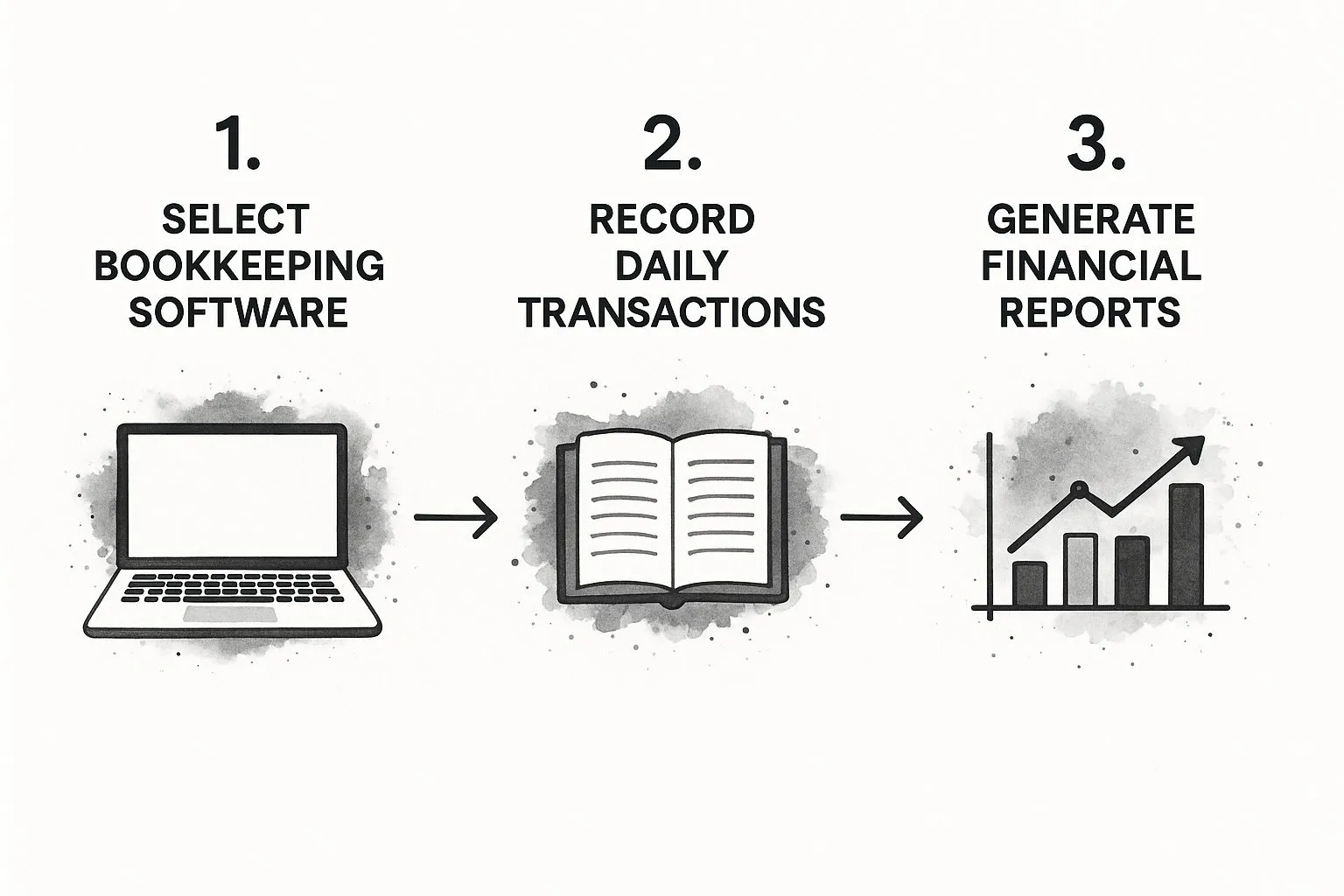
A reliable routine is more important than a year-end document scramble.
10. Budget for the Whole Bookkeeping Workflow
Separate three costs when building a bookkeeping budget: the team’s time collecting and checking records, the software and integrations used to organise them, and the licensed professional’s statutory accounting and tax work. A software subscription is not a substitute for the professional engagement, and the professional fee does not necessarily include every internal recordkeeping task.
| Cost layer |
What to clarify |
| Internal recordkeeping |
Who collects invoices, explains bank movements, follows up missing records and approves the month-end file? |
| Software and integrations |
Which users, e-document functions, bank imports, storage, exports and support are included? |
| Licensed accounting and tax work |
Which statutory books, returns, payroll tasks and period-end services are included in the professional engagement? |
| Additional work |
How are historical clean-up, missing-record reconstruction, unusual transactions and extra reports quoted? |
For SMMM professional-fee references and engagement checks, use the Turkish CPA/SMMM requirement guide and the current İSMMMO Professional Fee Tariffs archive. Compare quotes against the same transaction volume, employee count, foreign-currency needs and division of responsibilities rather than treating one monthly amount as the entire bookkeeping cost.
11. What the Founder Should Ask the SMMM/CPA
Before onboarding, clarify:
- Which statutory book/system applies to our taxpayer type?
- Which e-document/e-ledger obligations apply now, and which triggers could apply later?
- What must we send daily, weekly and monthly?
- What is the month-end cutoff for documents?
- Who handles payroll/SGK inputs and by what deadline?
- How are foreign-currency transactions and foreign invoices documented?
- Which declarations/notifications apply even in zero-activity periods?
- What is included in the professional engagement and what is charged separately?
- How will we receive copies/proof of filed declarations and tax payments?
- How should we document unusual transactions before executing them?
For a foreign-owned company, communication process and document visibility are as important as the software brand.
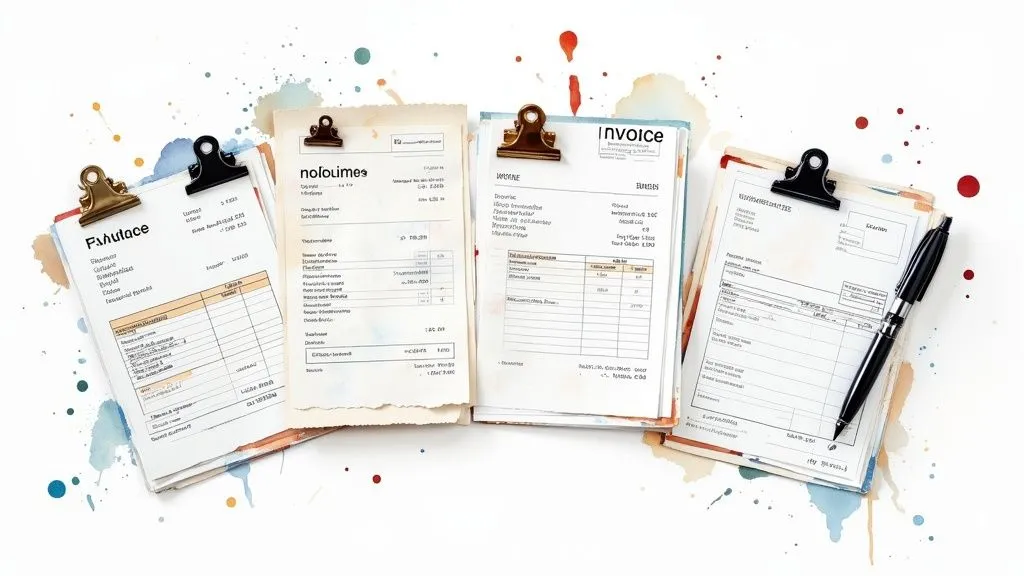
Define the document handoff and professional scope before the first reporting period closes.
12. What Workon Can Coordinate
Workon can coordinate company setup, document-flow onboarding, registered-address/workspace operations, bank-account application support and the handoff between the founder and an appropriately licensed SMMM/CPA. Regulated statutory accounting, professional tax filings and professional opinions remain with the licensed professional responsible for those services.

Build the bookkeeping and professional handoff at the same time as the company becomes operational.
Key Takeaways
- Bookkeeping is the daily record and reconciliation workflow; statutory accounting/tax filing is a separate professional/legal layer.
- Turkey does not use one universal accounting-book system for every taxpayer.
- Defter-Beyan and e-Defter are different GİB systems for different taxpayer/accounting regimes.
- From 1 January 2025, balance-sheet-basis taxpayers were brought into the e-Defter transition framework under the current rule.
- Check the dedicated 2026 e-Fatura, e-Arşiv and e-Defter guides for current thresholds and application details.
- A zero-sales period can still contain records, declarations or other compliance duties.
- Choose software by e-document compatibility, reconciliation, audit trail, multi-currency and SMMM/CPA handoff—not by a generic “best software” ranking.
- Workon coordinates operational setup and professional handoff; regulated accounting and tax work remains with the appropriately licensed SMMM/CPA.
Bookkeeping or ön muhasebe is the daily collection, organisation and reconciliation of sales, purchases, expenses, bank and cash movements, payroll inputs and supporting evidence. It should produce a clean operational record that can be handed to the licensed SMMM\/CPA responsible for the applicable statutory accounting and tax work.
No. Operational bookkeeping prepares and reconciles the business evidence, while statutory accounting determines the official treatment and required books and tax compliance covers declarations and related obligations. Regulated professional work should be handled within the scope of the appropriately licensed SMMM\/CPA.
No. The applicable system depends on the taxpayer and accounting regime. Defter-Beyan covers specified groups such as qualifying self-employed and business-account-basis taxpayers, while e-Defter is a separate regime for statutory ledgers including balance-sheet-basis taxpayers under the current transition rules.
Not necessarily. A zero-sales company can still have bank charges, rent, professional fees, capital or shareholder movements, payroll or SGK events, tax declarations or notifications, e-book or e-document obligations and annual corporate duties. The licensed professional should confirm the obligations for the company's actual status.
Choose from the real workflow: GİB and e-document compatibility, bank reconciliation, multi-currency handling, receivables and payables, inventory or asset needs, payroll inputs, export or API capability, access controls, audit trail and the SMMM\/CPA handoff. A generic 'best software' ranking is not enough.
No. The annual professional tariff provides reference minimum professional fees and can vary with the taxpayer and workload. It is not a universal all-in price and does not include software, taxes or other third-party costs. Regulated accounting and tax services remain with appropriately licensed professionals.
Important: Last reviewed 17 September 2026. This guide provides general operational information on bookkeeping in Turkey and is not accounting, tax or legal advice. Required books, electronic systems, declarations, document-retention periods and professional-signature rules depend on the taxpayer’s legal form, bookkeeping basis, activity and current legislation. Confirm the company’s exact obligations with an appropriately licensed SMMM/CPA and current GİB guidance before filing or making tax/accounting decisions. Workon coordinates setup and document-flow readiness but does not replace the licensed professional responsible for statutory accounting or tax filings.