Quick answer: Choose an English-speaking lawyer in Turkey by verifying bar registration first, then testing whether the lawyer’s actual practice matches your matter, whether they can explain Turkish legal risk clearly in English, how conflicts and confidentiality are handled, and exactly what the engagement and fees cover. English fluency is useful, but it is not a substitute for the right Turkish-law expertise.
This guide explains how to select and verify an individual English-speaking lawyer in Turkey. If you are choosing an Istanbul legal team or firm structure rather than an individual lawyer, use How to Choose a Law Firm in Istanbul. If your company needs a cross-border team that coordinates Turkish-law work with foreign or international-law issues, use How to Choose an International Law Firm in Turkey.
1. Start With the Legal Problem, Not the Phrase “English-Speaking Lawyer”
“English-speaking lawyer” describes a communication capability, not a practice area. Before searching, define the matter you actually need handled.
| Your issue |
Practice experience to look for |
| Company/shareholder matter |
Corporate law, governance, shareholder agreements, share transfers, capital changes or M&A as relevant. |
| Commercial contract |
Contract drafting/negotiation in the relevant industry and cross-border terms where applicable. |
| Employment dispute or policy |
Turkish labour and employment law. |
| Trademark / IP dispute |
IP and trademark litigation/advisory experience. |
| Regulated business |
Sector-specific regulatory practice, not only general corporate work. |
| Litigation / enforcement |
Dispute type, court/arbitration experience and enforcement strategy. |
| Immigration / work authorisation |
Current foreigner/work-permit practice, while keeping company registration separate from immigration rights. |
A lawyer who is excellent in litigation may not be the right person for a shareholder agreement. A corporate lawyer may not be the right choice for a criminal or family-law matter. Start with fit.
2. Verify Bar Registration Before Relying on Marketing
The Türkiye Barolar Birliği (TBB) publishes an official Baro Levhası / Avukat Arama search. It allows searches by name, surname and bar registration number. Local bars, including the Istanbul Bar, also publish lawyer registers.
Before engaging an individual lawyer, ask for:
- full name;
- registered bar;
- bar registration/sicil number where available;
- firm or office name;
- professional contact details.
Then verify the person against an official bar register rather than relying only on a website, social-media profile or referral. Use TBB Baro Levhası — Avukat Arama.
Do not infer special expertise or English fluency merely from being listed. The register verifies professional status; you still need to test practice fit and communication.
3. Understand the Professional Boundary
Legal advice and representation are part of Turkey’s regulated legal-profession framework under the Attorneys Act No. 1136 and the applicable professional rules. A business consultant, translator or company-formation coordinator should not be treated as a substitute for a Turkish lawyer where legal advice or legal representation is required.
At the same time, not every company-formation task requires the client to retain a lawyer. Company setup can involve founders, Trade Registry/MERSİS processes, notaries, licensed SMMM professionals and operational coordinators. The correct role depends on the task. Use a lawyer when you actually need legal analysis, drafting, negotiation, representation or another lawyer-specific function.
4. Test English as a Legal Communication Skill
The useful question is not “Do you speak English?” It is “Can you explain the legal consequence of this Turkish rule accurately enough that I can make a business decision?”
During the first call, ask the lawyer to explain one issue from your real matter in plain English. A strong answer should distinguish:
- what the law requires;
- what is common practice but not legally mandatory;
- what depends on an authority, court or counterparty;
- what facts are still missing;
- what the practical options and trade-offs are.
Be cautious when an adviser replaces explanation with certainty. “No problem,” “guaranteed,” or “this is always accepted” are weak substitutes for scope, assumptions and evidence.
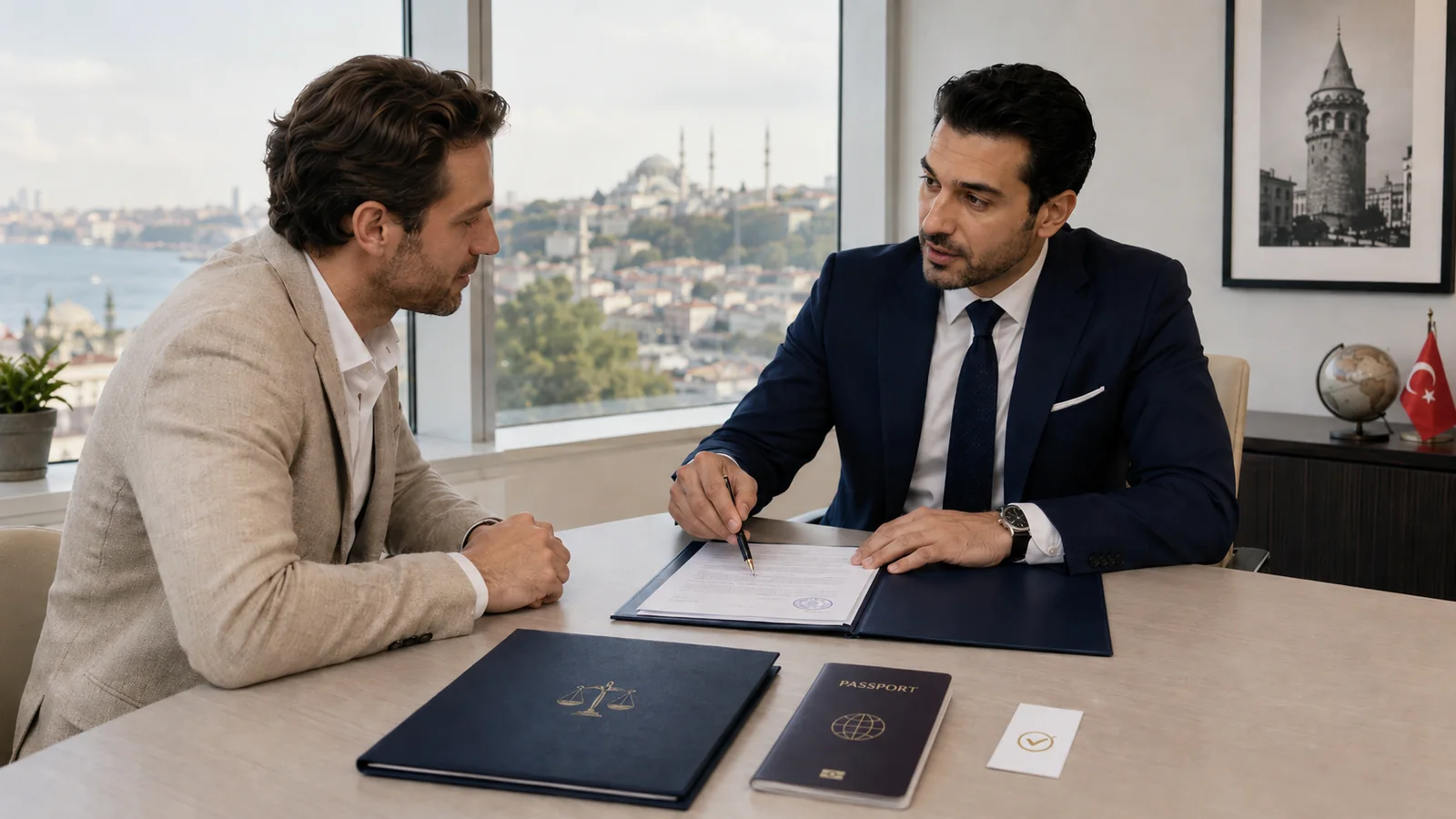
Language ability is most valuable when it helps a foreign client understand Turkish legal risk, options and next actions.
5. Ask for Relevant Experience Without Asking for Confidential Client Files
You do not need confidential examples or client names. Ask for non-confidential indicators that the lawyer regularly handles the type of matter you have.
Useful questions include:
- What types of matters in this practice area do you handle most often?
- What are the common failure points for a foreign client in a matter like mine?
- Which parts do you handle directly and which require another specialist?
- What facts would change your initial recommendation?
- What should I prepare before you can give reliable advice?
The answer should sound specific to your matter, not like a generic company-formation sales pitch.
6. Check for Conflicts Before Sharing Sensitive Information
If your matter involves a shareholder dispute, transaction, supplier conflict, investor, acquisition target or another identifiable counterparty, ask the lawyer to run the appropriate conflict check before you disclose unnecessary sensitive detail.
Provide enough information to identify the parties and related entities, but avoid sending complete confidential files to multiple firms before the engagement/conflict process is clear.
7. Clarify Who Will Actually Work on the Matter
In a firm, the person on the first call may not be the person doing every task. Ask:
- Who is the responsible lawyer?
- Who will draft and review the key documents?
- Will junior lawyers, trainees or other professionals be involved?
- Who is the day-to-day contact?
- How is urgent escalation handled?
- Who signs off on final advice?
This helps you compare service models rather than comparing only the seniority of the person who handled the sales conversation.
8. Review Scope and Deliverables Before Comparing Fees
Two legal quotes are not comparable until the scope is normalized.
| Fee/scope question |
Why it matters |
| What exact work is included? |
Drafting, negotiation, filings, meetings, opinions and follow-up may be priced differently. |
| What is excluded? |
Notary, translation, experts, court/authority charges, travel or other third-party costs may sit outside the legal fee. |
| Fixed, hourly or retainer? |
The right model depends on whether the matter is defined or open-ended. |
| Who bills at which level? |
Know whether partner, associate or other time is included and how. |
| What triggers extra work? |
Scope changes should be identified before additional fees accumulate. |
| How is termination handled? |
Know what happens to work product, originals, outstanding fees and handoff. |
Do not choose counsel on headline price alone. Compare the deliverable, team, assumptions and out-of-scope cost.
9. Do Not Accept Guaranteed Outcomes
A Turkish lawyer can advise, prepare, negotiate, file and represent within the agreed legal scope. They cannot guarantee how a court, regulator, Trade Registry, immigration authority, bank or counterparty will decide.
For business founders, this distinction is especially important because legal work is often connected to non-legal decision-makers. A correctly registered company does not force a bank to approve an account; a corporate structure does not automatically create residence or work rights; a lawyer’s filing does not guarantee a regulator will issue a licence.
10. Power of Attorney: Use the Narrowest Suitable Scope
A power of attorney (PoA) may be useful when a lawyer needs authority to act for a client, but there is no one universal “Turkey lawyer PoA” that every foreign client must sign. The correct scope and execution route depend on the transaction and where the document is signed.
Before signing, confirm:
- the exact powers required;
- which institutions or proceedings they apply to;
- whether substitution/delegation is allowed;
- duration or termination controls;
- whether foreign execution requires apostille/legalisation and translation for that use;
- how revocation and notice will be handled.
For the detailed owner, use Power of Attorney in Turkey: 2026 Scope & Signing Guide. Authentication decisions belong to Apostille for Turkey Documents.
11. Check How Advice Will Be Documented
For important decisions, ask whether the output will be a call, email, marked-up contract, formal opinion, filing package, checklist or another defined deliverable. The right format depends on the risk.
A useful written legal deliverable should normally identify the relevant facts and assumptions, the issue, the recommendation and material uncertainties or next actions. This matters when another director, investor, bank, auditor or adviser will later rely on the work.
12. Keep Legal Advice Separate From Tax, Accounting and Other Regulated Work
Cross-border business files often need several professions. A lawyer may identify a tax issue, but statutory accounting/tax filing belongs with the appropriate licensed SMMM/YMM professional. Customs representation, trademark agency and other regulated services may also require distinct authorised professionals depending on the task.
Ask who owns each workstream instead of assuming one adviser personally performs everything.
13. Red Flags When Hiring a Lawyer in Turkey
- Professional status cannot be verified in an official bar register.
- Practice area does not match the matter but the lawyer claims to do everything personally.
- Guaranteed court, licence, registry, bank or permit outcome.
- Scope is vague and fees cannot be tied to deliverables.
- No conflict process for a transaction or dispute involving identifiable parties.
- Important legal consequences cannot be explained clearly in the working language.
- Pressure to grant unnecessarily broad PoA powers without explaining why they are needed.
- Client credentials or bank access are requested where legal representation does not require them.
- No clear handoff of originals, signed documents and work product at the end.
14. A 15-Minute Lawyer Selection Scorecard
| Dimension |
Check |
| Bar status |
Officially verified |
| Practice fit |
Relevant recent matter experience |
| English communication |
Explains consequences, not just terminology |
| Conflict handling |
Clear process before sensitive disclosure |
| Scope |
Tasks and exclusions written |
| Fees |
Fee basis and third-party costs clear |
| Team |
Responsible lawyer and staffing known |
| Outcome language |
No inappropriate guarantees |
| Documents |
PoA/originals/translation needs are transaction-specific |
| Handoff |
Advice, originals and next steps remain retrievable |
How Workon Fits Into the Process
Workon is not a law firm and does not replace licensed Turkish counsel. For foreign founders, Workon coordinates company-formation, operational-readiness and legal-support workstreams as one connected process. When the project requires legal advice, contract work, representation or another regulated legal service, Workon coordinates the matter with appropriately licensed Turkish lawyers and aligns that legal work with the wider setup and operating workflow.
If your primary need is company setup rather than legal representation, see How to Choose a Company Formation Consultant in Turkey to separate legal, accounting, banking and operational roles.
Official Verification Sources
Last reviewed: 13 September 2026.
Frequently Asked Questions
You can start with official bar directories, embassy lists, business networks, and professional referrals. Always verify the lawyer’s bar registration before hiring.
Not every company-formation task requires a lawyer. Retain appropriately licensed counsel when your matter needs legal analysis, drafting, negotiation or representation; coordinate tax and accounting work with the appropriate licensed professional. The need for legal support depends on the actual matter.
You can ask for the lawyer’s full name, bar registration details, and registration number, then verify them through official Turkish bar association records.
Ask about experience in your specific practice area, who will handle and review the work, conflicts, written scope and exclusions, fees and third-party costs. Test whether the lawyer can explain one issue from your matter clearly in English and agree how advice and updates will be delivered.
Fees vary depending on the service. Lawyers may charge hourly rates, flat fees for company setup, or monthly retainers for ongoing legal support.
Important: This guide provides general information about selecting legal counsel and is not legal advice. Professional status, conflicts, scope, representation rights, fees and the appropriate type of legal support depend on the individual matter. Verify the lawyer through the relevant official bar register and agree the engagement in writing.