
Quick answer: A KEP address (Kayıtlı Elektronik Posta) is a regulated registered electronic-mail service that creates reliable evidence about the sender, recipient, content and timing of electronic communications. It is not the same as UETS/e‑Tebligat, and it should not be described as the mailbox through which every government notice is delivered.
This guide explains the KEP requirement and use-case question: when a Turkish company actually needs KEP, how it differs from UETS, which workflows commonly request it, and how foreign founders should set it up and monitor it.
KEP vs UETS: The Most Important Distinction
| System |
Main purpose |
Typical sender/receiver model |
| KEP |
Registered electronic correspondence with evidence of sending, receipt, identity and content integrity |
Private/legal entities and institutions can use KEP for regulated electronic correspondence |
| UETS / e‑Tebligat |
Electronic service of formal notifications under the Notification Law |
Authorities entitled to issue formal notifications send; recipients receive through UETS |
PTT states that, since UETS became operational on 1 January 2019, electronic notifications under the Notification Law are no longer delivered through KEP. Existing KEP accounts continue to be used for registered electronic correspondence, not as the UETS notification address.
Do not confuse the systems: A court, tax authority or other authorised body may serve a formal e‑notification through UETS, while a Ministry or company process may separately request KEP for registered correspondence.
Is KEP Mandatory for Every Turkish Company?
BTK’s KEP guidance does not state that every company in Türkiye is automatically required to use KEP for all purposes. Instead, specific legislation, public authorities, regulated processes, tender/application rules or contractual workflows can require a KEP address.
Therefore, the correct question is:
- Does the company’s legal form trigger a specific KEP obligation?
- Does a Ministry, regulator or application process require KEP?
- Does the company need KEP for a statutory electronic correspondence workflow?
- Would KEP provide useful evidence even where use is optional?
Do not buy or renew a service merely because an old article says “all capital companies must always have KEP.” Check the current rule that applies to the company’s real activity and process.

KEP provides evidence-oriented registered electronic correspondence; formal e‑notifications are handled separately through UETS.
Where Companies Commonly Need KEP
KEP can appear in many business and regulatory processes. Examples include:
- applications or correspondence with a Ministry or regulator that expressly accepts/requires KEP;
- certain permit, incentive, membership or licensing workflows;
- formal company-to-company notices and contractual correspondence;
- public procurement or institutional application processes where KEP is specified;
- regulated sector communications;
- corporate processes where proof of sending, receipt and content matters.
For example, the Ministry of Trade currently allows specified company-permission applications to be submitted through KEP and asks the applicant company to provide its KEP address for the Ministry’s electronic response. That is a process-specific requirement/use case, not proof that every business action must use KEP.
What Legal Evidence Does KEP Provide?
KEP is designed to create records showing key facts such as:
- who sent the message;
- who received it;
- when it was sent and delivered;
- whether the content changed;
- the evidence records generated by the KEP service provider.
This makes KEP useful where ordinary email would create avoidable arguments about delivery or content.
However, do not say a KEP message automatically has the same legal effect as every type of formal notification. The underlying legal transaction and applicable legislation still matter.
UETS Delivery Timing Is Not the KEP Rule
The old statement “a legal deadline starts the second a message reaches the KEP inbox” confuses KEP with statutory e‑notification.
PTT explains that an electronic notification delivered through UETS is legally deemed served at the end of the fifth day following the date it reaches the recipient’s UETS address, regardless of whether the recipient opened it earlier. That rule belongs to the UETS/e‑Tebligat framework.
A KEP message may have a different legal effect depending on the contract, regulation or process under which it was sent.
Does a Company Need Both KEP and UETS?
Potentially yes, because they serve different functions.
| Need |
Relevant system |
| Receive statutory e‑notifications from authorised authorities |
UETS |
| Send/receive registered electronic correspondence |
KEP |
| Sign an electronic document |
Secure e‑signature, where applicable |
| Entity certificate for specified GİB/e‑document processes |
Mali mühür, where applicable |
For secure e‑signature, see E‑Signature for Companies in Turkey. For the full comparison of KEP, UETS, e-signature and mali mühür, use KEP vs E-Signature vs UETS vs Mali Mühür.
How to Obtain a KEP Address
KEP services are provided by authorised KEP service providers (KEPHS). BTK publishes the current authorised-provider list.
A practical application sequence is:
- Confirm that the company/process actually needs KEP.
- Choose a BTK-authorised KEP service provider.
- Check whether the account must be sender-and-receiver or receive-only.
- Prepare current company and authorised-representative documents requested by the provider.
- Complete the provider’s identity/authority verification process.
- Activate the account and define authorised users/monitoring responsibilities.
Corporate-account control: BTK states that a legal entity can designate one or more işlem yetkilisi during the application or later to use the KEP account on the entity’s behalf. Sending through KEP requires an electronic signature, while receive-only use does not require one for that function. Confirm the KEPHS’s current identity and activation method, assign transaction officials deliberately and never share one person’s signing credential.
Document requirements and verification methods can differ by provider. Do not publish one provider’s checklist as though it were the permanent statutory list for all KEPHS.
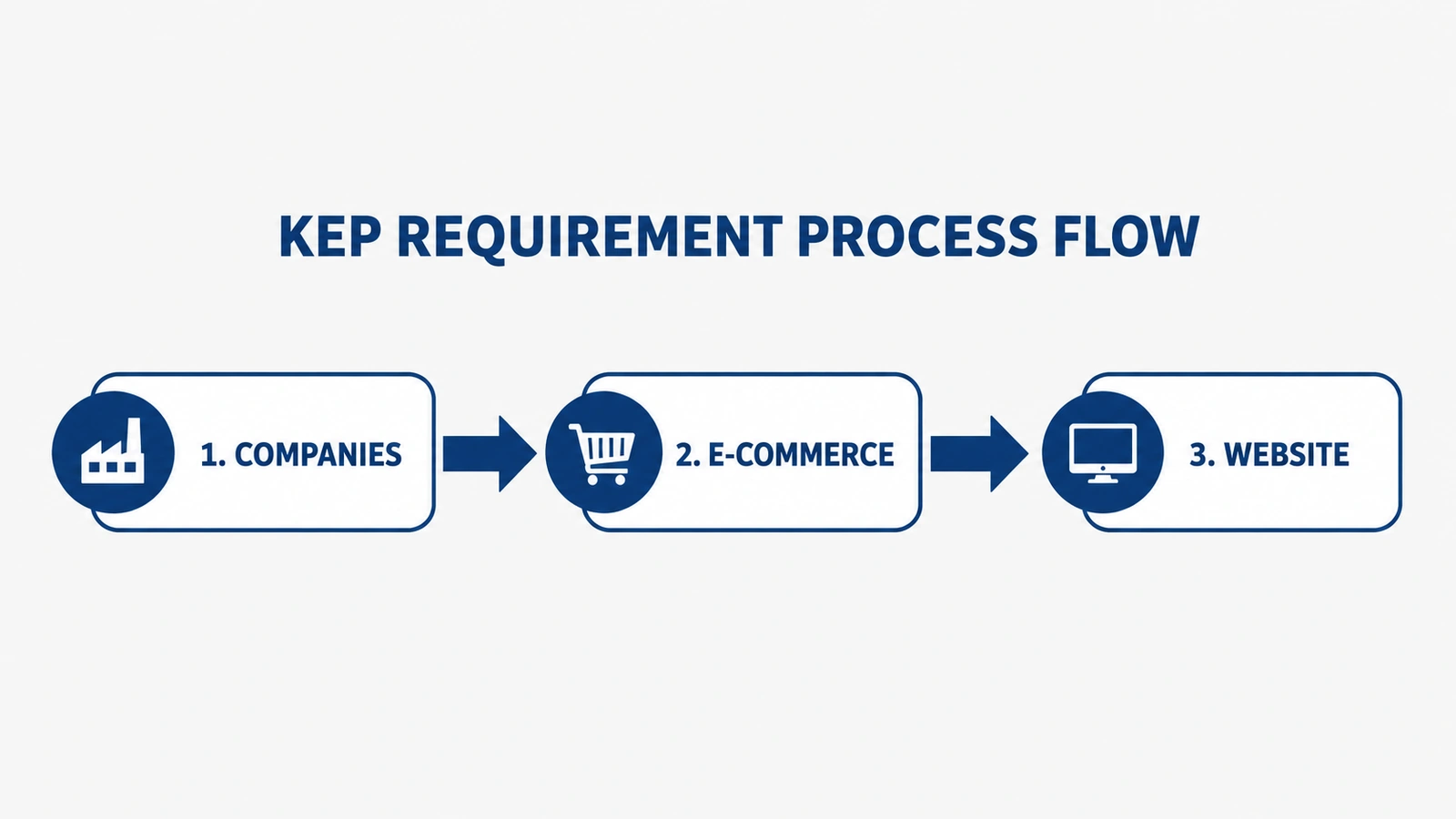
Confirm the use case first, then choose an authorised provider and complete its company-authority verification.
Can a Foreign Director Apply for the Company KEP Account?
A foreign national can be an authorised manager/director of a Turkish company. The KEP provider will evaluate the applicant’s authority and identity based on its current corporate-account procedure.
Before applying, confirm:
- which company registry documents are required;
- which identity document/number the provider accepts for a foreign representative;
- whether a power of attorney can be used;
- whether physical verification is required;
- which transaction official(s) will be authorised on the company account and whether each person who will send KEP messages has the secure e‑signature required for sending.
BTK states that receive-only KEP use does not require an electronic signature, while sending through KEP does require an electronic signature. For a company account, make sure the authorised transaction official who will send messages has the required signing credential and current company authority.
Do Not Tie KEP to the Registered Physical Address
A company’s registered headquarters address, MERSİS record, UETS address and KEP address are distinct data points/tools. They should be kept current, but one is not simply a digital copy of another.
Changing the registered office does not mean that KEP messages somehow continue to an “old physical address.” Instead, update the relevant company and provider records required by each system.
For headquarters changes, see Change Company Address in Turkey.
Monitoring KEP: What Should a Foreign-Owned Company Do?
If your company uses KEP for legal, regulatory or contractual correspondence, monitoring should be assigned to a responsible person or workflow.
Recommended controls:
- assign account responsibility;
- enable provider notifications where available;
- do not share credentials casually;
- archive important evidence records;
- route legal/tax/regulatory messages to the appropriate licensed professional immediately;
- keep authorised-user information current.
“Check every day” can be a sensible internal policy, but it should be presented as risk management—not invented as a universal statutory daily-check rule.
KEP Costs
Do not use old figures such as “TRY 100–300 per year” as a permanent market price. KEP providers set their own current tariffs based on account type, storage and message/service packages.
Check the selected authorised provider’s current tariff when the company is ready to open or renew the account.
E-Commerce: When Must a KEP Address Be Displayed?
The current Ministry of Trade guidance is more specific than a blanket “all online sellers” rule. Under the Electronic Commerce Intermediary Service Provider and Electronic Commerce Service Provider Regulation, a service provider operating its own electronic-commerce environment must make a KEP address suitable for service of notices available in that environment together with the other required identification/contact information.
Do not automatically transfer that website-display rule to every seller that only appears through someone else’s marketplace or to a different e-commerce model. Classify the business under the current e-commerce rules, then verify the applicable disclosure and ETBİS obligations against the Ministry of Trade’s current guidance.
See E‑Commerce in Turkey: Guide for Foreign Founders.
Common KEP Mistakes
| Mistake |
Why it is wrong |
Better approach |
| Calling KEP the e‑Tebligat inbox |
UETS has handled statutory electronic notifications since 2019 |
Keep KEP and UETS separate |
| Saying every company must use KEP for everything |
KEP obligations are process/regulation specific |
Identify the actual legal trigger |
| Applying UETS five-day/service rules to KEP |
Different legal systems |
Check the transaction’s governing rule |
| Using an unauthorised provider |
Does not create a regulated KEP account |
Use a BTK-authorised KEPHS |
| Publishing stale fixed KEP prices |
Provider tariffs change |
Check current provider pricing |
How Workon Coordinates KEP and Digital Tools
Workon coordinates post-registration operational readiness for foreign founders and overseas companies entering Türkiye. Depending on the agreed scope, this can include identifying when KEP is required, coordinating the authorised-provider application, and sequencing KEP with e‑signature, financial seal, MERSİS, licensed CPA and other business setup processes.
KEP services are provided by authorised KEP service providers; legal/tax interpretation and other regulated professional services remain with appropriately licensed professionals.
Review Workon’s company registration and operational coordination service.
Official Sources
Last reviewed: 17 September 2026. KEP and UETS requirements can differ by process and regulation; confirm the current rule for the company’s actual use case.
Frequently Asked Questions
KEP, or Kayıtlı Elektronik Posta, is a regulated registered electronic-mail service that creates evidence about the sender, recipient, content and timing of electronic correspondence. It is used for evidence-oriented registered communications and should not be confused with the UETS e-notification system.
No. Since UETS became operational in 2019, formal electronic notifications under the Notification Law are delivered through UETS. KEP remains a separate system for registered electronic correspondence used in legal, regulatory, contractual and institutional workflows where applicable.
No blanket KEP-system rule makes every company use KEP for every purpose. A requirement can arise from a specific law, regulator, Ministry process, tender, application, contract or business model, so the actual trigger should be identified before opening or renewing the service.
The current Ministry of Trade rule requires a service provider operating its own electronic-commerce environment to make a KEP address suitable for service of notices available in that environment together with the other required information. Do not automatically apply that exact website-display rule to a seller operating only through another party’s marketplace; first classify the e-commerce model and current obligations.
Potentially yes, where the person has the required corporate authority and satisfies the KEPHS identity and application procedure. For a legal-entity KEP account, the authorised transaction official (işlem yetkilisi) operates the account on the company’s behalf. Provider document and verification routes can differ, but sending through KEP requires the sender’s secure electronic signature.
No for receive-only use, yes for sending. BTK states that sending through KEP requires an electronic signature, while a user who uses the KEP account only as a recipient does not need an electronic signature for that receive-only function.
Do not apply the UETS five-day deemed-service rule automatically to KEP. A KEP message’s legal effect depends on the contract, regulation or process under which it was sent. The statutory UETS rule is a separate e-notification framework.