


















VAT withholding in Turkey (KDV tevkifatı) changes who declares the VAT, not the underlying VAT rate. Under full withholding, the Turkish buyer declares all of the VAT. Under partial withholding, the buyer declares the prescribed fraction through VAT 2 and the Turkish supplier declares the remaining fraction through VAT 1. The correct result depends on the supplier’s Turkish presence, the exact transaction, the buyer’s status and the annual threshold.
Tevkifat is not the same as income-tax or corporate-tax withholding, commonly called stopaj. If you need that separate subject, use Withholding Tax in Turkey: Stopaj Guide. This guide covers only VAT/KDV withholding.

Which VAT withholding route applies?
| Scenario | Likely route | Who declares VAT? |
|---|---|---|
| A supplier with no residence, workplace, legal centre or business centre in Turkey provides a taxable service used in Turkey | Full withholding, unless an exemption or a special route applies | The Turkish recipient generally declares the full VAT through VAT 2. |
| A Turkish VAT taxpayer supplies a category listed for partial withholding to a buyer covered by that category | Partial withholding | The buyer declares the stated fraction through VAT 2; the supplier declares the balance through VAT 1. |
| A non-resident supplies electronic services to Turkish individuals who are not VAT taxpayers | Special VAT 3 route, not the ordinary B2B reverse-charge answer | The non-resident provider may have the special filing obligation. |
| The transaction is exempt or outside the scope of Turkish VAT | No VAT withholding merely because the parties are cross-border | Confirm and document the exemption or place-of-supply analysis. |
The foreign-company distinction is critical. A foreign-owned company incorporated in Turkey is a Turkish taxpayer; its shareholder nationality does not make every invoice a cross-border reverse-charge invoice. Conversely, a non-resident supplier with no Turkish establishment should not assume that a 9/10 partial-withholding ratio applies simply because it provides consulting. Where the service is taxable in Turkey, the non-resident full-withholding rule can take priority.
For the establishment, reverse-charge and special VAT 3 route decision, see VAT Registration in Turkey: Which Route Applies?. For rates and exemptions, use VAT in Turkey: 2026 Rates, Exemptions & Compliance.
Full and partial VAT withholding compared
| Question | Full withholding | Partial withholding |
|---|---|---|
| Share withheld by buyer | 10/10 of the VAT | The category-specific fraction, such as 9/10, 7/10, 5/10, 4/10, 3/10 or 2/10. |
| Typical trigger | A transaction specifically placed in the full-withholding rules; cross-border services used in Turkey are a central example. | A listed supply plus the buyer group specified for that supply. |
| Supplier’s VAT 1 treatment | Depends on the full-withholding route and supplier status. | The Turkish supplier reports the transaction and the non-withheld VAT portion in VAT 1. |
| Buyer’s VAT 2 treatment | Declares the entire calculated VAT. | Declares only the prescribed withheld fraction. |
The five-gate partial-withholding test
- Is the transaction subject to Turkish VAT? No calculated VAT generally means no partial withholding.
- Is the supply specifically listed? Partial withholding is limited to the goods and services identified in the VAT General Application Communiqué.
- Is this buyer covered for this category? Some categories apply to VAT taxpayers, some to “specified buyers,” and some to both.
- Does a special exception apply? The supplier, buyer, contract structure, subcontracting chain or type of good can change the answer.
- Is the annual threshold exceeded? For partial withholding, compare the VAT-inclusive transaction amount with that year’s invoice-issuance threshold under Tax Procedure Law Article 232.
For 2026, the Article 232 invoice-issuance threshold used by this partial-withholding test is TRY 12,000. If the VAT-inclusive amount does not exceed that threshold, partial withholding is not applied. If it exceeds the threshold, withholding applies to the whole relevant amount—not only the excess. A single transaction cannot be split across invoices to avoid the rule. The Revenue Administration’s current invoice-issuance threshold table should be checked again when the transaction year changes.
Who is a “specified buyer”?
The official list is detailed. It includes, among others, bodies in the schedules to Law No. 5018, other public institutions created by law or Presidential Decree, revolving-fund bodies, public professional organisations, banks, insurance/reinsurance/pension companies, certain funds, unions, foundation universities, mobile communications operators, metropolitan water and sewerage administrations, state economic enterprises, privatisation-scope bodies, specified Turkish Wealth Fund entities, organised industrial zones, exchanges and Borsa Istanbul-listed companies.
Do not reduce this test to “large company.” Private turnover alone does not make every customer a specified buyer, and a buyer on the list does not withhold VAT from every purchase. The relevant transaction section must point to that buyer group.

Common partial-withholding categories and ratios
The table below is a practical shortlist from the 2026 consolidated Communiqué, not a substitute for its complete scope, exceptions and examples.
| Service category | Ratio | Buyer condition in the ordinary rule |
|---|---|---|
| Construction work and related engineering/architecture/project services performed together | 4/10 | Specified buyers; also VAT taxpayers where the VAT-inclusive construction contract is TRY 5 million or more, subject to the detailed rules. |
| Survey, plan/project, consultancy, audit and similar services | 9/10 | Specified buyers. |
| Repair and maintenance of machinery, equipment, fixtures and vehicles | 7/10 | Specified buyers. |
| Catering and organisation services | 5/10 | Specified buyers. |
| Cleaning, environmental and garden maintenance | 9/10 | VAT taxpayers and specified buyers. |
| Road freight transport covered by the rule | 2/10 | VAT taxpayers and specified buyers; scope and exclusions matter. |
| Personnel/student/customer shuttle services | 5/10 | VAT taxpayers and specified buyers, subject to the contract and invoice route. |
| Printing services | 7/10 | Specified buyers; purchases of ready-made printed goods are distinguished from printing services. |
| Commercial advertising services | 3/10 | VAT taxpayers and specified buyers. |
There are also partial-withholding rules for specified goods, including certain metal, scrap, paper, wood, cotton and iron-steel product transactions. Product origin and the seller’s position in the supply chain can create exceptions, so do not transfer a service ratio to a goods invoice.
Partial-withholding invoice example
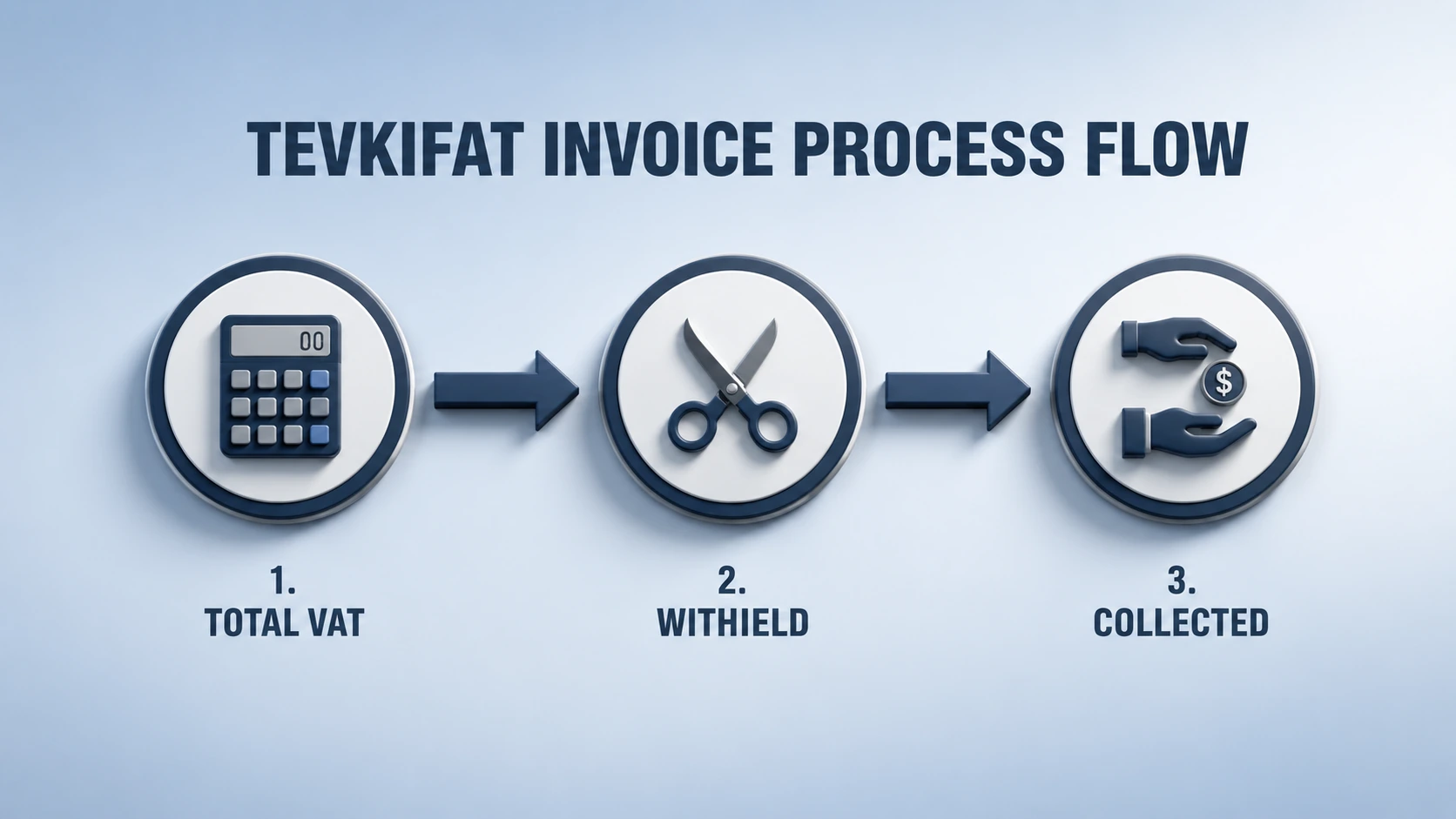
Assume a Turkish consultancy supplies a covered consulting service to a Turkish bank, a specified buyer:
| Line | Calculation | Amount |
|---|---|---|
| Service fee | — | TRY 100,000 |
| VAT at 20% | 100,000 × 20% | TRY 20,000 |
| Buyer-withheld VAT at 9/10 | 20,000 × 9/10 | TRY 18,000 |
| VAT collected by supplier | 20,000 − 18,000 | TRY 2,000 |
| Amount paid to supplier | 100,000 + 2,000 | TRY 102,000 |
The bank declares TRY 18,000 through VAT 2. The Turkish supplier reports the full transaction and the non-withheld portion through VAT 1. If the same consulting service were supplied by a non-resident with no Turkish residence, workplace, legal centre or business centre, the full-withholding analysis would come first; the buyer may need to account for 10/10 of the VAT instead.
What must appear on the invoice?
For a partial-withholding transaction, the Communiqué requires the document to show the transaction price, calculated VAT, withholding ratio, VAT to be withheld by the buyer, total including withholding and the amount payable after withholding. In practice, also control the correct transaction code, supplier/customer identifiers and applicable e-document scenario.
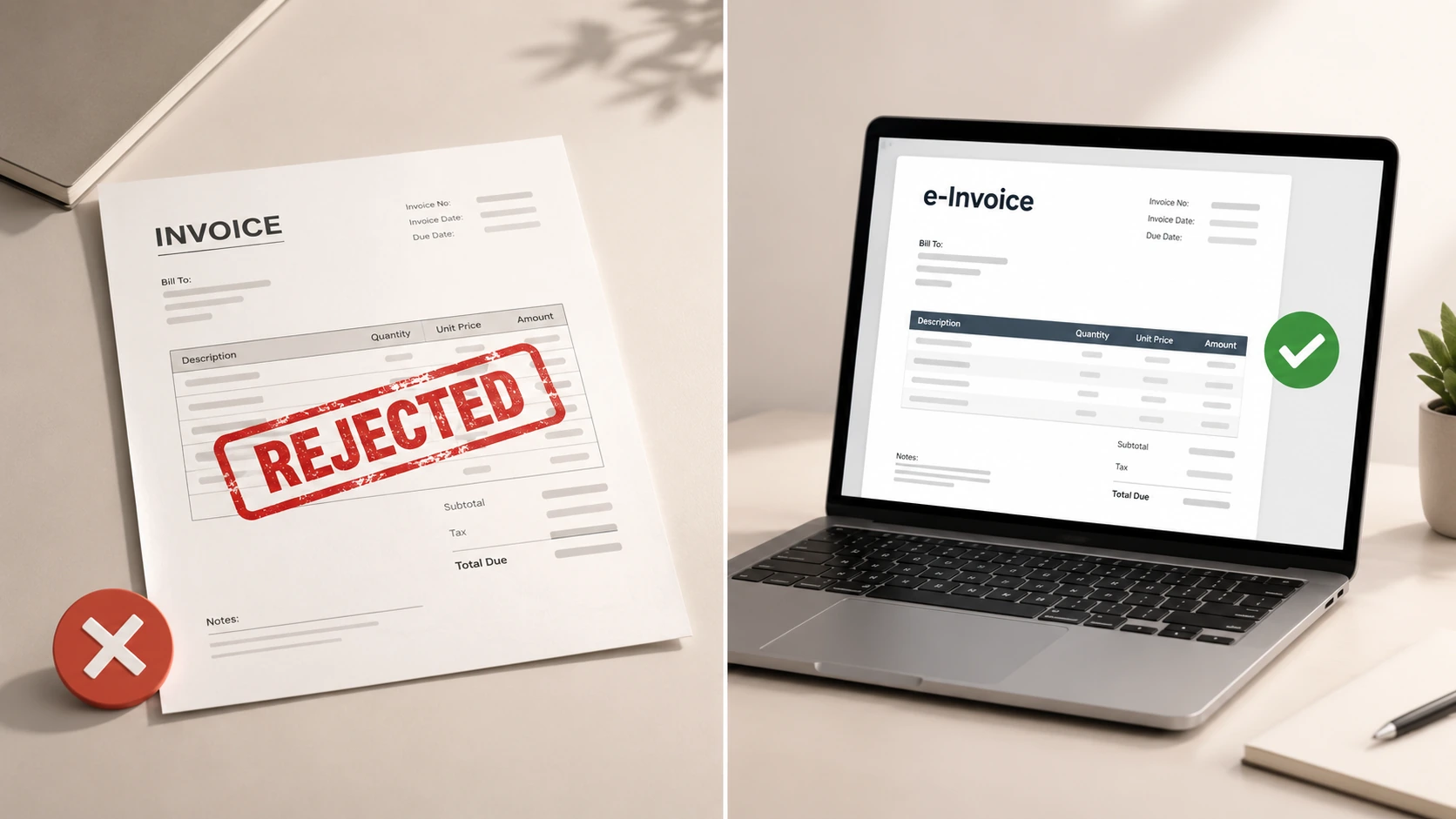
A “tevkifatlı fatura” is not automatically an e-Fatura in every case. The correct document channel depends on whether the parties are registered in the e-Fatura system and the e-document rules applying to the seller. When e-Fatura is required, the appropriate withholding invoice scenario and code must be used; otherwise, the applicable compliant e-Arşiv or other invoice route must be followed. See e-Fatura Registration in Turkey.
VAT 1 and VAT 2 deadlines in 2026
| Party | Return | General deadline |
|---|---|---|
| Buyer responsible for withheld VAT | VAT 2 | File and pay by the 25th day of the following month. |
| Turkish supplier in partial withholding | VAT 1 | File by the 28th day of the following month and pay within the filing period. |
The old 28th-day statement for VAT 2 is incorrect under the current Revenue Administration deadline table. Weekends, holidays or an official extension can affect the operational date, so confirm the calendar for each period.
Does withheld VAT become an automatic credit or refund?
No. The buyer’s withheld amount is not simply cash credited to the supplier, and it does not automatically become a corporate-income-tax credit. A Turkish supplier may request a tevkifat-related VAT refund only under the Communiqué’s transaction-specific rules, limits and evidence requirements. The VAT 1 and VAT 2 data, buyer payment of the assessed VAT where required, invoices, deductible-VAT records and refund calculation must align.
Cash and offset refund routes vary by category. Keep that file separate from an exporter refund: VAT Refund in Turkey for Exporters covers full-exemption export claims, not the tevkifat refund route.
Controls that prevent rejected invoices
- Record whether the supplier has a Turkish establishment and which VAT return route applies.
- Obtain the buyer’s exact legal status; do not accept “large company” as the only evidence.
- Map the contract deliverables to the Communiqué category and transaction code.
- Verify the VAT rate separately from the withholding ratio.
- Test the VAT-inclusive amount against the current annual threshold and aggregate one transaction correctly.
- Show the statutory invoice fields and reconcile the amount payable to the contract.
- Match seller VAT 1 data to buyer VAT 2 data and correct cancellations, returns or price changes on both sides.
- Archive the buyer-status evidence, legal section, calculation and approval with the invoice.

Official sources used for this 2026 guide
- Turkish Revenue Administration: 2026 consolidated VAT General Application Communiqué
- Revenue Administration declaration and payment deadlines
- Revenue Administration annual invoice-issuance threshold
- VAT Law No. 3065
Need the correct tevkifat route before invoicing? Workon can coordinate the operating file around supplier status, buyer group, transaction code, invoice fields and VAT 1/VAT 2 controls, with the withholding scope, ratio and regulated tax treatment confirmed by the company’s licensed SMMM/CPA or other authorised tax professional.
Frequently Asked Questions
Last reviewed: 17 September 2026. This guide provides general information, not legal or tax advice. Tevkifat scope, thresholds and ratios depend on the transaction period and detailed facts; confirm material decisions against the latest official text with a qualified Turkish tax professional.