Quick answer: A mali mühür (financial seal) is an electronic certificate used to authenticate a legal entity in specified Turkish Revenue Administration (GİB) e‑document systems. It is especially relevant to corporate taxpayers using e‑Fatura/e‑Arşiv and related GİB applications. Other workflows such as tax returns, SGK filings, KEP messages, bank instructions or government portals use their own applicable authentication and signing methods.
This guide explains the mali mühür requirement: which entity it identifies, where it is used, when a natural person can use qualified e‑signature instead, how application/delivery works, and when a new certificate is required.
Mali Mühür vs E‑Signature
| Tool |
Identity |
Typical function |
| Mali mühür |
Legal entity / taxpayer |
Entity authentication and signing in specified GİB e‑document systems |
| Qualified e‑signature |
Natural person |
Legally significant electronic signature by the individual |
GİB’s e‑Fatura portal guidance distinguishes legal entities and natural-person taxpayers: legal entities use mali mühür for portal access/signing, while natural persons can use a qualified e‑signature or, in applicable cases, mali mühür.
Key distinction: Mali mühür authenticates the legal entity in the relevant GİB framework. It does not replace the registered manager/director’s corporate representation authority.
Who Needs Mali Mühür?
The need is triggered by the company’s participation in a GİB application that requires mali mühür—not merely by the fact that an LLC or JSC has been incorporated.
Typical triggers include:
- registration/use of e‑Fatura where the legal entity uses the GİB portal or another model requiring its mali mühür;
- e‑Arşiv portal processes that require the taxpayer’s financial seal;
- e‑Defter or other GİB systems where current technical rules require entity certification/signing;
- other GİB e‑document applications expressly requiring mali mühür.
Apply for mali mühür when the company’s actual e‑document workflow requires it. The cleanest sequence is to map the applicable e‑Fatura, e‑Arşiv, e‑Defter or other GİB requirements first and then complete the certificate step at the right point.
Mali mühür is an entity-level electronic certificate used in specified GİB digital-document workflows.
Does Every New Company Need E‑Fatura Immediately?
No. E‑Fatura and other e‑document obligations depend on current GİB rules, turnover thresholds, sector/activity and taxpayer characteristics. Some businesses may enter voluntarily; others become mandatory users under current rules.
Therefore, the sequence should be:
- register the company;
- organise licensed SMMM/tax onboarding;
- determine which e‑document systems apply;
- apply for mali mühür where the chosen/required system needs it;
- complete e‑Fatura/e‑Arşiv/e‑Defter activation in the correct order.
See E‑Invoice Registration in Turkey and E‑Ledger in Turkey.
How Mali Mühür Fits Tax Declarations
Tax declarations are submitted through GİB’s declaration systems under the taxpayer’s applicable professional-signature/e‑Beyanname arrangements. An SMMM/YMM or eligible taxpayer filing method may be involved, while mali mühür has its own technical role in specified e‑document workflows.
Mali mühür has a distinct technical role in specific GİB e‑document applications. It should not be confused with the professional credentials and filing authorisations used for all tax declarations.
For the accounting/professional layer, see Turkish CPA / SMMM Requirement.
Portal, Integration and Private Integrator Models
How the company uses its certificate can depend on the e‑document integration model.
| Model |
Practical point |
| GİB Portal |
Legal entity generally authenticates/signs through its mali mühür in the portal workflow |
| Direct integration |
The taxpayer’s own technical system integrates with GİB and follows the current signing/security rules |
| Private integrator |
Documents may be signed under the technical model permitted by current GİB rules; do not assume the company must manually insert a USB token for every invoice |
This is why “without the USB stick you cannot issue a single invoice” is too simplistic for companies using private integration or other approved technical arrangements.
How to Apply for Mali Mühür
Mali mühür certificates are supplied through the Kamu SM / TÜBİTAK BİLGEM process. A practical sequence is:
- Confirm the company’s VKN and registered title are correct.
- Confirm the e‑document workflow actually requires mali mühür.
- Submit the current Kamu SM application.
- Pay the current certificate/device fee shown in the official application process.
- Track production and delivery through Kamu SM.
- Receive the certificate through an authorised company representative or other permitted recipient.
- Activate/install it according to the current technical instructions.
Use the current Kamu SM fee and delivery information when planning the application, as pricing, production and courier timing are updated through the official process.
Certificate-life control: Kamu SM’s current FAQ states that mali mühür certificates are produced with a three-year validity period. Record the certificate expiry date and start the renewal process early enough that e-document operations are not interrupted.
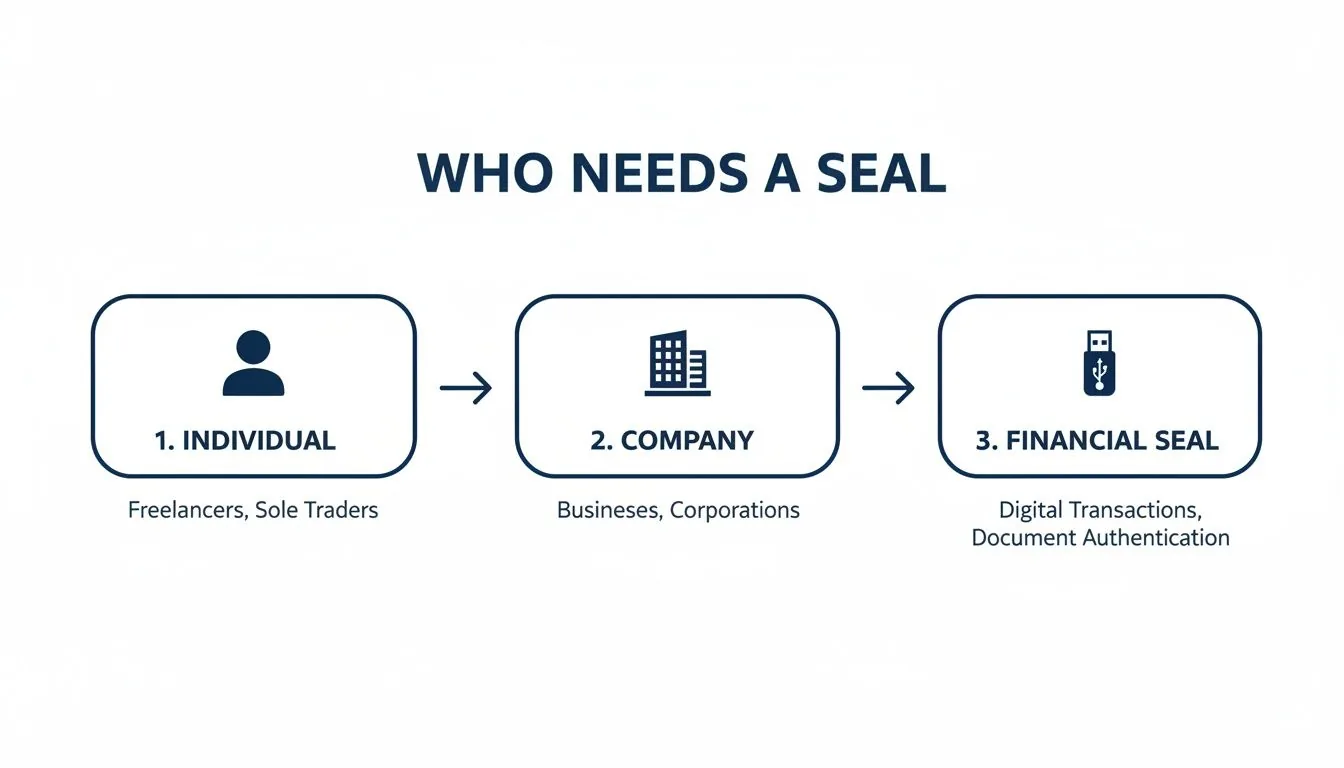
Apply after confirming the company’s e‑document requirement and current registered data.
Foreign-Owned Companies: Application Detail
Kamu SM’s current FAQ includes a specific rule for 100% foreign-owned companies. It states that these companies must obtain a temporary Turkish identification number (Geçici T.C. Kimlik Numarası) from the Directorate General of Migration Management, complete the Trade Registry registration and have the responsible-person information entered at the relevant tax office before completing the online mali mühür application.
For foreign-owned companies, the application workflow should therefore be prepared around the responsible-person and identification steps published by Kamu SM.
Who Can Receive the Certificate?
Kamu SM states that delivery may be made to:
- the company official specified in the application;
- a person holding the company official’s full notarised power of attorney; or
- another person identified through the permitted company-authority/delivery-document procedure.
The current Kamu SM delivery rules should be checked before arranging a courier or asking a third party to collect the certificate.
Which Company Changes Require a New Mali Mühür?
Kamu SM explicitly states that a new mali mühür certificate application is required when the company title or VKN changes.
Do not extend that rule automatically to every operational change. For example, Kamu SM separately provides a way to change the courier delivery address during the application process. A registered-address change or manager change should therefore be checked against the current certificate record and Kamu SM procedure rather than declared automatically to invalidate the certificate.
What if the Device Is Lost or Compromised?
If the smart card/token or certificate credentials are lost or compromised:
- contact Kamu SM immediately;
- follow the current certificate revocation/suspension process;
- assess whether unauthorised use may have occurred;
- apply for replacement where required.
Do not wait for the next invoice cycle to address a compromised entity certificate.
Mali Mühür Does Not Replace These Tools
| Tool |
Why it is separate |
| E‑signature |
Identifies/signs as a natural person |
| KEP |
Registered electronic correspondence service |
| UETS |
Formal electronic-notification system |
| Bank credentials |
Bank-specific authentication and transaction controls |
| SMMM/YMM filing authority |
Professional tax/accounting submission authority under separate rules |
Related guides: E‑Signature for Companies and KEP Address in Turkey. For the side-by-side decision map, use KEP vs E-Signature vs UETS vs Mali Mühür.

Workon coordinates post-registration digital-tool sequencing according to the company’s actual requirements.
Mali Mühür Decision Checklist
- Confirm whether e‑Fatura/e‑Arşiv/e‑Defter or another GİB system applies now.
- Confirm whether the company is a legal entity or natural-person taxpayer.
- Choose the portal/integration/private-integrator model.
- Check whether the company’s own mali mühür is needed for that model.
- Make sure title/VKN and responsible-person records are current.
- For foreign-owned companies, resolve the identification/tax-office responsible-person record before applying where required.
- Use current Kamu SM fees and delivery timing—not an old blog price.
- Renew or replace the certificate before a workflow is interrupted.
How Workon Coordinates the Mali Mühür Workflow
Workon coordinates post-registration operational readiness for foreign founders and overseas companies in Türkiye. Depending on the agreed scope, this can include determining the required digital tools with the licensed SMMM, coordinating mali mühür application/delivery, and sequencing e‑Fatura, e‑signature, KEP and other operating processes.
Mali mühür is issued through the authorised Kamu SM process. Tax/accounting decisions and regulated professional work are handled by licensed SMMM/YMM professionals.
Review Workon’s company registration and operational coordination service.
Official Sources
Frequently Asked Questions
A mali mühür is an electronic certificate used to authenticate a legal entity in specified GİB e-document workflows. It is relevant to systems such as e-Fatura and related applications where the selected method requires it. Tax-return filing authority, KEP, SGK and bank credentials are separate.
The need follows the taxpayer's e-document obligations and the portal or integration method used; incorporation alone does not decide it. Legal entities use a financial seal in the GİB e-Fatura portal, while natural-person taxpayers may use a qualified electronic signature under the applicable route.
No. The financial seal identifies the entity in the relevant e-document framework, while a qualified e-signature identifies a natural person. Use the credential accepted for the specific taxpayer and system; neither credential replaces the signer's required corporate authority.
After confirming that the company's e-document route requires it, apply through the current Kamu SM process using the company's registered title, VKN and responsible-person information, then complete payment, delivery and activation. For 100% foreign-owned companies, Kamu SM currently requires a temporary Turkish identification number for the responsible person, Trade Registry registration and the responsible-person record at the relevant tax office before the online application is completed.
Kamu SM's current FAQ states that mali mühür certificates are produced with a three-year validity period. Track the expiry date and start renewal early enough to avoid interrupting e-document operations.
Check the actual invoicing route. GİB portal, direct integration and approved private-integrator models can use different authentication and signing arrangements. It is too broad to say that every company must physically use its own USB token for each invoice or cannot issue any invoice without one.
Note: Last reviewed 17 September 2026. This guide explains mali mühür and related Turkish e-document workflows at an operational level. Workon coordinates the digital-tool setup with the licensed SMMM/YMM and the relevant GİB/Kamu SM process according to the company’s needs.