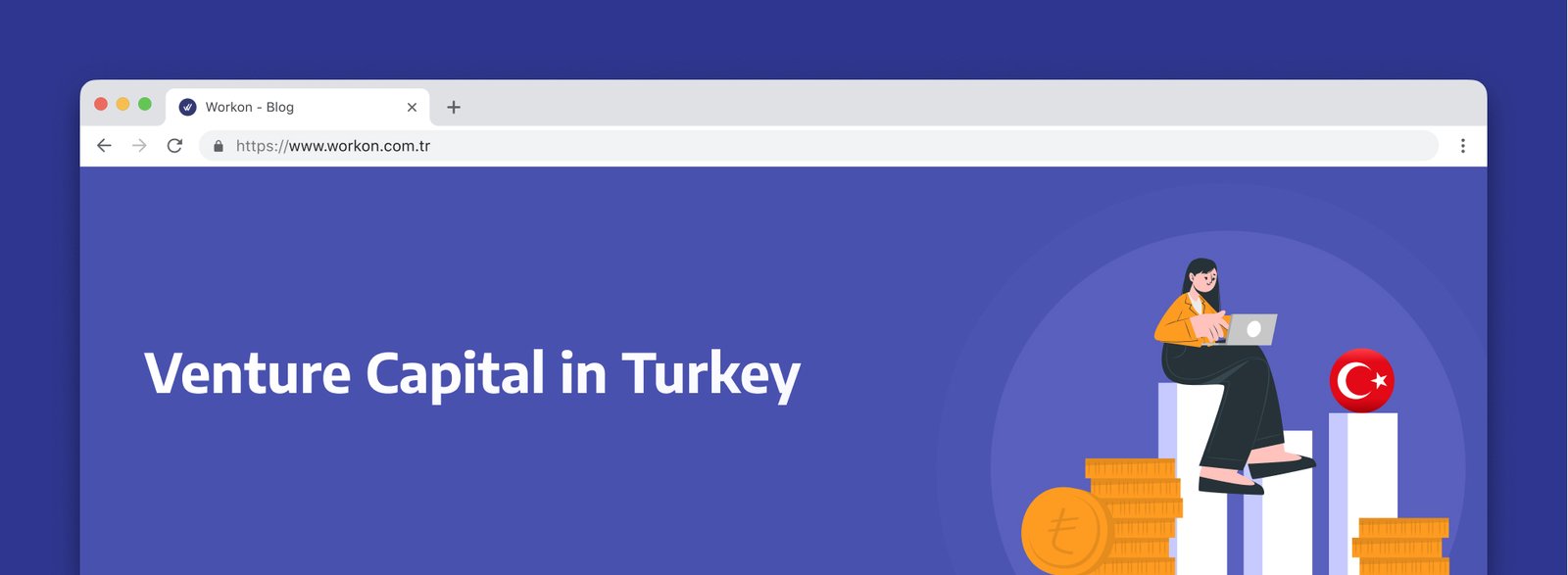
Venture capital in Turkey is not one funding product or one type of investor. A startup can raise capital through a direct equity investment from an angel or VC, a strategic/corporate investor, an SPK-regulated Girişim Sermayesi Yatırım Fonu (GSYF), or a public/co-investment route such as TÜBİTAK BiGG. The right route depends on the company’s stage, capital need, sector, governance readiness and the investor’s legal structure.
For founders, the practical 2026 sequence is: funding need → investor type → valuation/ownership impact → due diligence → term sheet → capital increase/share transfer → closing → post-investment governance. For investors, the sequence begins with mandate, eligibility, diligence, structure and exit rather than with generic ecosystem narratives.
Quick Answer: What Venture Funding Routes Exist in Turkey?
| Funding route |
Typical use |
Main legal/operational point |
| Direct angel / VC equity |
Pre-seed to growth-stage capital |
Investor subscribes for new shares or acquires existing shares; shareholder rights and governance are negotiated directly. |
| SPK-regulated GSYF |
Professional fund investment into qualifying ventures |
Fund is established/managed under Capital Markets Board rules and financed through participation units purchased by qualified investors. |
| TÜBİTAK BiGG / public co-investment |
Technology-oriented pre-seed/seed companies that meet call criteria |
Funding terms, equity percentages and application windows are call-specific and must be checked for the current programme. |
| Strategic / corporate investor |
Capital plus distribution, technology, market or supply-chain access |
Commercial rights, exclusivity, IP, board/control rights and strategic dependencies require careful negotiation. |
| Convertible / debt-like funding |
Bridge financing or delayed valuation where legally/contractually suitable |
Instrument design, corporate approvals, tax/accounting and conversion mechanics require transaction-specific review. |
| Later-stage bank/debt finance |
Companies with revenue, assets or predictable cash flow |
Not venture equity; bank underwriting, collateral/KGF and repayment capacity remain separate. |
No route is automatically “better.” The founder should compare capital amount, dilution, control rights, investor value-add, timing, reporting burden and future-round compatibility.
1. Direct Equity: The Core Founder–Investor Route
A direct venture investment usually enters the Turkish company through one or a combination of:
- capital increase — new shares are issued and the investment cash goes into the company;
- share transfer — an existing shareholder sells shares and the purchase price goes to that shareholder;
- combined transaction — part primary capital, part secondary share sale.
These routes have different cash-flow and governance consequences. A founder seeking growth capital should not describe a secondary founder share sale as if the company itself received the full investment amount.
For transaction mechanics, see How to Add a Partner to a Turkish Company, Capital Increase in Turkey: 2026 Guide and Share Transfer in Turkish LLCs.
2. GSYF: A Regulated Fund Route, Not a Synonym for All VC
The Capital Markets Board (SPK) defines Girişim Sermayesi Yatırım Fonu (GSYF) as an asset pool without legal personality, established for a fixed term by an authorised portfolio management company or venture-capital portfolio management company and funded through participation units purchased by qualified investors.
GSYFs are governed by the Capital Markets Law and SPK Communiqué III-52.4. Their portfolios can invest in ventures within the permitted framework, but a GSYF is only one institutional vehicle in Türkiye’s venture-capital ecosystem.
Founders should ask:
- Is the investor investing directly or through a GSYF?
- What is the fund’s investment mandate and remaining fund life?
- What ticket size and stage does the fund target?
- What governance, reporting and exit rights does the fund require?
- Can the fund make follow-on investments?
- Are there sector, geography or portfolio-concentration constraints?
Official reference: SPK Girişim Sermayesi Yatırım Fonları guide.
3. Public Venture Investment Is Not the Same as a Grant
TÜBİTAK’s BiGG Yatırım is an investment-based route. A founder comparing it with private venture capital should examine the investment instrument, equity impact, eligible company stage, use of funds and continuing obligations—not treat the programme as an equity-free grant.
Depending on the applicable programme and call, funding can involve equity, convertible debt or a combination. A subscription for new shares brings funding into the company; a purchase of an existing founder’s shares has a different cash-flow effect. Keep that distinction visible in the funding plan.
For applicant-stage conditions, current amounts and submission windows, use the IT startup incentive and funding-route guide and verify the applicable official BiGG programme and call documents.
4. Check Seed and Follow-On Investment Conditions Separately
A seed or follow-on programme is not automatically available to every startup that could apply for an earlier-stage programme. BİGG+ has its own applicant and prior-programme conditions, and investment follows the relevant evaluation and due-diligence process.
Before including a public investment in the next round, check the company’s eligibility, existing cap table, proposed dilution, instrument, required approvals and compatibility with other funding commitments. Do not present a programme cap as committed financing or assume the published maximum will be offered to the company.
The IT startup funding-route guide covers programme selection. For a BİGG+ application, use the official seed-investment call for its specific conditions.
5. Match the Funding Route to the Startup Stage
| Stage |
Main founder need |
Routes to evaluate |
| Idea / pre-company |
Validation, prototype, initial team |
Founder capital, accelerator, call-based public/pre-seed programmes. |
| Pre-seed |
MVP, first users, technical/product validation |
Angels, micro-VC, BiGG-type call, strategic partner. |
| Seed |
Repeatable sales, team growth, go-to-market |
VC/GSYF, strategic investor, BİGG+ where eligible. |
| Series / growth |
Scale, international expansion, acquisitions |
Larger VC/GSYF, corporate investor, growth equity, selected debt. |
| Capital-intensive / deep tech |
Long R&D cycles, hardware, regulatory testing |
Specialist VC, corporate/strategic capital, public R&D programmes, staged equity. |
A startup should not force a VC round merely because “venture capital” sounds prestigious. If the capital requirement can be funded through revenue, founder capital or non-dilutive support at acceptable risk, dilution may not be the best first choice.
6. Founder Fundraising Readiness: Build the Data Room Before Outreach
Investors usually evaluate far more than the pitch deck. Before fundraising, prepare:
- current Trade Registry / company records;
- cap table and shareholder agreements;
- founder IP assignment and employee/contractor IP documentation;
- financial statements and management accounts;
- tax and SGK compliance status;
- customer contracts and concentration;
- MRR/ARR/revenue/cohort or other sector-relevant operating metrics;
- key supplier/vendor/platform agreements;
- licences/permits where regulated;
- employment and incentive-plan documents;
- litigation/dispute disclosure;
- planned use of funds and runway model.
Missing corporate or IP records can delay a round even when investors like the product.
7. Founder-Side Term Sheet Questions
Do not evaluate a term sheet only from headline valuation. Review:
- pre-money vs post-money valuation;
- investment amount and dilution;
- liquidation preference;
- anti-dilution;
- board/management rights;
- reserved matters / veto rights;
- founder vesting or reverse vesting;
- employee option pool;
- information/reporting rights;
- drag-along / tag-along;
- pre-emption / right of first refusal;
- founder transfer restrictions;
- future-round participation;
- exit and deadlock mechanics.
The commercial combination matters more than any one clause in isolation. Have transaction documents reviewed by appropriately licensed counsel before signing.
8. Investor Due Diligence: What Should Be Tested?
Investor-side diligence typically covers:
| Area |
Questions |
| Corporate |
Is the cap table accurate? Were past share transfers/capital increases validly completed? |
| Financial |
Are revenue, margins, cash, debt and related-party balances reliable? |
| Tax / SGK |
Are there filing, payroll or public-debt exposures? |
| IP / technology |
Does the company own the code, trademarks, patents/data rights it claims? |
| Commercial |
Are customer contracts durable? Any concentration, cancellation or platform dependence? |
| Regulatory |
Does the product require licences or approvals? Are claims compliant? |
| People |
Are key founders/employees bound by valid employment, IP and confidentiality terms? |
| Data / security |
Are privacy, cybersecurity and cross-border data risks material? |
| Exit |
What realistic strategic, financial or public-market exit paths exist? |
9. Foreign Investor Into a Turkish Startup: Operational Closing Matters
A foreign investor should plan the investment mechanics alongside banking/KYC and corporate records. Common workstreams include:
- foreign investor identity/corporate authority documents;
- apostille/legalisation/translation where the receiving file requires it;
- capital increase or share-transfer documentation;
- bank transfer evidence and source-of-funds/KYC;
- Trade Registry/MERSIS updates where applicable;
- UBO/bank/institution records;
- E-TUYS foreign-investment notifications where applicable;
- shareholder agreement and corporate governance implementation.
For business-bank/KYC planning, see How to Open a Business Bank Account in Turkey.
10. Startup Incentives and VC Are Separate Funding Layers
Technopark tax advantages, R&D grants, Ministry support, KOSGEB and export/service incentives can improve startup economics, but they are not substitutes for investment capital and should not be bundled into a generic “venture capital package.”
A founder should model separately:
- equity capital;
- grants/non-dilutive support;
- tax incentives;
- bank/debt financing;
- customer revenue;
- strategic partner contributions.
For technology-zone eligibility, see IT Company Setup in Turkey Technoparks.
11. Avoid These Venture-Capital Myths
- “Every announced investment amount is partly fake or only networking value.” — unsupported generalisation.
- “Turkish startups should always focus on revenue because capital is scarce.” — strategy depends on sector and stage.
- “Deep tech cannot thrive in Türkiye.” — capital intensity is a challenge, not a universal conclusion.
- “A USD 50k or USD 100k cheque has a fixed meaning in the Turkish ecosystem.” — ticket sizes vary by investor, stage and year.
- “GSYF means venture capital in Turkey.” — GSYF is one regulated fund vehicle among multiple routes.
- “BiGG is a fixed grant.” — current programme uses investment structures and call-specific terms.
12. Workon’s Role in an Investment-Ready Setup
Workon coordinates Turkish company setup, registered-address/workspace, corporate document readiness, bank-account application support and the operational handoffs needed before or after an investment. Where a funding round requires regulated investment advice, securities or fund-management activity, valuation, legal transaction work or regulated tax/accounting work, Workon coordinates the relevant workstream with the appropriately licensed or authorised professional or regulated entity and keeps it aligned with the wider company-setup and closing process.

Corporate records, banking and operating readiness should be investment-ready before a funding round closes.
Key Takeaways
- Venture capital in Türkiye includes direct equity, GSYF, strategic investment and public/co-investment routes.
- GSYF is an SPK-regulated fund vehicle, not a synonym for all venture investment.
- TÜBİTAK BiGG/BİGG+ investment amounts and equity terms are call-specific; use current dated calls.
- Capital increase and share transfer have different cash-flow consequences.
- Founders should prepare a clean data room before fundraising.
- Investors should diligence corporate, financial, tax, IP, regulatory and commercial risks.
- Term-sheet economics include governance and exit rights as well as valuation.
- Foreign-investor closing requires banking/KYC and corporate-record coordination.
Routes can include direct angel or VC equity, strategic or corporate investors, SPK-regulated GSYFs, call-based public or co-investment programmes such as TÜBİTAK BiGG, and transaction-specific convertible or debt-like structures. The right route depends on stage, capital need, governance and investor mandate.
No. A Girişim Sermayesi Yatırım Fonu is a specific SPK-regulated fund vehicle managed within the capital-markets framework and funded through participation units purchased by qualified investors. Direct angels, VCs and strategic investors can use other structures.
No. BiGG uses investment-based, call-specific terms. Investment amounts, equity percentages, eligibility, dates and possible continuation mechanisms can change by call, so founders should use the current official call rather than an old headline figure.
In a capital increase, new shares are issued and the investment cash goes into the company. In a share transfer, an existing shareholder sells shares and the purchase price goes to that shareholder. A transaction can combine both, but the cash-flow and governance effects differ.
Prepare current corporate records and cap table, IP ownership evidence, financial and tax or SGK records, customer and operating metrics, key contracts, employee and contractor documentation, licences where relevant, disputes, use of funds and runway. A clean data room reduces avoidable closing delays.
Current-rule note: Last reviewed 17 September 2026. Fund eligibility, public-programme terms, investor mandates, valuations and transaction structures can change and depend on the parties and current regulation. Use current SPK/TÜBİTAK sources and the appropriately licensed legal, tax, financial and investment professionals for the relevant workstream. Workon coordinates business setup and operational readiness around the investment process; funding, fund-management and other regulated decisions remain with the relevant investors, regulated entities, authorities and licensed professionals.