Virtual Office in Turkey: 2026 Model & Setup Guide
08.07.2026
A virtual office in Turkey can give a foreign founder a registered business address, mail handling and access to business facilities without taking a dedicated office lease from day one. For many remote or light-presence businesses, that can be a practical way to establish a Turkish company while keeping fixed premises costs under control.
A virtual-office arrangement works best when the selected premises, address-use documentation and company activity are aligned. Businesses that need employees, customer access, stock, equipment, production or a premises-specific licence can instead use a workspace model designed for those operating needs.
Thinking of a Virtual Office in Turkey? Start Here
A virtual-office decision becomes operationally important when company formation, official correspondence and tax-office verification all depend on the same address record. Before filing, confirm what right-to-use document the provider supplies, how official notices are received and escalated, and how the premises-side team responds if the tax administration requests information or attends the address.
A virtual office in Turkey solves a real problem when the business genuinely does not need dedicated premises. It can provide a registered address and supporting services while avoiding the lease, fit-out, utilities and daily facility management of a private office.
The decision should still be driven by the company’s activity and operating model rather than by a generic market-growth statistic. A remote consultancy and a licensed clinic, warehouse or customer-facing retail business do not have the same premises requirements.
Who usually benefits most
Foreign founders testing the market: They need a registered address first, not a large office.
Remote-first service businesses: Consulting, software, design, trade intermediation, and e-commerce often don’t need permanent desks.
SMEs opening a Turkish entity: They want a local presence for registration and correspondence while keeping overhead controlled.
Digital operators who travel often: They need someone local to receive and manage official mail.
The strongest setup is one where the address arrangement, supporting premises documents and operational handling are aligned with the company’s filing and verification needs from the beginning.
The sensible approach is simple: choose the address model around the company’s activity, registration needs and operating model, then compare the commercial package and cost.
Defining the Virtual Office for the Turkish Market
In Turkey, a virtual-office service may combine a registered-address right with mail handling and optional business facilities. Whether a particular arrangement can be used for a company depends on the premises, the right-to-use documentation, the company’s activity and any activity-specific licensing or operating requirements.
A mailbox-only service should not be confused with a registered-headquarters arrangement. For company use, the address should be identifiable in the relevant official address systems, supported by a valid right-to-use arrangement and backed by a reliable process for official correspondence and any tax-office verification that applies to the case.
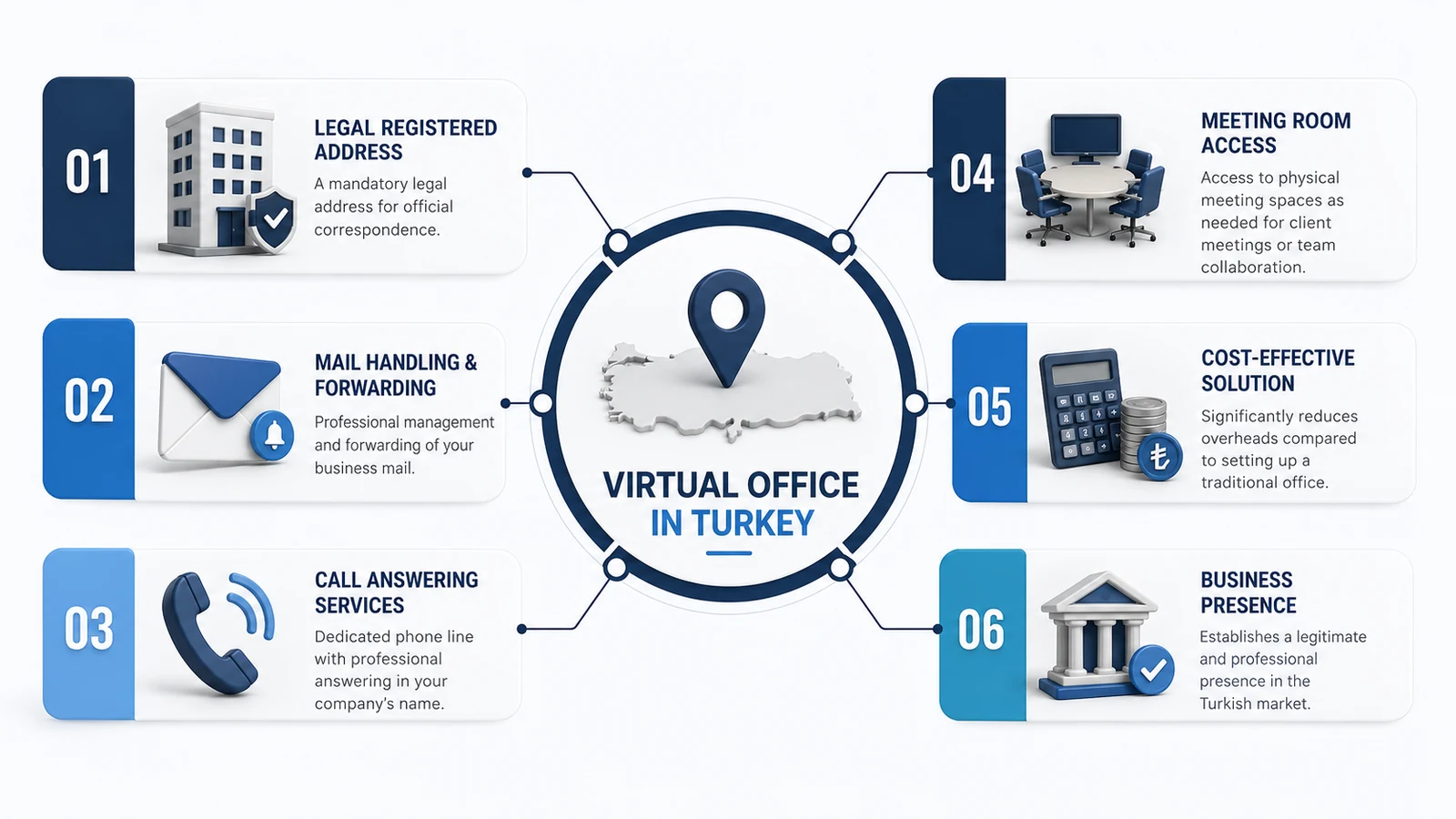
Virtual-office packages can combine a registered-address arrangement with mail handling and optional meeting or workspace access; exact rights are package- and activity-specific.
What you’re actually buying
A virtual-office package can combine several service layers, but they should be checked separately rather than assumed to be included:
Registered-address use: Confirm that the agreement actually grants the company the right to use the exact premises as its registered headquarters where the activity allows it.
Mail handling: Confirm which company-addressed correspondence the provider accepts and how official notices are logged and escalated. Workon operating note: Workon’s ordinary virtual-office mail workflow is for items addressed to the contracted company; personal packages and bulky e-commerce/stock boxes are outside the ordinary mail-handling scope, and mail notifications are sent to the contract email under the applicable service terms.
Forwarding or notification: Check what is scanned, stored, collected or forwarded and which actions carry extra charges.
Phone or receptionist support: Treat this as a separate package feature unless the current offer expressly includes it.
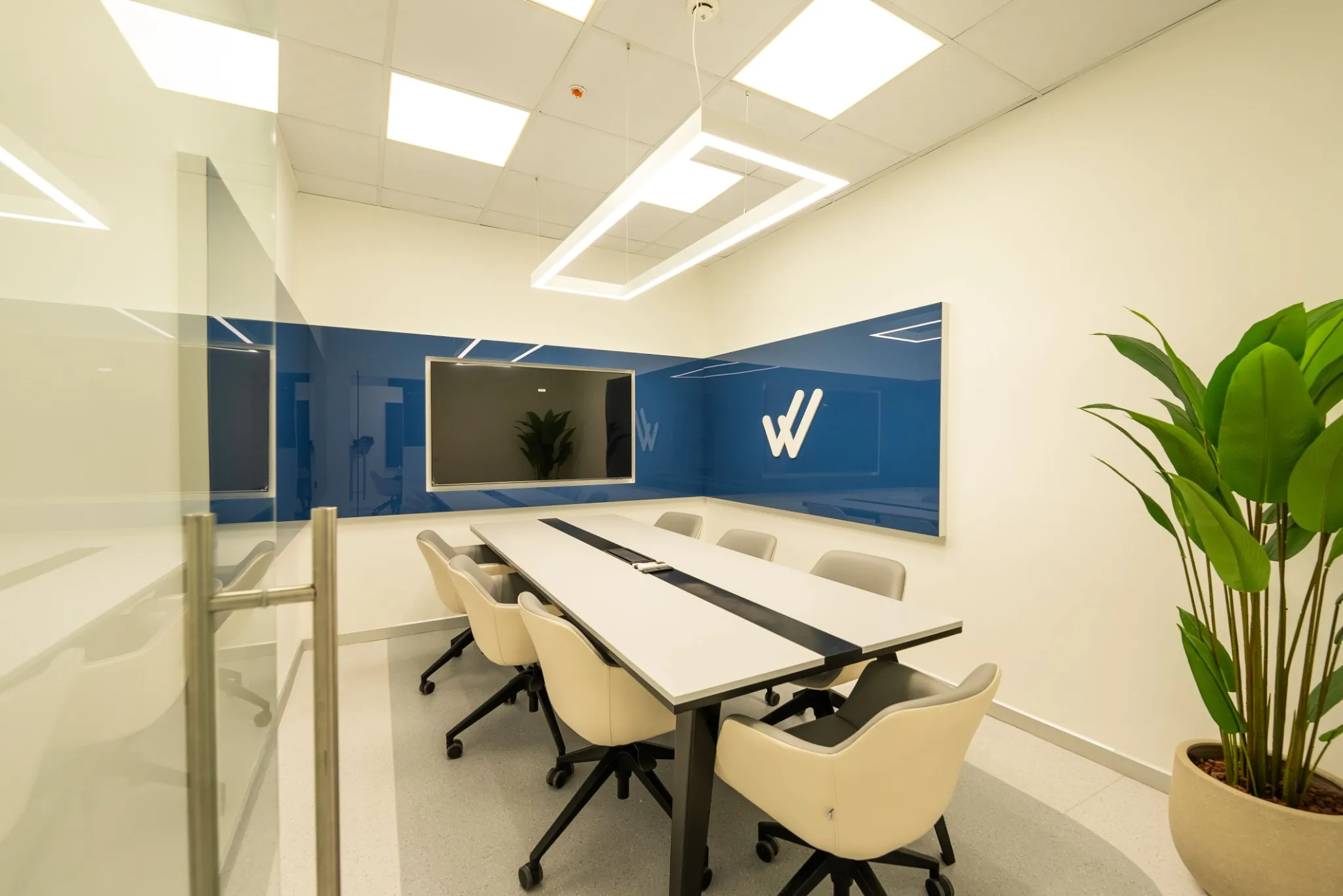
Meeting room or workspace access: Confirm the included allowance, booking rules and any additional usage charge rather than assuming unlimited access.
A virtual-office package is therefore an operational service built around a physical business location. A company may operate remotely, but its registered-address arrangement still needs to be traceable, usable and supported by the appropriate premises and correspondence records.
What matters more than the brochure
Founders often focus on prestige first. Levent, Maslak, Ataşehir, Kadıköy, Çankaya. The location matters, but not in isolation. A polished address is useful only if the provider knows how to support company registration and routine bureaucracy.
Use this practical pre-signing test:
Check
Why it matters
Address can be used in company registration
This confirms whether the package supports the incorporation use case
Provider handles official mail properly
Reliable handling keeps official correspondence timely and organised
Meeting room access exists
Useful for bank, client, or partner meetings
Contract terms are clear
You need to know what is included and what is extra
Support during verification steps
This shows how well the provider supports the registration and verification workflow
A virtual office should reduce friction. Prefer a provider that can clearly explain how registration, mail handling and verification support work in practice.
Meeting Legal and Tax Address Requirements in Turkey
For company use, the registered-headquarters address should be identifiable in the relevant official address systems and supported by an appropriate right-to-use arrangement. For companies using MERSİS, the Ministry of Trade states that incorporation and address-change records use address data integrated with the National Address Database (UAVT), so consistent and correctly recorded address data is the key practical requirement.
The separate tax question is whether the declared business facts can be verified. GİB explains that commencement-of-business checks are carried out through the Electronic Yoklama System after taxpayer registration. For the detailed timing and practical preparation, use the virtual office tax-office verification guide for the inspection-specific documents, responsibilities and follow-up.
Registered-address records and tax-office verification are separate controls; a virtual-office arrangement should be assessed against the company’s actual activity and premises file.
Check Verification Support as Part of Provider Selection
Before buying the address service, establish who supplies the premises documents and who responds to an authority request. Keep this purchasing decision separate from the later verification itself: provider support does not guarantee the tax administration’s findings. The linked yoklama guide explains how to prepare that specific file once the address model is chosen.
Check the address file before signing
The address, the provider’s authority to let the company use it, the company’s activity and the documents used across the registry and tax records should be reviewed together before submission. This keeps the formation and verification workflow consistent from the start.
Practical rule: ask the provider to explain, in writing, what address-use documents it supplies, how official correspondence is handled and how it responds when the tax administration needs to verify a company registered at the premises.
For an LLC, use the activity and premises suitability guide to test whether the business needs staff space, stock storage, customer access or specially licensed premises. The company’s legal form alone does not settle the workspace requirement.
Simplify your business setup with Workon’s all-in-one company registration service in Turkey.
What a workable arrangement should provide
A workable arrangement should have a clear contract, a traceable physical business location, reliable handling of official correspondence, coordinated address data across the company file and a defined response process for document or verification requests.
The key is to choose an address arrangement that supports the company’s actual registration, correspondence and verification requirements.
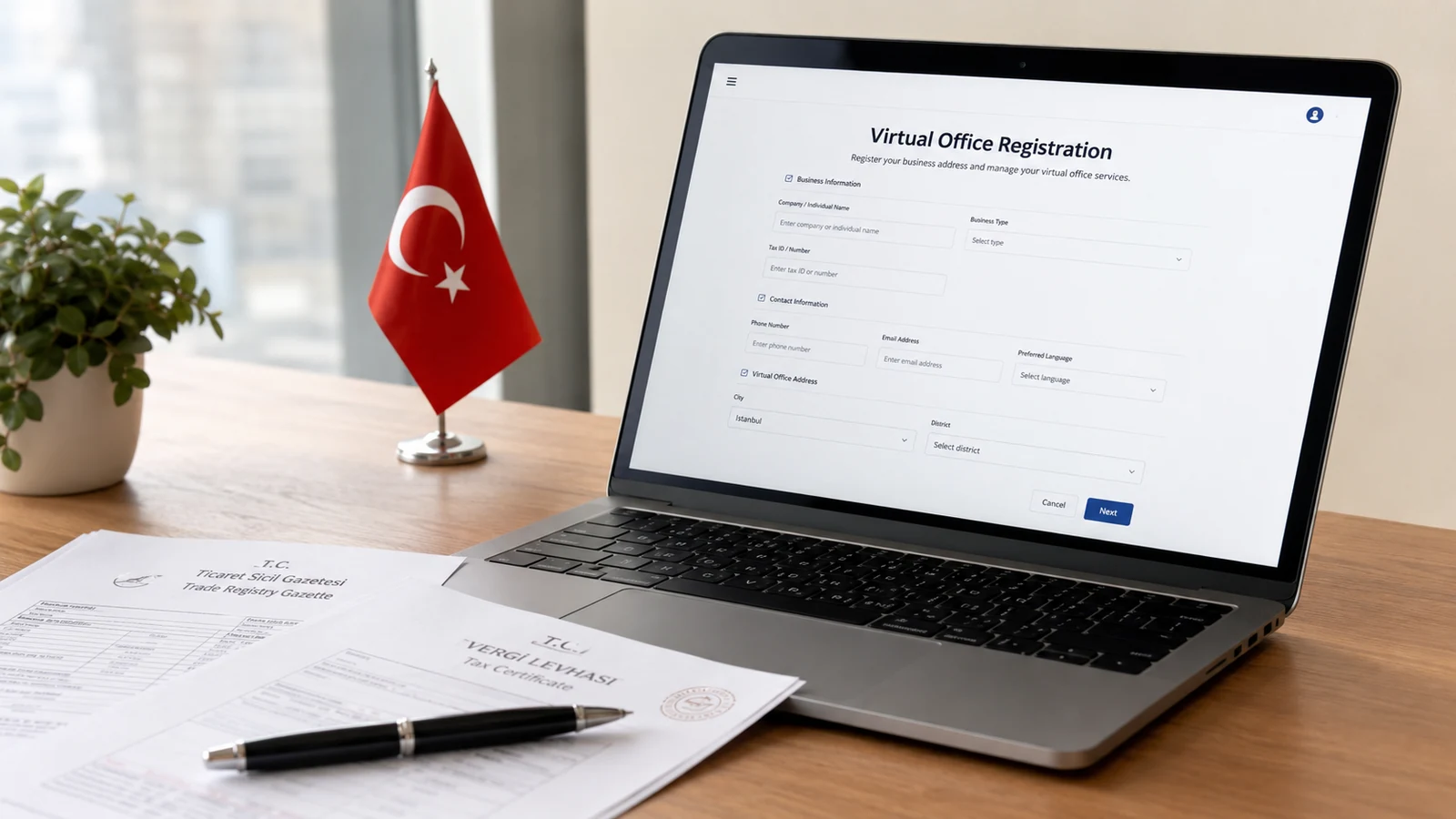
Your Step-by-Step Setup and Compliance Checklist
Sequence matters. Check the company activity and premises fit before purchasing the address service, then align the agreement and address data with the formation, tax and post-registration workflow.
There is also a financial reason to get the address model right early: a virtual office can remove many fixed costs associated with a dedicated lease, but there is no reliable universal percentage saving or evidence that companies using virtual addresses expand by a fixed percentage faster. Compare the actual package, meeting-room use, mail forwarding, VAT, contract term and the physical workspace the business genuinely needs.
A practical setup order
Choose the address based on compliance first
Check that the provider supports company formation, official correspondence, and verification steps. If you need a specific district for commercial credibility, discuss that after confirming compliance.
Review the contract carefully
Look for the basics: address usage, mail handling, forwarding rules, meeting room terms, contract duration, and any extra support tied to registration.
Coordinate with your accountant before filing
The company and its licensed SMMM should use the same verified address details consistently across the relevant formation and tax records. Address mismatches can trigger additional questions or correction work.
Where many files slow down
Founders often underestimate document flow. The address agreement, passport translations if needed, signature process, trade registry forms, tax registration, and later bank requests all need consistency. Using the same verified address format across the file keeps later registry, tax and banking steps easier to coordinate.
Keep one master version of your company address and share it with every adviser involved. The issue is rarely the address itself. It’s inconsistent paperwork.
Finish the operational side, not just the legal side
After registration, set rules for communication immediately:
Mail notifications: Decide whether you want instant notice or batched updates.
Forwarding instructions: Official notices should not sit unopened.
Phone handling: If your package includes a local line, decide who answers and how.
Meeting room use: Know how to book space before a bank or client meeting comes up.
If you’re moving an already formed company rather than starting a new one, the paperwork follows a different route. In that case, a guide on changing a company address in Turkey is more relevant than a formation checklist.
Coordinating the Address Service With Company Setup
Some founders prefer to keep the registered-address service and company-setup coordination with the same operational team, so there are fewer handoffs between the address contract, formation file and post-registration follow-up. Workon offers virtual office, workspace and business-setup coordination in Turkey. Regulated legal, tax and other professional work is handled by the appropriately licensed professionals for the specific case.
Cost Breakdown: Virtual Office vs Coworking vs Physical Office
The monthly headline price is only one part of the decision. A virtual-office package can have a lower fixed premises cost than a dedicated lease because the company is buying address and support services rather than exclusive premises. The best comparison therefore combines price with the activity fit, registered-address rights and the operational support included in the package.
For a useful comparison, separate the workspace cost from the company’s legal and operational requirements.
What you are actually comparing
Decision factor
Virtual office
Coworking / hot desk
Dedicated physical office
Registered-address right
Only where the agreement expressly grants a usable registered-business address
Plan-specific; confirm before relying on it for registration
Possible where the premises and right-to-use documentation fit the company file
Mail handling
Package-specific; confirm receipt, notification, storage and forwarding rules
Operator- and plan-specific
Managed by the company at its premises
Meeting / work access
Often limited, bookable or separately charged
Usually a core part of the plan
Exclusive access under the premises arrangement
Fixed premises cost
Often lower than taking a dedicated lease
Usually between address-only and dedicated-office models
Usually includes rent plus premises-related operating costs
Activity and premises suitability
Depends on the activity, premises, documentation and any licensing requirements
Depends on the activity, plan rights, premises and any licensing requirements
A lease alone does not establish suitability; activity and premises rules still apply
Best operational fit
Businesses that can operate without dedicated daily premises and whose activity supports the model
People who need regular desk access while retaining flexibility
Activities that require exclusive space, staff presence, storage, equipment, customer access or premises-specific licensing
How to compare the real cost
A dedicated office can add rent, deposit, utilities, internet, furniture, cleaning, fit-out and management time. A virtual-office package may remove many of those fixed premises costs while consolidating the registered-address, document-support and official-mail workflow with one provider.
A practical cost comparison therefore has three layers:
Premises or service cost: rent or package fee plus recurring service charges.
Setup cost: transaction-specific document, third-party and premises setup costs where applicable.
Operational handling: mail forwarding, meeting or workspace use and the internal time needed to keep address-related records and authority requests organised.
Current package pricing belongs on the live service page rather than in a long-lived legal or compliance guide.
A more reliable way to choose
Choose a virtual-office model only where the company’s activity and premises requirements allow it and the agreement gives the company the registered-address and operational rights it actually needs. It can be a practical fit for many remote-first service, consulting, software, agency and market-entry businesses, but suitability is case-specific.
Choose coworking when regular desk or meeting access is important, then verify separately whether the selected plan also grants an appropriate registered-address right and supports the company’s official correspondence requirements.
Choose a dedicated office where the operating model genuinely requires exclusive premises, on-site staff, storage, equipment, production, regular customer access or a premises-specific licence. The company’s registration, tax, banking and sector-specific steps can then be coordinated around that premises model.
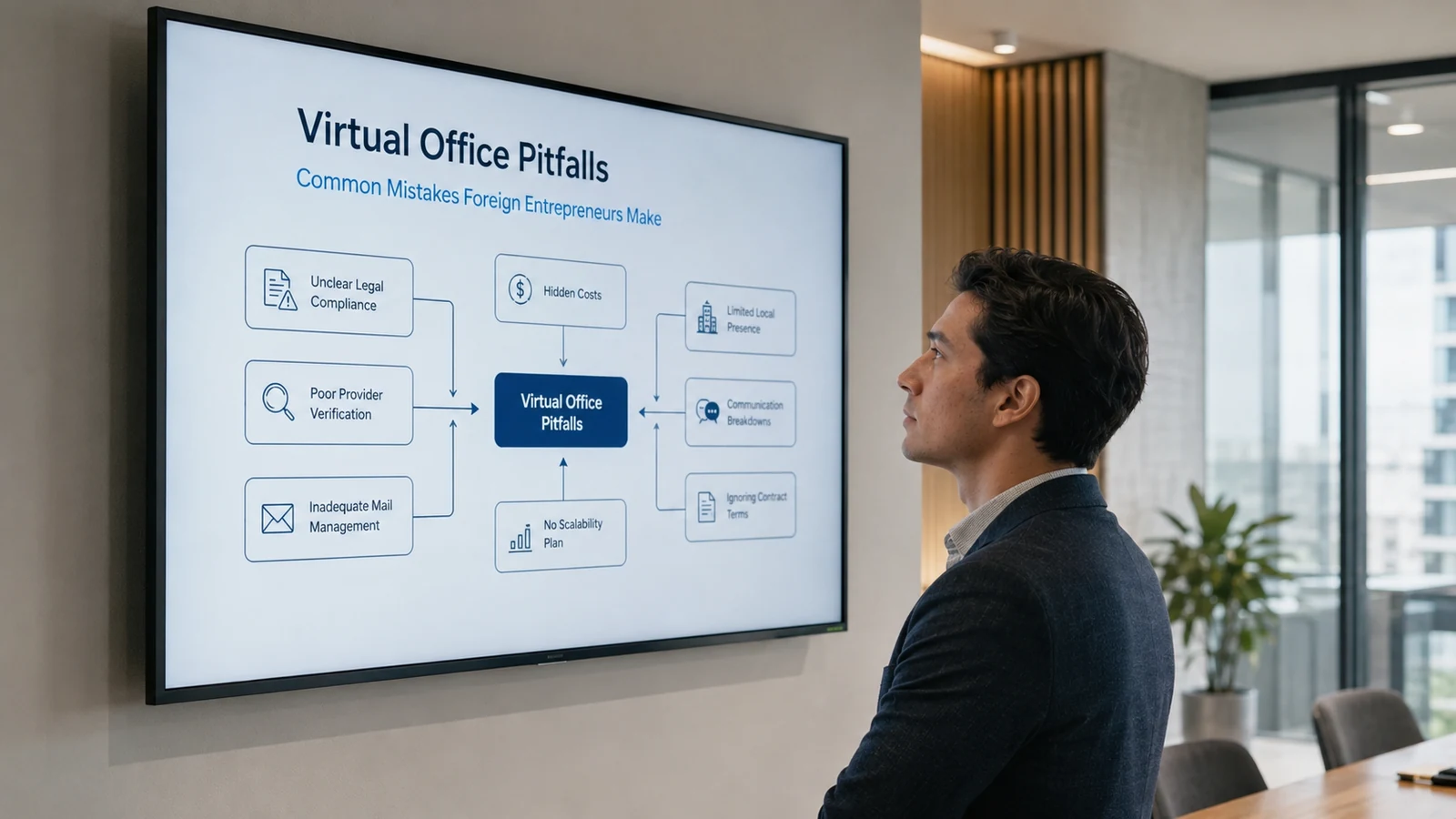
How Foreign Founders Can Choose the Right Virtual Office Setup
Foreign founders should review the address-use file and operational process before choosing a virtual office in Turkey.
Choosing on price alone: compare the right to use the premises, supporting address documents, official-mail handling and any workspace access the business actually needs.
Assuming every package is registration-ready: a mailbox or meeting-room product is not automatically a registered-headquarters arrangement. Confirm the exact agreement and premises before filing.
Confusing Trade Registry and tax-office verification: company registration and GİB yoklama are separate processes. Do not describe a standard Trade Registry site inspection as part of every formation.
Treating official mail as an optional extra: the company needs a reliable process for receiving and escalating official correspondence.
Assuming location prestige changes legal suitability: district and building choice can matter for meetings and daily operations, but they do not replace correct documents, activity fit or bank KYC.
Mixing company and personal residence files: the company’s registered headquarters does not automatically satisfy the founder’s residence-permit or residential-address requirements.
Check activity fit before signing
A virtual or serviced address can suit many consulting, software, agency, professional-service and market-entry businesses that do not require dedicated operating premises. It may be unsuitable where the activity requires storage, production, regular walk-in customer access, permanent on-site staff or sector-specific premises or licensing conditions.
If the activity may require a workplace or sector-specific licence, use the Business License in Turkey guide to map the licence and premises questions that should be checked before choosing the address model.
There is no useful blanket rule that every virtual office is accepted for every business. Confirm the activity and premises model together.
Five questions for the provider
What exact agreement gives my company the right to use these premises as its registered headquarters?
Which supporting premises documents are available for this arrangement?
How are official notices received, logged and forwarded?
What is the premises-side process if the tax administration requests information or attends the address?
Which services are included and which — such as forwarding, meeting rooms or additional document handling — are charged separately?
If a virtual or serviced address fits your company’s activity, review Workon’s virtual office service in Turkey. Workon can coordinate the address service with company-setup and operational support for foreign founders; regulated legal, tax and other professional work is handled by the appropriately licensed professionals for the specific case.
Frequently Asked Questions
A virtual-office arrangement may be used where the agreement grants a genuine registered-address right and the premises, supporting documents and company activity fit the applicable requirements. A mailbox-only service is not automatically a registered-headquarters arrangement; registration, tax verification and activity-specific licensing are separate checks.
A virtual-office package can reduce fixed premises costs compared with a dedicated lease. Compare the actual package fee, taxes, mail forwarding, meeting or workspace use and contract term against rent, utilities, fit-out and management costs for the physical space the business needs.
It can suit remote consulting, software, agency and other light-presence businesses whose activities do not require dedicated premises. Stock, production, customer access, permanent on-site staff or premises-specific licensing can require a different workspace model. Decide on activity fit before choosing the address package.
Note: Last reviewed 13 September 2026. Registered-address, tax-office verification, licensing and premises requirements are matched to the company’s activity, location and current rules. Workon coordinates the address and setup workflow with the relevant authorities and appropriately licensed professionals where required.
Subscribe to Newsletter
Be notified of the latest news in the business world quickly